Morne Morkel Reveals India's Strategic Edge for T20 World Cup
As the T20 World Cup approaches, India's bowling coach Morne Morkel has outlined why the Indian cricket team will be exceptionally difficult for opponents to read and prepare against. With a deliberate focus on maintaining unpredictability, the team is experimenting with various bowling combinations across different match situations, creating a tactical advantage that could prove decisive in the tournament.
Versatile Bowling Attack Creates Tactical Flexibility
In the ongoing series against New Zealand, India's bowling unit has transformed into a remarkably adaptable attack where bowlers have demonstrated comfort across all phases of the game. According to Morkel, this versatility represents a significant strategic luxury for the team as they prepare for the global tournament.
"That's a luxury we have at the moment," Morkel emphasized regarding the attack's flexibility. "We've got a handful of bowlers that can bowl in every situation, in different situations. Part of the thinking for us, leading into the World Cup, was to look at different combinations. We don't want teams to have set plans against us."

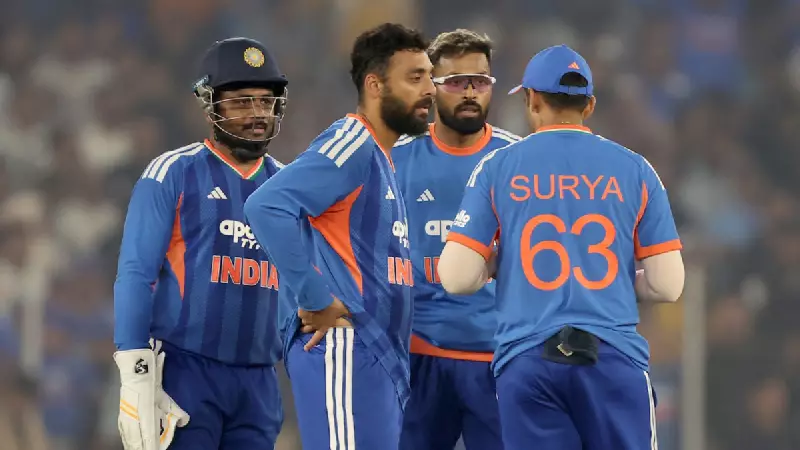
This approach has seen bowlers deployed for even single-over spells, catching opponents off-guard and disrupting their batting strategies. Beyond premier pacer Jasprit Bumrah, who has been assigned a flexible role, spinners Varun Chakaravarthy and Kuldeep Yadav have also been utilized at unexpected moments to deliver crucial overs.
Disrupting Opposition Planning Through Unpredictability
Morkel explained that creating uncertainty for opposing teams has been a priority since India began their T20 World Cup preparations. The coaching staff deliberately avoids establishing predictable patterns that opponents could analyze and counter.
"I think at the moment, we're doing that quite well," Morkel noted. "If teams start to plan against us, they don't know where we are going to fit and how we're going to play our cards. For us, it is important to give guys that opportunity in that role, to get comfortable in those roles."
The strategy involves preparing multiple game plans that can be deployed based on specific match conditions, ensuring India remains adaptable regardless of the playing surface or opposition lineup.
Wicket-Taking Focus Over Defensive Containment
While many T20 teams prioritize batting strength to win matches, Morkel revealed that India's approach aligns more with aggressive wicket-taking, particularly during powerplay overs. This proactive strategy aims to restrict opponents' ability to post massive totals by dismantling their batting lineup early.
"20-20 is about taking wickets," Morkel asserted. "We want to try and get teams down, seven, eight down, six down, by the 15th, 16th over. So how we can plan that with our bowling attack to get those wickets is going to be important."
This emphasis on bowling partnerships and coordinated attacks represents a shift from conventional T20 thinking, where batting often dominates strategic planning.
Multiple X-Factor Bowlers Provide Unmatched Depth
Most international teams typically rely on one or two bowlers with exceptional match-winning abilities, but Morkel highlighted that India possesses three distinct X-factor options in Bumrah, Kuldeep Yadav, and Varun Chakaravarthy. Each bowler offers unique variations and skills that complement the overall attack.
"Everybody has a certain ability of X factor about them," Morkel explained. "So yeah, for us it's just to keep on having good, clear communications about their roles, what to expect."
This depth creates healthy competition within the squad, as Morkel clarified that "there's no guarantee of starting in the 11" for any bowler. Selection decisions will be based purely on match conditions and the specific requirements for victory in each game.
Building a Cohesive Unit with Clear Communication
The success of this flexible approach depends on transparent communication between coaching staff and players regarding roles and expectations. Morkel emphasized that every squad member understands the team-first philosophy that guides selection and strategy.

"And then they also know, the buy-in for this team is that there's no guarantee of starting in the 11," Morkel reiterated. "It's about who is suited based on the conditions and how we can see the team winning at the end of the day. It's about the team and the conditions and how we can win a great game of cricket."
With what Morkel describes as "11 match winners" available for selection on any given match day, India enters the T20 World Cup with unprecedented bowling depth and strategic flexibility that could unsettle even the most prepared opponents.