Gavaskar Foresees Possible Reversal in Pakistan's India Boycott Decision
NEW DELHI: Cricket legend Sunil Gavaskar has expressed skepticism about the finality of Pakistan's decision to boycott their high-profile ICC T20 World Cup clash against India. Gavaskar believes public pressure could force a reconsideration, drawing parallels with the country's history of cricketers reversing retirement decisions after fan appeals.
Pakistan's Controversial Announcement
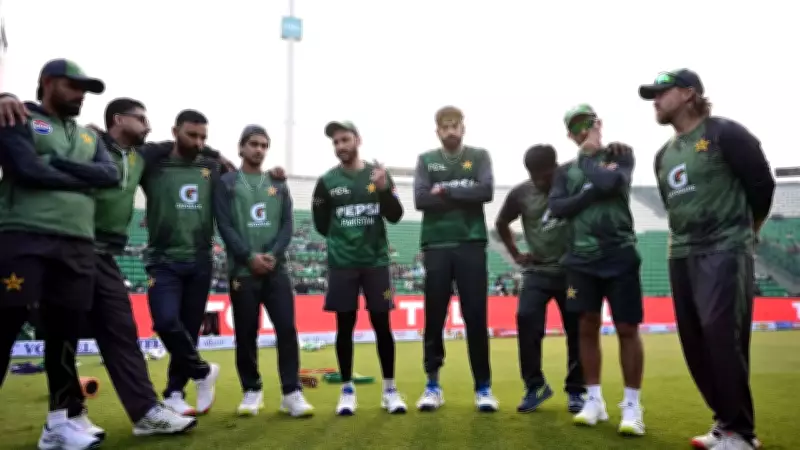
Pakistan recently ended days of uncertainty by confirming participation in the T20 World Cup, which begins on February 7. However, the announcement came with a significant caveat: the team will forfeit their group-stage match against India scheduled for February 15. The decision was communicated via a social media post from the Pakistani government, which did not provide specific reasons for the boycott.
The government release stated: "The government of Pakistan grants approval to the Pakistan cricket team to participate in the Twenty20 World Cup, however, the Pakistan team shall not take the field in the match scheduled on 15th February against India."

Gavaskar's Analysis of the Situation
Reacting to the development, Gavaskar suggested on Aaj Tak that public reaction could yet force a rethink. "Their decision could change once the world starts reacting to their boycott decision," he said. The former Indian captain pointed to a familiar pattern in Pakistan cricket, noting that players often make retirement U-turns, citing fan demand as the reason.
"There's nothing new to this issue. Pakistani cricketers are known to make retirement U-turns, claiming their fans want them to continue," Gavaskar remarked. He elaborated that a similar scenario could unfold here, with Pakistani fans potentially questioning their government's decision.
"It's possible that Pakistani fans may question their government about their decision. So, I don't see any problem here. Pakistani cricketers have set the example – they make a U-turn 8-10 days after retiring. Something similar could happen before February 15," he added.
Tournament Implications and ICC Response
The marquee event, co-hosted by India and Sri Lanka, runs from February 7 to March 8 and features 20 teams. The International Cricket Council (ICC) has already taken note of Pakistan's stance and warned the Pakistan Cricket Board (PCB) about potential long-term consequences if the decision is not revisited.
Despite Pakistan's current stance, India is expected to proceed as scheduled and travel to Sri Lanka for the fixture in line with tournament protocols. For a walkover to be officially awarded, the opposing team must be present for the toss.
Accordingly, India T20I captain Suryakumar Yadav is set to walk out for the coin toss at Colombo's R. Premadasa Stadium on February 15. If Pakistan captain Salman Ali Agha fails to appear, the match referee will declare a walkover, handing India two points.
Uncertainty Over PCB's Position
Meanwhile, uncertainty remains over whether the PCB supports the government's call. PCB chairman Mohsin Naqvi is expected to clarify the board's position. A source quoted by news agency PTI said: "What will be interesting to see is what reason the PCB gives for the government denying them permission to play India on February 15 and whether it was a unilateral government decision or the PCB was on board as well."
Historical Context and Tournament Schedule
India and Pakistan have not played bilateral cricket since 2012 and only meet in multi-nation tournaments. Pakistan begins their campaign against the Netherlands in Colombo on February 7 in Group A, which also includes India, the United States, and Namibia.
The T20 World Cup promises to be a thrilling event, with fans eagerly anticipating high-stakes matches. However, the potential boycott has cast a shadow over one of the most anticipated fixtures of the tournament.
As the cricketing world watches closely, all eyes will be on Pakistan's next move and whether public sentiment will indeed influence a reversal of their controversial decision.