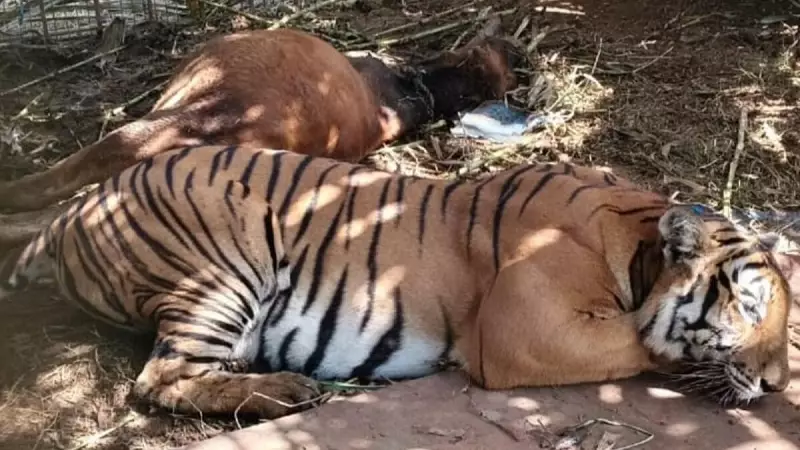
A tense situation in Karnataka's Chamarajanagar district has been partially resolved with the successful capture of a tigress that had been instilling fear in local communities. The operation, led by the state's Forest Department, concluded on Tuesday, but the mission is far from over as officials now urgently search for the big cat's four cubs.
The Rescue Operation Unfolds
Forest department personnel, acting on consistent alerts from villagers, located and safely rescued the tigress on May 28. The animal had been reportedly roaming near human settlements, creating a climate of anxiety among residents. The team employed a carefully planned strategy to tranquilize and capture the tigress without causing her harm.
The tigress is estimated to be between four and five years old, placing her in the prime of her life. Following her capture, she was immediately transported to the Mysuru Zoo for a thorough veterinary examination. This health check is a standard and critical procedure to ensure the animal's well-being after such a stressful event and before any potential translocation or long-term care decisions are made.

The Critical Search for the Cubs
While the capture of the adult tigress is a significant achievement, it has opened a new and pressing challenge for the forest authorities. The tigress is a mother to four cubs, each believed to be less than a year old. Their current whereabouts are unknown, raising serious concerns for their survival without maternal care.
Forest officials have launched an intensive combing operation in the surrounding forest areas to locate the vulnerable cubs. The search party is on high alert, scanning the terrain for any signs of the young tigers. The welfare of these cubs is now the top priority, as their chances of survival in the wild diminish rapidly without their mother's protection and guidance.
Addressing Human-Animal Conflict
This incident highlights the ongoing and complex issue of human-animal conflict in regions bordering wildlife habitats. Chamarajanagar, with its rich biodiversity and proximity to tiger corridors, often experiences such tense encounters. The proactive response by the Forest Department underscores the delicate balance they must maintain between ensuring public safety and protecting endangered wildlife.
The successful capture of the tigress prevented potential harm to both humans and the animal itself, which could have resulted from escalating conflict. The department's strategy focuses on rescue and translocation where possible, rather than lethal measures, aligning with broader conservation goals for the majestic Bengal tiger.
As the search for the four cubs continues, the forest department urges locals to remain vigilant and report any sightings immediately. The coming days are crucial for reuniting the tiger family or ensuring the cubs are brought into a safe care system. This event serves as a stark reminder of the challenges and responsibilities inherent in wildlife conservation amidst expanding human landscapes.