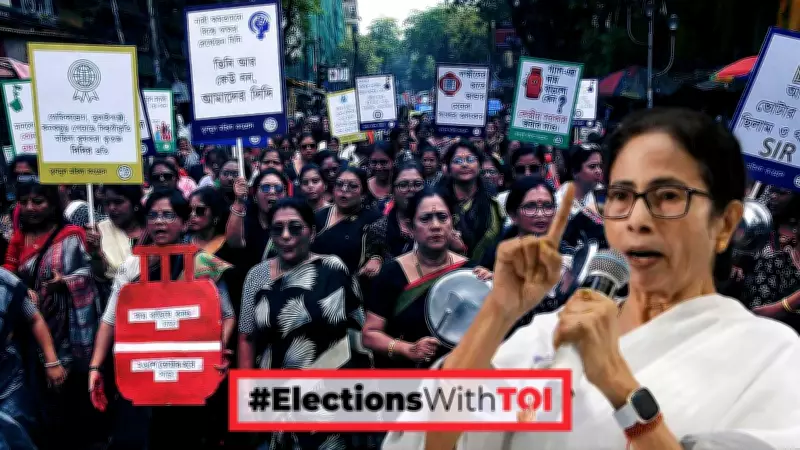
Mamata Banerjee Announces New Protest Dharna, TMC To Target Modi Government Over LPG Shortage Crisis
West Bengal Chief Minister and Trinamool Congress (TMC) supremo Mamata Banerjee is set to launch a new protest dharna as her party plans to aggressively target the Modi government over severe LPG shortages affecting the state. This political move comes ahead of crucial assembly elections, with the TMC aiming to highlight governance failures in essential commodity supply.
West Bengal Authorities Implement Emergency Measures Amid Supply Disruptions
State authorities in West Bengal are actively managing the ongoing LPG shortage crisis through a series of emergency meetings, implementation of Standard Operating Procedures (SOPs), and comprehensive public information campaigns. The administration is closely monitoring stock levels and prioritizing local distribution networks as households and small businesses report significant operational impacts due to the supply disruptions.
The situation has been exacerbated by recent price increases and extended booking windows for LPG cylinders, creating hardship for consumers across the state. "We are facing unprecedented challenges in maintaining regular LPG supply," acknowledged a state government official, speaking on condition of anonymity.

TMC Announces Protest March on March 16 to Highlight Supply Issues
The Trinamool Congress has officially announced a protest march scheduled for March 16 to draw attention to the persistent LPG supply issues. This organized demonstration is strategically timed to maximize political impact as election preparations intensify across Bengal.
Political analysts suggest the TMC's focus on LPG shortages represents a calculated effort to connect with voters experiencing daily inconveniences and economic strain. "Essential commodities like cooking gas directly affect every household, making this a potent political issue," noted a Kolkata-based political observer.
Broader Political Context and Election Implications
The LPG shortage controversy emerges within a charged political environment where multiple parties are positioning themselves ahead of state elections. The TMC's planned dharna and protest march represent an escalation of their criticism against the central government's handling of essential supplies.
Meanwhile, West Bengal's administration continues its dual approach of addressing immediate supply challenges while preparing contingency plans for potential prolonged shortages. The state government has emphasized its commitment to minimizing public inconvenience despite what it characterizes as systemic supply chain failures.
As the political temperature rises, all eyes remain on how this issue will develop in the coming weeks and what impact it may have on electoral dynamics in one of India's most politically significant states.