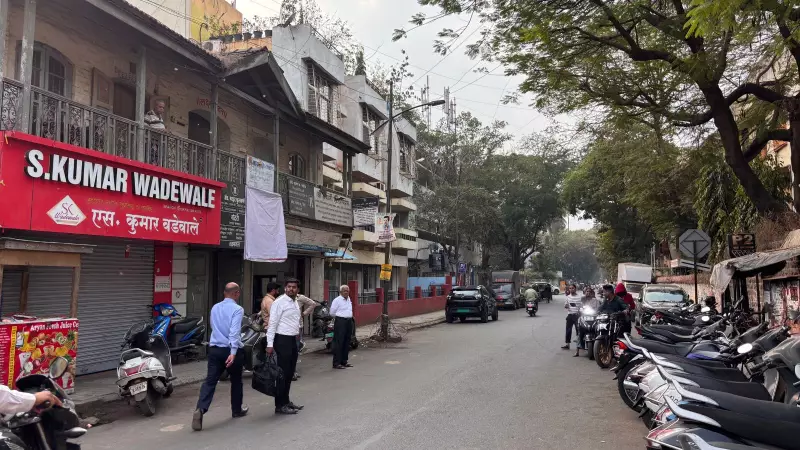
In the bustling heart of Pune, a road named Dinkarrao Javalkar Road intersects with the city's historical narrative, yet the man behind the name remains a shadowy figure to most who traverse it. This street, branching off the famous Tilak Road, stands as a quiet testament to a fierce ideological battle that shaped early 20th-century Maharashtra—a battle between two contrasting visions of the Indian nation.
From Social Movement to Political Force: The Rise of Javalkar
Born in 1898 in Alandi to a poor Patil family, Dinkarrao Javalkar was a second-generation leader of the Satyashodhak Samaj, the organization founded by Mahatma Jyotirao Phule. According to historian Vijay Nalawade's book 'Life and Career of Keshavrao Jedhe', Javalkar, educated only up to matriculation, was renowned for his powerful oratory and writing. Alongside contemporaries like Keshavrao Jedhe, he played a pivotal role in revitalizing the Satyashodhak movement in the 1920s, following a period of decline after the deaths of Jyotirao and Savitribai Phule.
Devkumar Ahire, an Assistant Professor at Savitribai Phule Pune University (SPPU), explains that Javalkar and Jedhe were instrumental in transforming the Samaj from a social reform group into a formidable political entity. They initially formed their own political party before eventually merging with the Indian National Congress. This period coincided with Mahatma Gandhi's rise on the national stage and intense internal conflict within the Maharashtra Congress between Gandhians and followers of Bal Gangadhar Tilak.
Javalkar's political journey was marked by critical thought. He famously wrote an article criticizing Gandhi around 1925-26. Yet, in a significant shift, by 1929 he authored 'Satyashodhak Mahatma', an article acknowledging and praising Gandhi's contributions—demonstrating a complex, evolving political stance.
The Fierce Critic: 'Deshache Dushman' and a Clash of Nationalisms
Javalkar's most controversial act was his scathing critique of Pune's Brahminical nationalist leaders. In his book 'Deshache Dushman' (Nation's Enemies), he branded figures like Bal Gangadhar Tilak and Vishnushastri Chiplunkar as enemies of the nation.
Professor Ahire clarifies that Javalkar was articulating a fundamentally different idea of India. "He was articulating an idea of the nation which is different from what was presented by upper-caste Brahmin nationalists," Ahire states. In his publication 'Shetkarancha Hindustan', Javalkar argued that India was essentially a nation of peasants. He viewed Tilak's movement as exclusionary—an urban, upper-caste, English-educated endeavor that failed to include the masses.
The book's language was incendiary. Nalawade notes that Javalkar called Chiplunkar a dog and suggested he should be shot for abusing Mahatma Phule in print. This led to a defamation case filed by a descendant of Chiplunkar. Javalkar was sentenced to a year in prison, and in a notable historical detail, Dr. B.R. Ambedkar represented him in an appeal against the judgment.
A Road Named, A Story Forgotten
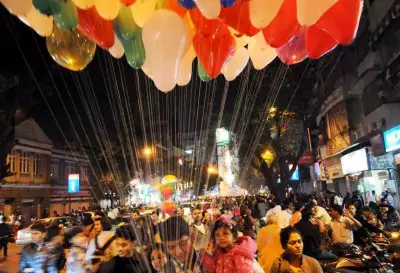
Today, the physical legacy of Dinkarrao Javalkar is a road sign that many overlook. For Kamal Madan Pardeshi, a street hawker who has worked on the road for three years, the name holds no meaning. She and others refer to the area as "Mamledar Kacheri Road," an informal, functional name derived from a nearby court.
This disconnect spans generations. Vilas Manchalekar, 71, has run a sewing shop on the road for nearly fifty years. He admits he does not know who Javalkar was. "I don't know who he was," Manchalekar says, gesturing to the municipal signboard, which, at the time of reporting, was partially obscured by a religious hoarding. "The board is all I know of him."
The memory persists only in fragments, primarily through lineage. Swapnil Javalkar, 38, a junior clerk and a fourth-generation descendant, confirms the family's roots in Alandi. He often faces curious questions about the road's name. "People always ask me if the road was named after me," he remarks, laughing before explaining his connection to the historical figure.
This gap between official commemoration and public memory underscores a common urban phenomenon: when names outlast their stories, roads become mere labels, known to the city map but stripped of their historical weight for those who use them daily. The story of Dinkarrao Javalkar Road is a poignant reminder of the complex, often contentious layers of history that lie beneath the familiar surfaces of our cities.