

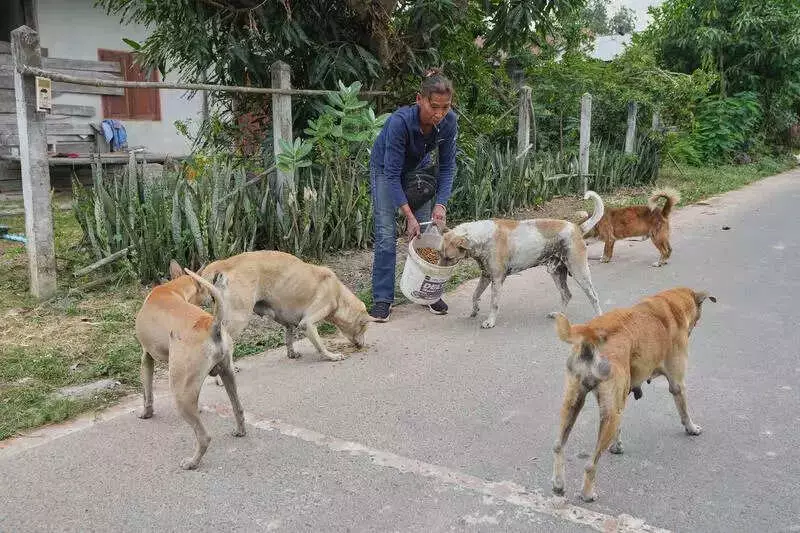
In a significant escalation of their campaign, animal welfare organizations and NGOs across India have announced a decisive 'Do Or Die' movement scheduled for January 4. This nationwide initiative represents a final, concerted appeal to the Supreme Court of India to stay its recent order mandating the confinement of all stray dogs in shelters, a directive activists label as cruel and impractical.
The Final Appeal for Freedom
Drawing inspiration from Mahatma Gandhi's historic 1942 call for India's independence, some activists are terming this effort 'Do Or Die-2'. The movement aims to secure the freedom of street dogs, allowing them to live freely rather than face incarceration. Ambika Shukla of the prominent NGO People for Animals (PFA) articulated the collective sentiment, stating that animal lovers are now fighting for the liberty of these vulnerable creatures. She emphasized that the Animal Birth Control (ABC) Rules of 2023 provide the only legal and humane pathway to managing the stray dog population, contrary to the mass sheltering directive.
Nationwide Protests and Digital Campaign
The movement will unfold on multiple fronts. A massive digital campaign will see hundreds of messages flooding social media platforms like X (formerly Twitter) and Facebook on January 4, with the goal of making the issue trend nationally. Simultaneously, peaceful street demonstrations are planned in various cities and towns.

In Mumbai, the Pure Animal Lovers (PAL) Foundation will organize a protest march in the Lokhandwala area of Andheri (West). Roshan Pathak of PAL questioned the judiciary's role in protecting society's weakest and stressed the need for compassion ('karuna'). He also challenged the statistics on dog bite cases circulating on social media, calling them highly inflated. Pathak further warned of a potential boycott of the forthcoming Brihanmumbai Municipal Corporation (BMC) elections if the government remains adamant about "arresting" stray dogs.
Practical and Ethical Concerns Raised
Activists have highlighted severe practical flaws in the Supreme Court's November 7 order. Vijay Rangare, founder of the newly formed group Rakshak, pointed out the sheer lack of infrastructure, stating there are not enough shelters to accommodate India's vast stray dog population. He also raised alarms about animal health, noting that cramming dogs into shelters could trigger viral outbreaks, effectively turning the order into a death sentence for healthy indie (Indian) dogs.
Echoing these concerns, Navi Mumbai-based dog feeder Pranali Auti described the movement as a final, compassionate appeal to the Supreme Court and government officers for a fair hearing. The activists aim to present their case, backed by research and on-ground experience.
A Unified Stand for the Voiceless
Ambika Shukla of PFA reinforced the movement's gravity, connecting it to India's legacy of fighting for freedom. She stated that January 4 will mark a day of national unity, where citizens speak up for voiceless street animals condemned to 'jail'. The movement's objectives are clear: to debunk false figures, demonstrate the unfeasibility of mass sheltering, showcase proven research, and establish the Animal Birth Control program as the only viable way forward.
As the date approaches, the 'Do Or Die' movement is poised to become a major flashpoint in the ongoing debate over urban wildlife management and animal rights in India, testing the balance between public safety and compassionate policy.






