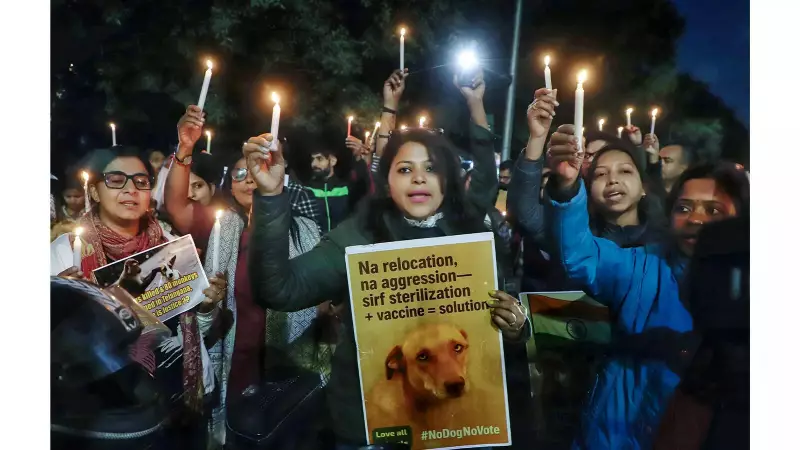
Telangana's Stray Dog Crisis: When Political Power Trumps Humane Laws
As the Supreme Court continues hearings on India's stray dog management policies, disturbing reports have emerged from Telangana revealing a systematic campaign of mass canine killings across the state. More than 1,000 stray dogs have been brutally eliminated, not through random acts of violence but through calculated political maneuvering that exposes the failure of existing legal frameworks to prevent such cruelty.
The Political Machinery Behind the Massacre
Following their victory in the December 2025 gram panchayat elections, a group of newly empowered sarpanches in Telangana initiated a covert operation targeting stray animals. These elected representatives, fulfilling campaign promises to reduce stray dog and monkey populations, opted for the most expedient and cost-effective method available. Rather than implementing the legally mandated Animal Birth Control (ABC) programs, they hired "specialists" from neighboring Andhra Pradesh who administered lethal injections containing gaddi mandu, an agricultural chemical whose primary component is paraquat dichloride.
Local sources indicate the entire operation was remarkably inexpensive, with each dog elimination costing between ₹100 to ₹500 – a fraction of what proper ABC implementation would require. This economic calculation, combined with the relative ease of trapping dogs compared to monkeys, made mass culling the preferred approach for these politicians seeking quick voter approval.

Legal Impunity and Political Complicity
Despite police cases being registered against nearly a dozen sarpanches across five districts under BNS Section 325 and the Prevention of Cruelty to Animals Act, the likelihood of meaningful prosecution remains minimal. All accused received station bail, a standard practice for offenses carrying potential sentences under seven years, and their cases now languish in forensic limbo. The political reality further complicates matters: the Congress-led Telangana government shows little appetite for arresting newly elected representatives, creating what activists describe as a "state-enabled campaign" of animal cruelty.
This impunity exists despite the Supreme Court's recent reiteration that ABC programs represent the only legally and ethically acceptable approach to managing stray populations. Sarpanches exploited public unfamiliarity with ongoing court proceedings, deliberately misinterpreting discussions about removing strays from public institutions to justify their illegal actions.
The Data Distortion and Scientific Solutions
Compounding the problem is the misuse of statistics to justify extreme measures. A recent RTI response indicated Telangana recorded over 14.9 lakh dog-bite cases over five years, but experts consistently note these figures are significantly inflated. The data actually represents rabies vaccinations administered, which include preventive shots for animal handlers and treatments for bites from various animals including monkeys and rats.
Animal welfare experts emphasize that ABC remains the only scientifically validated and humane approach to stabilizing stray dog populations. Telangana's current efforts – approximately 10,000 sterilizations annually for an estimated 15 lakh stray dogs – are woefully inadequate. Hyderabad exemplifies this failure, with recent reports indicating substantial numbers of unsterilized and unvaccinated dogs throughout the city.
The Path Forward for Telangana
The solution requires systemic changes that mirror needs across Indian states: recruitment of trained personnel, sustained partnerships with animal welfare organizations, establishment of more animal shelters (particularly in rural areas), and increased municipal and panchayat budgets for ABC implementation. Without such measures, activists fear the mass killings may continue unabated in Telangana's villages.

This crisis represents more than an animal welfare issue – it demonstrates how political ambition, public misinformation, and institutional inertia can collectively undermine both legal frameworks and ethical imperatives. As the Supreme Court deliberates on national stray dog policies, Telangana's experience serves as a cautionary tale about what happens when humane laws encounter political realities on the ground.