Sunetra Pawar's Historic Appointment Amid Political Turmoil
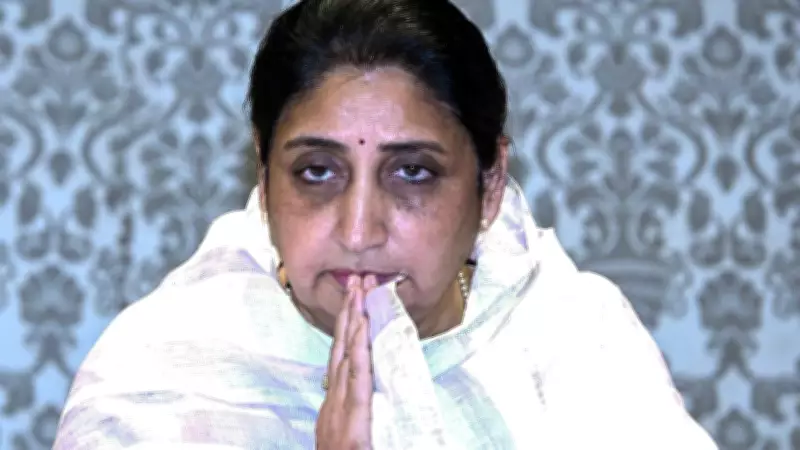
The sudden and tragic demise of Maharashtra Deputy Chief Minister Ajit Pawar in an aircraft accident has created a seismic shift in the state's political landscape. As the state mourns the loss of this prolific political leader, questions immediately emerged about the future of Maharashtra's already turbulent politics. Within days of this tragedy, Sunetra Pawar was sworn in as Deputy Chief Minister, making history as the first woman to hold this position in Maharashtra.
The Challenge of Maratha Patriarchy
The swiftness of Sunetra Pawar's elevation tells only part of the story. Her appointment must be understood within the context of Maratha patriarchy that has long defined the Nationalist Congress Party. For decades, the NCP has been shaped by dominant Maratha male leadership, grounded in rural patronage networks, cooperative institutions, and elite political bargaining. Sunetra Pawar's ascent represents a significant disruption to this established order.
Even before she has had adequate time to mourn her personal loss or begin to process the political implications of her husband's death, Sunetra Pawar finds her political acumen and leadership capabilities under intense scrutiny. She faces the monumental task of navigating family hierarchy, generational aspirations, and party leadership while operating within a coalition that stands to benefit from internal NCP instability.

BJP's Strategic Opportunity
Ajit Pawar's absence creates a significant vulnerability for the NCP within the BJP-led Mahayuti alliance. His greatest strength lay in his exceptional negotiating abilities, leveraging commanding legislative numbers, controlling crucial portfolios like Finance and Planning, and bringing deep understanding of rural Maharashtra and Maratha politics to the table. Without his presence, the NCP risks being substantially diminished as a major partner in the alliance.
For the Bharatiya Janata Party, which has systematically worked to shrink and fragment opposition parties across India, this situation presents a strategic opportunity. The BJP now has the chance not only to exert greater control over the NCP but also to hollow out the influential Pawar political brand, much as it has attempted with other political dynasties like the Thackerays.
Whether Sunetra Pawar can prevent her party from slipping completely into the BJP's shadow will depend critically on how much political space she can claim within both her family and the NCP organization.
Fissures Within the NCP and Pawar Family
Ajit Pawar served as the crucial balancing force between the two NCP factions that emerged after his dramatic split from the party and subsequent alliance with the BJP. Despite this political division, blood ties allowed him to maintain communication channels with Sharad Pawar and Supriya Sule. The fissures within the party were evident not just between the two NCP factions but also within the leadership that Ajit Pawar brought with him to the alliance.
Leaders like Praful Patel, Sunil Tatkare, and Chhagan Bhujbal, with their unending political ambitions and dependence on the BJP for access to power, were increasingly becoming liabilities for the NCP brand. This dynamic explains the whispers about the Pawar family planning a merger of the NCP factions to consolidate control after the upcoming Zilla Parishad polls.
Ajit Pawar's sudden death removes the emotional and political glue that held these disparate elements together. What now emerges are naked ambitions and unresolved rivalries, with Sharad Pawar and Supriya Sule on one side and leaders like Patel and Tatkare on the other. The potential merger now moves beyond family and ideological considerations, with the BJP likely to assess which configuration serves its strategic interests better: Sharad Pawar with Sunetra Pawar as a symbolic bridge, or Sunetra Pawar backed by other leaders as a rubber-stamp figure.

Exposed Family Fault Lines
Ajit Pawar's death has exposed delicate fault lines within the Pawar family itself. Sharad Pawar's visible shock and unease following the tragedy suggest underlying tensions, while Supriya Sule's long-standing political ambitions add another layer of complexity to the family dynamics. Sunetra Pawar must now negotiate these intricate family relationships while simultaneously managing party leadership and coalition politics.
A Defining Moment for Maharashtra
Ajit Pawar was not merely a political power broker; he was a serious politician with deep understanding of Maharashtra's political economy, agrarian distress, and complex caste dynamics. For a state with nearly 55 percent agrarian population, his loss represents a significant void in political leadership and policy understanding.
The popular narrative following Ajit Pawar's death has unfortunately focused on questioning Sunetra Pawar's rapid ascension rather than interrogating the structural forces at play. What deserves closer attention is not whether a woman took charge too quickly, but what the men around her will do next, both inside the party, within the alliance, and in their approach to governing the people of Maharashtra.
As power realigns in the aftermath of this tragedy, the emerging equations and political forces will fundamentally shape governance, opposition space, and democratic accountability in Maharashtra for years to come. Sunetra Pawar's leadership represents a critical test case for women in Indian politics navigating patriarchal structures while facing expansionist political forces.