Ratna Debnath Files Nomination as BJP Candidate from Panihati for 2026 Assembly Elections
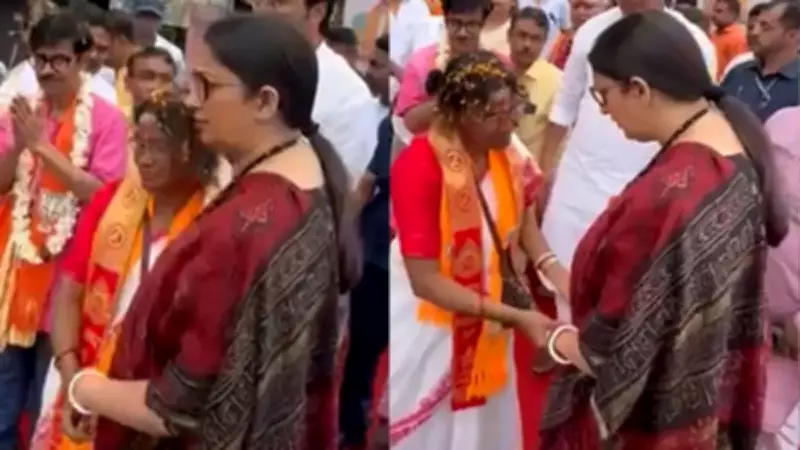
In a significant political development in West Bengal, Ratna Debnath, the mother of the victim from the RG Kar Medical College case, has officially filed her nomination as the Bharatiya Janata Party (BJP) candidate from the Panihati constituency for the upcoming 2026 Assembly elections. The nomination process was notably accompanied by Union Minister Smriti Irani, highlighting the party's strategic focus on this key electoral battle.
High-Profile Support from Smriti Irani
Union Minister Smriti Irani's presence during the nomination filing underscores the BJP's concerted effort to bolster its campaign in West Bengal. Irani, a prominent figure in national politics, has been actively involved in the state's political landscape, and her support for Debnath signals the party's intent to leverage local issues and personal narratives to gain electoral traction. This move is seen as part of the BJP's broader strategy to challenge the ruling Trinamool Congress (TMC) in the state.
Background of Ratna Debnath and the RG Kar Case
Ratna Debnath gained public attention following the tragic incident at RG Kar Medical College, where her child was a victim. The case has been a focal point in West Bengal's political discourse, with allegations of negligence and demands for justice resonating across the state. By fielding Debnath as a candidate, the BJP aims to capitalize on the emotional and social dimensions of this issue, positioning itself as a champion for victims' rights and accountability in governance.

Debnath's candidacy is expected to bring a personal touch to the BJP's campaign, potentially appealing to voters who are dissatisfied with the current administration's handling of such sensitive matters. Her nomination from Panihati, a constituency with its own set of local challenges, could help the party connect with grassroots concerns and build a narrative around justice and reform.
Political Implications for West Bengal
The 2026 Assembly elections in West Bengal are poised to be a fiercely contested battle, with the BJP seeking to expand its footprint beyond its current strongholds. The selection of Ratna Debnath as a candidate reflects the party's adaptive electoral tactics, which include:
- Emphasizing Local Issues: By highlighting cases like RG Kar, the BJP aims to address specific grievances that resonate with voters.
- Leveraging National Leaders: Involvement of figures like Smriti Irani adds star power and media attention to the campaign.
- Building a Diverse Candidate Pool: Debnath's background as a victim's mother adds a unique perspective to the BJP's roster, potentially attracting sympathy and support from various demographics.
This nomination comes at a time when West Bengal's political environment is increasingly polarized, with both the BJP and TMC vying for dominance. The BJP's strategy appears to focus on combining national resources with local narratives to create a compelling electoral appeal.
Looking Ahead to the 2026 Elections
As the nomination process unfolds, all eyes will be on Panihati and other key constituencies in West Bengal. Ratna Debnath's campaign, backed by Smriti Irani and the BJP's organizational machinery, is likely to be closely watched as a test case for the party's ability to translate emotional issues into electoral success. The outcome could influence the BJP's broader approach in the state and beyond.
In summary, the filing of Ratna Debnath's nomination marks a strategic move by the BJP in West Bengal's political arena, blending personal tragedy with political ambition to challenge the status quo in the 2026 Assembly elections.