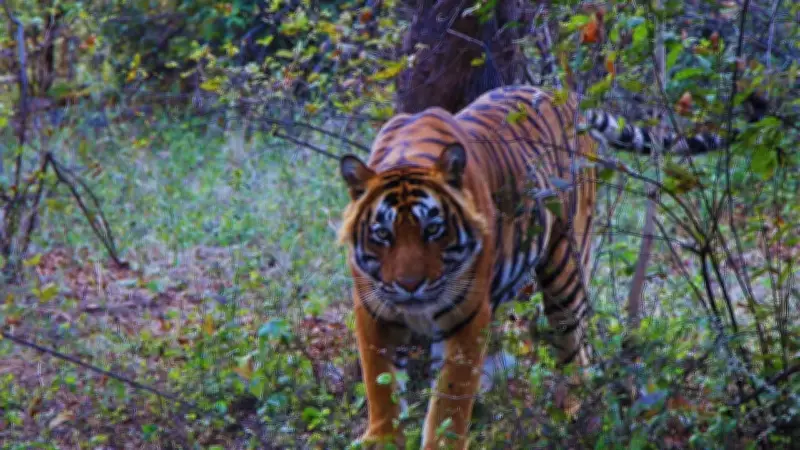
Viral Ranthambore Tiger Video Ignites Wildlife Tourism Ethics Debate
A concerning video clip from Ranthambore National Park has rapidly circulated across multiple social media platforms, triggering widespread criticism of current wildlife viewing practices. The footage captures a distressing episode where a tiger finds itself encircled by numerous safari jeeps, with minimal space left for the animal to move freely.
Video Details and Immediate Aftermath
The now-viral video, originally posted on Instagram by user Monty Bhatt (@monty_thetraveller), begins as what appears to be a routine tiger sighting. However, the situation quickly escalates as multiple safari vehicles converge on a narrow park road, gradually surrounding the tiger from various angles. As more jeeps arrive at the scene, the available space for the animal becomes increasingly restricted.
Observers can clearly see park officials and guides attempting to communicate with drivers to regulate vehicle movement, instructing some to halt while others are directed to move along. Despite these efforts, tourists from both India and abroad continue recording videos and taking photographs, seemingly unaware of the potential distress they might be causing the wild animal.

The tiger itself pauses to assess the situation, appearing to recognize that its natural path has been effectively blocked by the cluster of vehicles. This moment has become particularly symbolic in the ongoing discussion about wildlife tourism ethics.
Public Reaction and Conservation Concerns
The video has generated mixed reactions online, with many viewers expressing concern about the potential anxiety such scenarios create for wild animals. Numerous commentators have questioned whether the number of vehicles and tourists observing animals during safaris complies with established park regulations and guidelines.
India's renowned Ranthambore National Park, home to a significant tiger population, attracts substantial visitor numbers annually, particularly during peak tourism seasons. While wildlife viewing provides exciting experiences for tourists, conservation advocates argue that stricter controls are necessary regarding vehicle numbers and visitor proximity to animals.
The viral footage has highlighted the crucial importance of balancing wildlife tourism with respect for animals' natural habitats and behavioral patterns.
Understanding Ranthambore's Safari System
Jeep safaris at Ranthambore National Park operate within a structured framework:
- The park is divided into ten distinct tourism zones, each featuring varied landscapes including dry deciduous forests, open fields, and notable water bodies like Padam Talao lake
- A permit system carefully manages bookings, allowing only a limited number of vehicles in each zone at any given time
- Each vehicle follows a predetermined route to minimize disturbance to wildlife
- Two daily safari sessions operate using open 6-seater Gypsy vehicles
- Every safari includes both a driver and a government-approved guide who coordinate using wireless communication systems
While tigers remain the primary attraction, visitors also frequently observe other fauna including leopards, sloth bears, marsh crocodiles, and diverse bird species. The current controversy has prompted renewed examination of whether existing management protocols adequately protect animal welfare during these tourism activities.