Siddaramaiah Accuses RSS of Orchestrating MGNREGA Scrap, Vows Fight for Restoration
In a fiery address at a massive 'Raj Bhavan Chalo' programme in Bengaluru, Karnataka Chief Minister Siddaramaiah on Tuesday launched a scathing attack on the Rashtriya Swayamsevak Sangh (RSS), accusing it of being the driving force behind the Central government's controversial decision to replace the Mahatma Gandhi National Rural Employment Guarantee Act (MGNREGA). The event, organized by the Karnataka Pradesh Congress Committee (KPCC) at Freedom Park as part of the Congress party's 'MGNREGA Bachao Sangram', saw Siddaramaiah denounce the move to introduce the Viksit Bharat–Guarantee for Rozgar and Ajeevika Mission (Gramin), commonly referred to as G RAM G.
Allegations of Malicious Intent and Ideological Agenda
Siddaramaiah asserted that the decision by the BJP-led Union government to scrap MGNREGA reeked of "malicious intent" and fundamentally weakened the rights of the rural poor. He claimed that the RSS, which he described as opposed to the empowerment of the underprivileged, does not desire the poor to integrate into the mainstream and thrive. "RSS does not want the poor to join the mainstream and prosper; it wants them to be slaves forever, and the BJP has duly adopted this principle," he declared. The Chief Minister further alleged an ideological conspiracy behind the move, stating, "Their conspiracy is to prevent the poor from being empowered. RSS' agenda is to permanently institutionalise inequality in society." He emphasized that economic and social freedom are essential to realize the equality envisioned by B.R. Ambedkar.
Impact on Vulnerable Sections and Dilution of Rights
Highlighting the profound impact of MGNREGA, Siddaramaiah provided stark statistics to underscore its significance for marginalized communities. He noted that approximately 53% of MGNREGA workers were women, 28% belonged to Scheduled Castes and Scheduled Tribes, and nearly five lakh people with disabilities were engaged as wage labourers under the scheme. "MGNREGA ensured employment for all," he remarked, adding that it allowed women, Dalits, backward classes, minorities, and small farmers to seek work on any day of the year, with gram sabhas and gram panchayats determining the nature of the work.

In contrast, Siddaramaiah criticized the new G RAM G framework, arguing that it centralizes decision-making. "Now, instead of local rural bodies, Delhi decides what work the rural poor should do," he lamented. He also pointed out that the new law dilutes the constitutional right to work. Under MGNREGA, workers were guaranteed 100 days of employment, but this assurance has been undermined by G RAM G. Furthermore, he highlighted a significant shift in funding: previously, the Centre bore all expenses under MGNREGA, but under the new law, states must shoulder 40% of the cost, with the Centre contributing only 60%. "The right to work is a constitutional right, but this has been taken away through G RAM G," he asserted.
Congress's Resolute Opposition and Broader Call to Action
Siddaramaiah declared that the Congress party and the Karnataka government are steadfast in their opposition to what he termed the "anti-people policies" of the Centre. He called for a nationwide struggle until MGNREGA is restored, urging farmers, workers, and women to join the agitation in large numbers. "Therefore, our government and Congress party are opposing these policies. People across the country must continue this struggle until this law is repealed and MGNREGA is restored," he stated. As a symbolic gesture of resistance, he announced plans to name all gram panchayats in Karnataka after Mahatma Gandhi, reinforcing the commitment to the principles embodied by the original Act.

Delegation Meets Governor with Memorandum
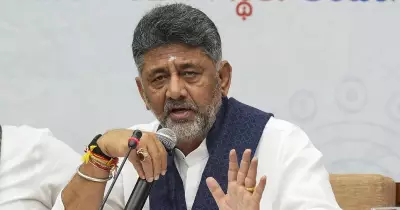
Earlier in the day, a high-profile Congress delegation, led by Siddaramaiah and including Deputy Chief Minister D.K. Shivakumar, AICC general secretary in charge of Karnataka Randeep Singh Surjewala, and other party functionaries, met Governor Thaawar Chand Gehlot. They submitted a formal memorandum demanding the immediate restoration of MGNREGA, underscoring the party's unwavering stance against the Centre's decision. This move signals the intensification of political pressure and sets the stage for a prolonged confrontation over rural employment guarantees in India.