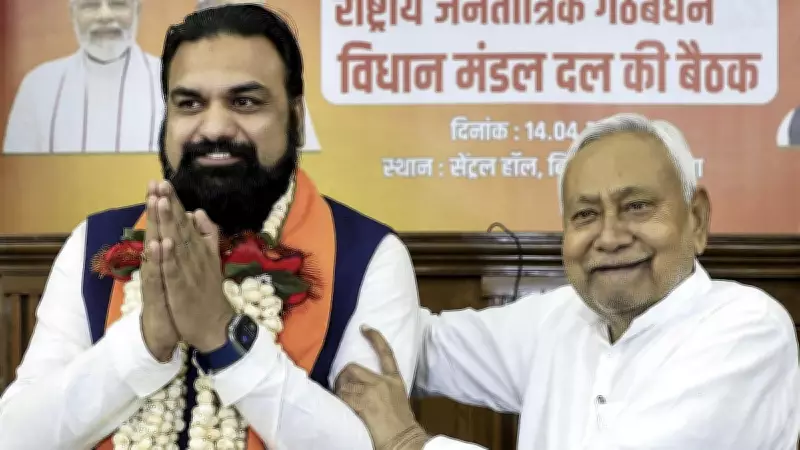
Samrat Choudhary's Political Metamorphosis in Bihar
Samrat Choudhary's elevation to the position of Chief Minister of Bihar represents a remarkable political transformation, characterized by his shift from the Rashtriya Janata Dal (RJD) to the Bharatiya Janata Party (BJP). This journey, often described as moving from the lantern symbol of the RJD to the lotus emblem of the BJP, underscores the dynamic and evolving nature of Indian state politics. Choudhary's rise is not merely a personal achievement but a reflection of broader strategic realignments within Bihar's political landscape, where alliances and ideologies frequently intersect to shape governance.
Early Political Roots and RJD Affiliation
Samrat Choudhary began his political career with the RJD, a party historically dominant in Bihar under the leadership of Lalu Prasad Yadav. During this phase, he was associated with the lantern symbol, which has long been a symbol of the RJD's identity and its focus on social justice and empowerment of marginalized communities. Choudhary's initial foray into politics was marked by his involvement in local governance and grassroots mobilization, where he built a reputation as a vocal advocate for his constituents. His tenure with the RJD provided him with a foundational understanding of Bihar's socio-political dynamics, including the challenges of rural development, caste-based politics, and economic disparities that continue to influence the state's trajectory.
Transition to BJP and Strategic Alignment
The pivotal moment in Choudhary's career came with his decision to join the BJP, a move that signaled a significant ideological and strategic shift. This transition from the lantern to the lotus was driven by a combination of factors, including political opportunism, alignment with national-level policies, and a desire to leverage the BJP's growing influence in Bihar. As a member of the BJP, Choudhary quickly ascended through the ranks, leveraging his experience and connections to secure key positions within the party structure. His ability to navigate the complex web of Bihar's political factions, coupled with his support for the BJP's agenda of development and nationalism, facilitated his rapid rise and positioned him as a formidable leader in the state's political arena.

Ascension to Chief Minister and Implications
Samrat Choudhary's appointment as Chief Minister of Bihar marks the culmination of his political journey, reflecting both personal ambition and broader party strategies. This development has several implications for Bihar's governance and political future. Firstly, it reinforces the BJP's strengthening foothold in the state, challenging traditional power structures dominated by regional parties like the RJD. Secondly, Choudhary's leadership is expected to focus on issues such as infrastructure development, agricultural reforms, and social welfare programs, aligning with the BJP's national priorities. However, his tenure will also be tested by ongoing challenges, including managing coalition dynamics, addressing unemployment, and ensuring inclusive growth in a state with diverse socio-economic needs.
In summary, Samrat Choudhary's rise from the lantern to the lotus symbolizes a transformative phase in Bihar's politics, highlighting the fluidity of political allegiances and the strategic maneuvers that define contemporary Indian democracy. His journey serves as a case study in how individual trajectories can intersect with larger political currents to reshape state-level leadership and policy directions.