Punjab's School Color Coding Sparks Political Row Over AAP Flag Colors
A recent directive from the Punjab Director General of School Education (DGSE) has ignited a significant political controversy, with opposition parties alleging that the state government is using public funds to promote its political identity. The order, issued on December 22, 2025, but which surfaced publicly on Friday, mandates the repainting of 852 government schools across 23 districts in shades of yellow and blue.
Details of the Color Coding Initiative
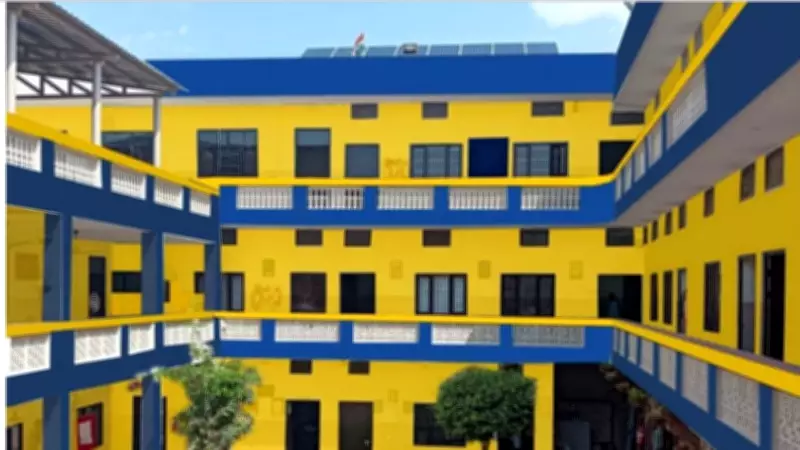
According to the official order, these schools, which include middle, high, and senior secondary institutions, are to be whitewashed, painted, and color-coded in the first phase of the project. A substantial budget of Rs 17.44 crore has been released to district education officers (DEOs) to facilitate this initiative. The order specifies that the outer buildings, such as verandahs and corridors, must be painted in combinations of egg custard and enamel rhapsody shades, while interior classroom walls are to feature enamel bronze mist and Sea Oats colors.
The order includes a pictorial representation illustrating the projected appearance of the schools post-repaint, prominently showcasing the yellow and blue hues. Notably, the majority of schools slated for this color coding are located in Chief Minister Bhagwant Mann's home district of Sangrur, with 102 institutions affected. Other districts with significant numbers include:

- Roopnagar (Ropar): 37 schools, the home district of Education Minister Harjot Singh Bains
- Ludhiana: 70 schools
- Amritsar: 84 schools
- Bathinda: 43 schools
- Fazilka: 63 schools
- Gurdaspur: 59 schools
- Patiala: 63 schools
Political Backlash and Allegations
Opposition figures have been quick to criticize the move, asserting that the chosen colors closely resemble those of the ruling Aam Aadmi Party (AAP) flag, which also features yellow and blue. Giani Harpreet Singh, former acting jathedar of Akal Takht Sahib and now president of the Shiromani Akali Dal Punar Surjeet, a breakaway faction, took to social media platform X to voice his condemnation. He described the decision as deeply shameful and a serious threat to the education system, arguing that schools should not be used as propaganda tools for political parties.
In his statement, Singh emphasized that government schools are state property, not assets of any single political party, and called for the immediate withdrawal of the order to preserve the independence of education from political influence. Similarly, Mansa-based RTI activist Manik Goyal expressed concern on Facebook, questioning the expenditure of crores of rupees on what he perceives as political branding, especially with elections approaching.
Government and AAP Response
In response to the allegations, AAP representatives have firmly denied any political motives behind the color selection. Malvinder Singh Kang, AAP MP from Anandpur Sahib and party spokesperson, stated that there is nothing political to be seen in the order. He pointed out that blue has historically been associated with the Shiromani Akali Dal, and other colors like red and saffron are linked to different political groups, suggesting that the choice was merely aesthetic.
Kang further explained that blue and yellow are common and formal choices for painting government buildings, aimed at enhancing their appearance. Aravind Kumar MK, the Director General of School Education in Punjab, echoed this sentiment, clarifying that the repainting targets schools that have not been whitewashed or painted in over five years. He assured that no political thinking influenced the color selection, and most of the work has already been completed across various districts.

Funding and Implementation Insights
A senior education official provided additional context, noting that the funds for this color-coding project are sourced entirely from the state budget, rather than from Samagra Shiksha, which operates on a 60:40 Centre-State funding ratio. This detail underscores the state's direct financial involvement in the initiative. The official reiterated that the selection of colors was made without any political considerations, focusing solely on maintenance and aesthetic improvements for the schools.
As the debate continues, this controversy highlights the delicate balance between administrative decisions and political perceptions in Punjab's education sector. The state government maintains that the repainting is a routine maintenance effort, while critics view it as an attempt to impose political symbolism on public institutions.