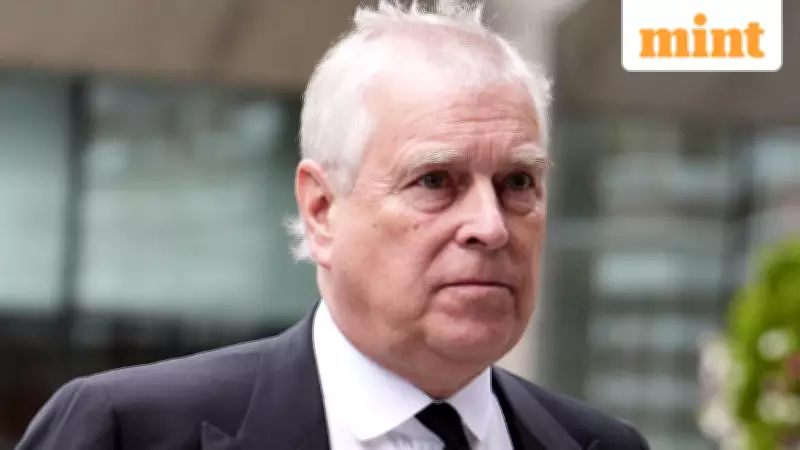
Prince Andrew's Buckingham Palace Invitation to Jeffrey Epstein Revealed in New Documents
Andrew Mountbatten-Windsor, the brother of King Charles III, has once again found himself embroiled in controversy following the release of new Jeffrey Epstein documents. The latest revelations indicate that Prince Andrew extended an invitation to the convicted sex offender to visit Buckingham Palace shortly after Epstein's release from house arrest in 2010.
Details of the Controversial Invitation
According to documents released by the US Justice Department, which include millions of new pages, Prince Andrew appeared to have invited Jeffrey Epstein to the royal residence in central London. The communication between the two individuals reveals a concerning level of familiarity and planning for private meetings.
In one message dated 27 September 2010, Epstein contacted Prince Andrew during a stay in London, writing: "What time would you like me... we will also need (to)... have private time." Andrew responded that he was just leaving Scotland, adding: "We could have dinner at Buckingham Palace and lots of privacy."

Further Communication and Arrangements
The documents show that Prince Andrew mentioned he could not join Epstein for lunch due to a commitment with a "Saudi Prince", but indicated he would be available later that day. Two days after the initial exchange, Andrew emailed again with more specific arrangements.
He wrote: "Delighted for you to come here to BP (Buckingham Palace). Come with whomever, and I'll be here free from 1600ish to 2000." Epstein responded simply: "See you at 4." It remains unclear whether any dinner or meeting at the palace actually took place.
Background and Context of the Relationship
Jeffrey Epstein had been released on probation from house arrest in August 2010 following his sentencing for procuring a girl below the age of 18 for prostitution. The timing of Prince Andrew's invitation, coming just weeks after Epstein's release, has raised significant questions about judgment and association.
Prince Andrew has consistently denied any wrongdoing related to his association with Epstein. However, last year, King Charles III stripped his brother of all royal titles and honors due to the ongoing controversy surrounding his ties to the convicted sex offender.
Broader Implications and Recent Developments
The release of these documents has reignited public anger in the United Kingdom over Prince Andrew's connections to Jeffrey Epstein. This follows previous document releases and a posthumous memoir by Epstein accuser Virginia Giuffre, who had accused Andrew of sexual assault.
The culmination of these revelations led to the king's decision to remove all of his brother's royal titles and announce that Andrew would be ousted from his 30-room mansion on the royal estate at Windsor, west of London.
Legal Settlements and Denials
Prince Andrew, now known by the surname Mountbatten-Windsor, has always denied that he sexually abused Virginia Giuffre, who alleged that she was trafficked to have sex with him on three occasions, twice when she was just 17 years old.
After Giuffre launched a lawsuit against him, Andrew paid her a multi-million-pound settlement in 2022 without making any admission of guilt. Tragically, Giuffre, a US and Australian citizen, died by suicide at her home in Australia in April.
Jeffrey Epstein himself died by suicide in jail in 2019, leaving many questions unanswered about his extensive network of powerful connections. The latest document releases continue to shed light on the relationships Epstein maintained with high-profile individuals around the world.
The Buckingham Palace invitation revelation adds another layer to the complex and troubling narrative surrounding Prince Andrew's association with Jeffrey Epstein, raising further questions about royal judgment and accountability in the face of serious criminal associations.