Punjab and Haryana CMs Forge Path to Resolution in SYL Canal Talks
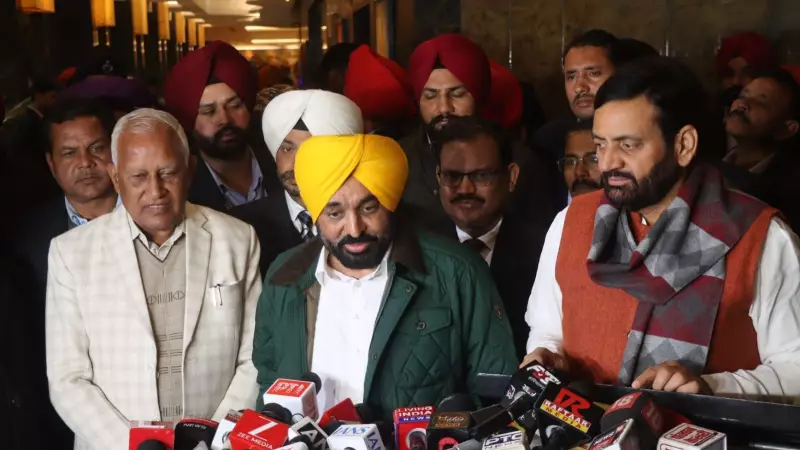
In a significant development aimed at defusing decades of tension, Punjab Chief Minister Bhagwant Mann and Haryana Chief Minister Nayab Singh Saini held a crucial meeting on the contentious Sutlej-Yamuna Link (SYL) canal issue in Chandigarh. While the high-level discussions remained inconclusive, both leaders announced a breakthrough agreement to escalate diplomatic efforts through regular official engagements.
Monthly Meetings and Brotherhood Diplomacy
The chief ministers revealed that officials from both states will now convene three to four times monthly to work toward a mutually acceptable solution. This structured approach marks a departure from previous stalemates and demonstrates renewed commitment to dialogue.
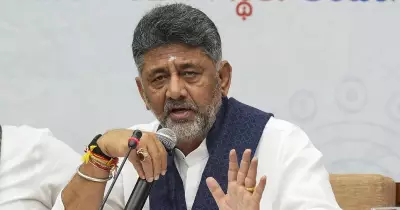
Addressing reporters after the hour-long meeting, CM Mann struck a conciliatory tone, emphasizing familial bonds over adversarial positions. "Haryana is our brother, and not an enemy," Mann declared, invoking the spirit of Bhai Kanhaiya, the historical Sikh figure known for serving water to both friends and foes during battle.

CM Saini echoed this sentiment, describing the discussions as "constructive" and conducted in a "cordial atmosphere." He emphasized that when dialogue occurs in such positive environments, meaningful outcomes naturally follow.
Historical Context and Water Rights Concerns
The SYL canal dispute has simmered between Punjab and Haryana since the 1980s, representing one of India's most persistent inter-state water conflicts. The Supreme Court's directive in May 2025 for both states to cooperate with the Centre for an amicable solution has added urgency to recent negotiations.
Mann articulated Punjab's fundamental position with striking clarity: "Punjab has no surplus water to share with any other state. Not even a single drop of Punjab's rightful water can be allowed to be taken away." He framed the SYL canal as an "emotive issue" for Punjab that could trigger serious law and order problems if imposed without consensus.
The Punjab CM presented detailed hydrological data to support his state's position:
- Out of 34.34 Million Acre Feet (MAF) of water from three rivers, Punjab receives only 14.22 MAF (40%)
- The remaining 60% is allocated to Haryana, Delhi, and Rajasthan despite these rivers not flowing through these states
- 115 of Punjab's 153 blocks have been declared over-exploited due to groundwater depletion
- Punjab currently has the highest groundwater extraction rate in India
Metaphors and Generational Perspectives
Mann employed vivid metaphors to illustrate his points, questioning the logic of canal construction without water availability: "What will you release in the canal? Will you release juice in the canal?" He emphasized that water assessment must precede any infrastructure development.
The Punjab leader also offered a generational perspective on the conflict, noting that "the new generation is here" to resolve what has traditionally been "an old issue." He drew parallels to traditional conflict resolution methods where elders would facilitate dialogue between divided families.
"There is no question of winning or losing," Mann asserted, "but the interests and emotions of Punjab and Punjabis cannot be ignored."
Spiritual Guidance and Practical Next Steps
Saini invoked spiritual wisdom during the discussions, referencing Guru Nanak Dev's teachings about water's sacred nature. "The Gurus' 'bani' are guiding us," he remarked, connecting contemporary water diplomacy to timeless spiritual principles.
Both leaders committed to practical implementation mechanisms:

- Regular meetings between irrigation department officers
- Detailed technical discussions to develop practical solutions
- Escalation of unresolved issues to chief ministerial level
- Protection of both states' legitimate rights and interests
Mann summarized the collaborative spirit: "We will sort this issue amicably. Rights of neither Punjab, nor of Haryana should be affected." He positioned Punjab as the "elder brother" in this relationship, committed to finding solutions through dialogue rather than confrontation.
The Supreme Court has scheduled further hearings on the SYL matter for April, adding judicial oversight to the political and administrative processes now underway. For the first time in recent history, both state governments are engaging in sustained, serious deliberations to resolve this decades-old dispute, potentially setting a precedent for inter-state water conflict resolution across India.