

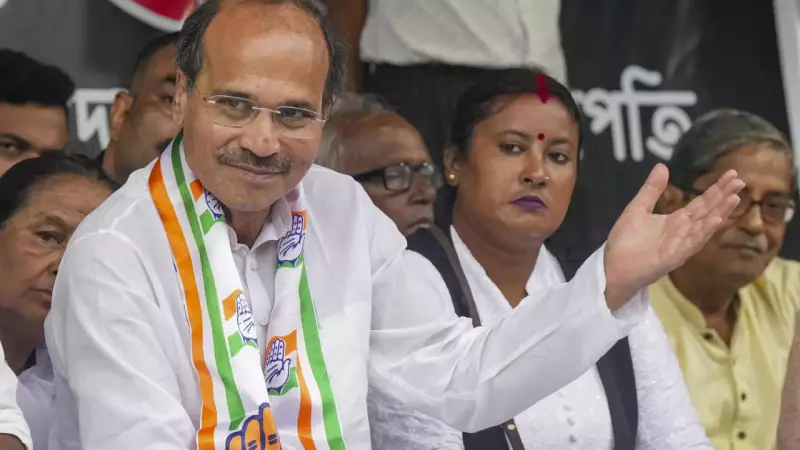
Prime Minister Narendra Modi held a significant meeting with senior Congress leader Adhir Ranjan Chowdhury in New Delhi on Tuesday. The discussion centered on the rising concerns over attacks targeting Bengali-speaking individuals, particularly in states governed by the Bharatiya Janata Party (BJP).
Congress Leader Seeks PM's Intervention
Adhir Ranjan Chowdhury, the former president of the West Bengal Congress, personally urged Prime Minister Modi to step in and help stop these assaults. He warned that such incidents have the potential to ignite serious communal tensions within West Bengal.
In a detailed letter submitted to the Prime Minister, Chowdhury outlined the core issue. He stated that the only "offence" of these individuals is speaking the Bengali language. This often leads local administrations to mistakenly label them as illegal immigrants from neighbouring Bangladesh, resulting in their treatment as infiltrators.

"It is ironical to note that administrative officers, including the police, do not differentiate between 'Banglabhasi' and 'Bangladeshi' people," Chowdhury emphasized in his communication. He added that innocent people are being jailed or sent to detention centres without committing any crime, leading to grave injustice.
Political Context and Downplaying the Meeting
This high-level interaction takes place against the crucial backdrop of West Bengal preparing for its next Assembly elections, which are scheduled for May 2026. The political landscape in the state is heating up, making any dialogue between national and state leaders particularly noteworthy.
However, Chowdhury was quick to downplay the political nature of his visit to the Prime Minister's residence. He insisted that the meeting was "not political" in character, framing it as a matter of urgent public concern rather than partisan strategy.
Amit Shah's Parallel Bengal Mission
While the Delhi meeting unfolded, Union Home Minister Amit Shah commenced a critical three-day visit to West Bengal. Shah's itinerary is packed with strategic closed-door meetings aimed at strengthening the BJP's position in the state.
His schedule includes back-to-back sessions with the party's Members of Legislative Assembly (MLAs) and Members of Parliament (MPs), as well as representatives from various civic bodies. Shah is also expected to meet with the top leadership of the Rashtriya Swayamsevak Sangh (RSS) in West Bengal, highlighting the organizational push ahead of the polls.
Since his arrival on Monday, the Home Minister has been actively reviewing the party's preparedness. He held a key meeting at the BJP's state office in Salt Lake, Kolkata, to take stock of the organizational machinery and electoral strategy.
The concurrent events—Modi's meeting in Delhi addressing regional linguistic concerns and Shah's ground-level political mobilization in Kolkata—underscore the intense focus on West Bengal as a major battleground state in Indian politics. The issue of identity and language, raised by Chowdhury, adds a complex socio-political layer to the upcoming electoral contest.






