Pathanapuram Assembly Elections: A Traditional Stronghold Faces Unprecedented Challenges
With less than ten days remaining until the crucial assembly elections in Kerala, the constituency of Pathanapuram is witnessing a political transformation. Long considered an impregnable fortress for five-time MLA and Kerala Congress B leader K B Ganesh Kumar, the seat is now showing clear signs of a genuinely competitive contest, driven by significant social and political undercurrents that could reshape the electoral landscape.
Historical Dominance and Shifting Margins
Kumar has demonstrated remarkable electoral resilience, retaining the Pathanapuram seat consistently despite switching political fronts. In the 2021 assembly elections, he secured a commanding 49.09% of the vote share, translating to 67,276 votes, to defeat Congress candidate Jyothikumar Chamakkala, who polled 52,940 votes (38.63%). The BJP's candidate, VS Jathin Dev, managed to secure 12,398 votes, representing approximately 9% of the total.
However, a deeper analysis reveals a gradual erosion in Kumar's victory margins over time. Back in 2016, he had bagged an impressive 74,429 votes, which constituted 52.39% of the total votes cast. The decline from 52.39% to 49.09% indicates a steady narrowing of his electoral advantage, setting the stage for a potentially tighter race in the current election cycle.

Strained Relations with Key Social Groups
A pivotal factor influencing this election is the visible and growing strain in Kumar's relationship with influential sections of the Nair Service Society (NSS). The NSS leadership recently took the dramatic step of dissolving the Pathanapuram taluk union, where Kumar had served as president. This decision followed a substantial revolt by a majority of committee members, fueled by prolonged internal dissent.
Criticism has centered on Kumar's leadership style and allegations concerning fund utilization within the union. While the NSS maintains an official stance of not dictating voting patterns to its members, its considerable organizational influence across parts of the constituency renders this internal rift politically significant, potentially swaying a segment of the electorate.
Equally consequential is the apparent straining of Kumar's ties with a section of the Christian community. His recent public remarks against former Chief Minister Oommen Chandy, a widely respected and revered figure among Kerala's Christian population, have drawn sharp criticism from both Congress workers and community leaders alike.
Congress Strategy: Leveraging Legacy and Grassroots Efforts
The Congress-led United Democratic Front (UDF) has astutely sought to capitalize on this sentiment. The party's campaign has actively invoked the enduring legacy of Oommen Chandy. His daughter, Maria Oommen, has visited the picturesque constituency to campaign vigorously for Congress candidate Jyothikumar Chamakkala.
In a further push to consolidate support, Chandy's youngest daughter, Achu Oommen, is also scheduled to visit Pathanapuram. These visits are a strategic attempt to tap into the deep-seated goodwill and emotional connection voters still hold for the late leader, aiming to translate that sentiment into electoral gains for the Congress.
Erosion of a Cross-Party Personal Vote Bank
Historically, Kumar's electoral strength has not been solely reliant on party machinery. It stemmed from a robust, cross-party personal vote base meticulously built during his earlier tenure with the UDF. Remarkably, a section of traditionally Congress-leaning voters continued to support him even after his political shift to the Left Democratic Front (LDF), which has been a cornerstone of his consistent victories.
However, ground reports and local feedback now suggest a potential recalibration. Voters from the NSS and Christian communities, who previously crossed traditional party lines to support Kumar, are reportedly showing signs of reverting to their original political alignments. Political analysts note that even a modest shift of 3-4% among these key demographic segments could significantly narrow the electoral gap, transforming the contest into one of the closest in the constituency's recent history.

Campaign Dynamics and Candidate Perception
Sensing a tangible opportunity, the UDF has significantly intensified its campaign in Pathanapuram. Party workers point to increased participation of voters linked to the NSS in their public meetings as a positive indicator. Nonetheless, the UDF's primary challenge remains converting this emerging sentiment into actual votes on election day.
Congress candidate Jyothikumar Chamakkala, despite spending the past few years diligently building a grassroots base in the constituency, is yet to generate the level of personal connection and widespread accessibility that voters associate with the incumbent, Ganesh Kumar. Several voters interviewed acknowledged that Chamakkala currently lacks the charisma and immediate recognizability of his rival, though many conceded that a strong, focused campaign in the final phase could alter the momentum.
The Peripheral Role of the NDA and Local Sentiments
The National Democratic Alliance (NDA), led by the BJP, continues to be a peripheral force in Pathanapuram. Its vote share has remained steady at 8-9%, and with limited organizational depth and ground-level penetration, it is unlikely to emerge as a decisive factor in this election. Local political observers note that any weakening of the UDF's position is more likely to directly benefit the incumbent, Kumar, rather than translate into substantial gains for the BJP, effectively keeping the contest a largely bipolar affair between the LDF and UDF.
Interestingly, local feedback also suggests that past personal controversies, including allegations made by Kumar's wife, are unlikely to significantly influence voting behavior in this election. Many voters indicated that such issues have long been factored into their overall perception of the leader and are viewed as personal matters rather than political disqualifications.
"The issue with Kumar's wife is his personal matter. These types of issues have emerged earlier also, but that didn't change voters' support for him. In fact, when we discuss polls with our friends, everybody says the recent issue wouldn't be very effective. Even if people decide to vote for Congress, it will be due to personal connection or other political reasons," stated Manju D., a local resident and social activist.
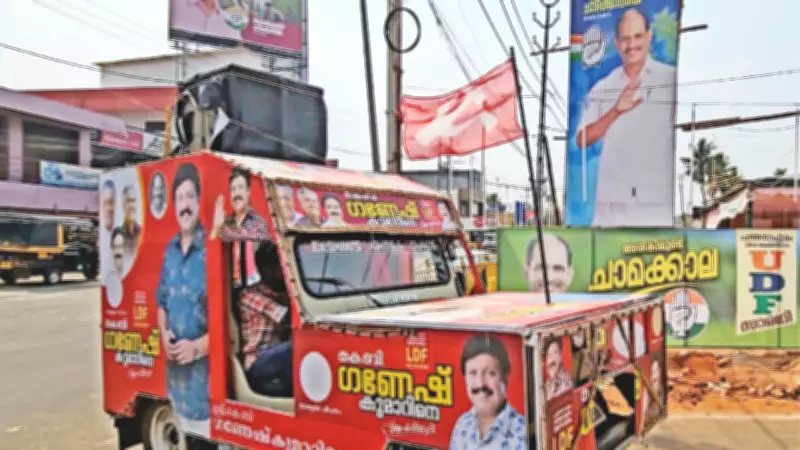
"Since 2001, Kumar has been campaigning in an open jeep and directly meeting people. This is what Congress candidate Jyothikumar is also trying to do now. The recent NSS issue and remarks on Oommen Chandy have certainly created a negative image, but that impact may be short-term. If Congress doesn't seize this opportunity with strong, sustained grassroots work, Ganesh Kumar will simply take the winning lap once again," added Nasser N., a businessman from Pathanapuram.
As the campaign enters its final, most critical phase, all eyes are on whether the social undercurrents and strategic campaigning will be enough to challenge the enduring political machinery and personal appeal of a seasoned incumbent in one of Kerala's most watched constituencies.