Nowgong Assembly Constituency: A Political Battleground in Assam's Heartland
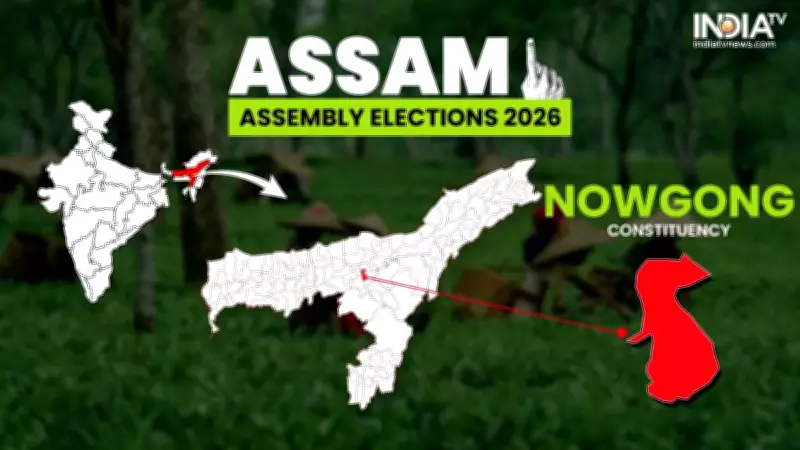
The Nowgong assembly constituency, situated in the Nagaon district of Assam, is gearing up for a high-stakes electoral contest in the 2026 state polls. This constituency has emerged as a significant political arena, reflecting the broader dynamics of Assam's vibrant democracy. With a diverse electorate and a history of competitive politics, Nowgong offers a microcosm of the state's evolving political landscape.
Historical Performance and Past Winners
An analysis of past election results reveals a shifting political allegiance in Nowgong. In the 2021 Assam Legislative Assembly election, the constituency was won by Rupak Sarma of the Bharatiya Janata Party (BJP). He secured a decisive victory, underscoring the party's growing influence in the region. Prior to this, the seat had seen representation from other major parties, including the Indian National Congress (INC), which held sway in earlier elections. The All India United Democratic Front (AIUDF) and the Asom Gana Parishad (AGP) have also been key contenders, making the constituency a multi-cornered fight.
Victory Margins and Electoral Trends
The victory margins in Nowgong have varied significantly over the years, indicating the constituency's competitive nature. In the 2021 polls, Rupak Sarma's win was marked by a substantial margin, highlighting the BJP's organizational strength and voter outreach. Earlier elections witnessed narrower margins, often reflecting close contests between the Congress and regional parties. This volatility suggests that voter preferences in Nowgong are dynamic, influenced by local issues, candidate appeal, and broader state-level political currents.

Key factors contributing to these trends include demographic shifts, economic development initiatives, and the impact of national policies on regional politics. The constituency's electorate, comprising various communities, often responds to promises of infrastructure development, employment opportunities, and social welfare schemes.
Party-Wise Dynamics and Candidate Strategies
As the 2026 elections approach, political parties are fine-tuning their strategies for Nowgong. The BJP aims to consolidate its hold, leveraging its incumbency advantage and highlighting governance achievements. The party is expected to focus on its development agenda and nationalistic appeals to retain voter support.
The Congress is working to regain lost ground, emphasizing local issues and criticizing the ruling party's performance. It may forge alliances or adjust its candidate selection to counter the BJP's dominance. The AIUDF and AGP, as regional players, are likely to position themselves as alternatives, catering to specific community interests and advocating for Assam's unique cultural and political identity.
Potential candidates from these parties are already engaging in grassroots campaigns, addressing concerns related to agriculture, education, healthcare, and flood management—critical issues in this part of Assam. The role of independent candidates cannot be overlooked, as they sometimes influence outcomes by splitting votes.
Broader Implications for Assam Politics
The Nowgong constituency's outcome in 2026 will have wider ramifications for Assam's political scene. A BJP victory could reinforce the party's dominance in the state, while a loss might signal shifting voter sentiments. For the opposition, a win here could provide a much-needed morale boost and strengthen their coalition efforts.
This election is also a test of how national parties balance local aspirations with broader ideological narratives. Issues such as immigration, cultural preservation, and economic growth are likely to dominate the discourse, making Nowgong a bellwether for Assam's future political direction.
In summary, the Nowgong assembly seat is poised for an intense electoral battle in 2026, with past winners, victory margins, and party strategies shaping the contest. As parties mobilize resources and voters weigh their options, this constituency will be a key indicator of Assam's political trajectory in the coming years.