Nitish Kumar Steps Down from Bihar Legislative Council, Triggering Leadership Transition Talks
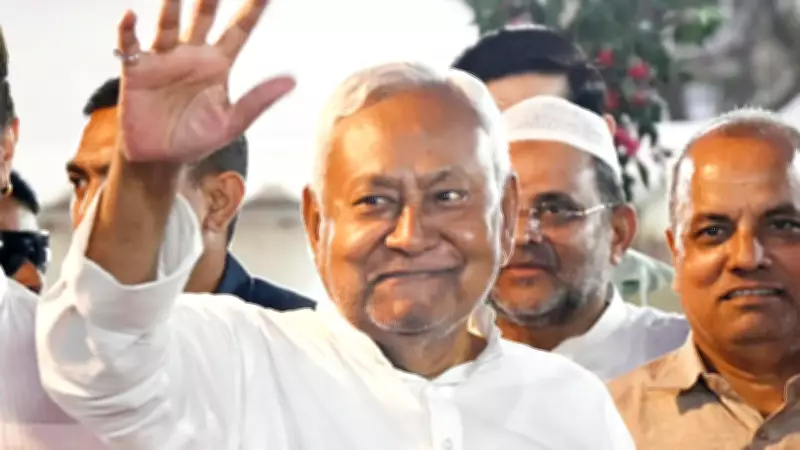
In a significant political development, Bihar Chief Minister and Janata Dal (United) president Nitish Kumar officially resigned from the Bihar Legislative Council on Monday. This move comes just days after he secured a position in the Rajya Sabha, effectively marking the conclusion of an influential era in the state's political landscape. The resignation has immediately ignited fresh rounds of speculation regarding an imminent change of guard for the state's highest executive office.
All political attention is now sharply focused on who will assume the mantle of leadership in Bihar, as both the JD(U) and its alliance partner, the Bharatiya Janata Party, are expected to maneuver strategically to gain the upper hand within the governing coalition. The announcement of a successor, however, may not be immediate, based on recent statements from JD(U) insiders.
Constitutional Window Provides Breathing Room
Senior leaders within the JD(U) have repeatedly referenced a specific constitutional provision that permits a chief minister to remain in office for up to six months without holding membership in either house of the state legislature. This six-month rule has become a central point of discussion in political circles, with close aides to the 75-year-old Nitish Kumar and senior ministers like Shravan Kumar making ambiguous remarks about this legal window, as reported by news agency PTI.

Although no official timeline or plan has been publicly disclosed, the consistent emphasis on this constitutional allowance has amplified conjecture that a carefully orchestrated leadership transition is underway. Sources within the National Democratic Alliance suggest that Nitish Kumar is unlikely to occupy the chief minister's chair for the entire six-month duration. There is additional talk that he might transition to the Rajya Sabha as early as next month, a step that could facilitate a smoother handover of power.
Timing Influenced by Hindu Calendar Period
Insiders familiar with the deliberations indicate that any formal change in leadership is likely to occur only after 'Kharmaas,' an inauspicious period in the Hindu calendar that concludes on April 14. This astrological timing is considered a crucial factor in determining the exact moment when the baton will be passed to the next chief minister, highlighting the cultural nuances embedded in Bihar's political decision-making.
BJP Seizes Opportunity for Long-Awaited Leadership Role
These unfolding developments have energized the BJP, which perceives a genuine opportunity to install its own chief minister in Bihar for the first time, despite being a part of the ruling coalition for nearly two decades. With the JD(U) holding only a marginal numerical advantage, the BJP is reportedly evaluating its options with considerable caution and strategic foresight.
Deputy Chief Minister Samrat Choudhary emerges as a prominent frontrunner in the succession race. Currently holding the home portfolio, Choudhary is a Koeri leader who could potentially succeed Nitish Kumar, a Kurmi face, thereby maintaining the critical Kurmi-Koeri caste equation that is vital in Bihar's electoral politics. His elevation might enable the BJP to consolidate support among a significant Other Backward Class group and counteract perceptions of the party being predominantly upper-caste-centric.
However, some factions within the BJP point to Choudhary's relatively recent entry into the party in 2017, following previous stints with the Rashtriya Janata Dal and JD(U), as a factor that could impact his acceptability among certain sections of the organization.
Union Minister of State for Home Nityanand Rai is another key contender. A former state BJP president, Rai is viewed as having robust backing from the party's central leadership, which could play a decisive role in the final selection.
Central Leadership Expected to Make Final Decision
Party sources communicating with PTI indicate that while the BJP legislative party will formally elect its leader, the ultimate decision is anticipated to be made by the central leadership in Delhi. They cite precedents from states like Rajasthan, where leadership choices were finalized at the central level before being announced locally.

Amid the swirling speculation, JD(U) leaders maintain that their party will seek an equitable share in the new cabinet should a leadership change materialize. There is also growing buzz that Nitish Kumar's son, Nishant Kumar, who recently entered active politics, could be considered for a significant role, possibly as deputy chief minister, adding another layer to the complex political calculus.