Nitish Kumar Steps Down as Bihar Chief Minister Following Rajya Sabha Election
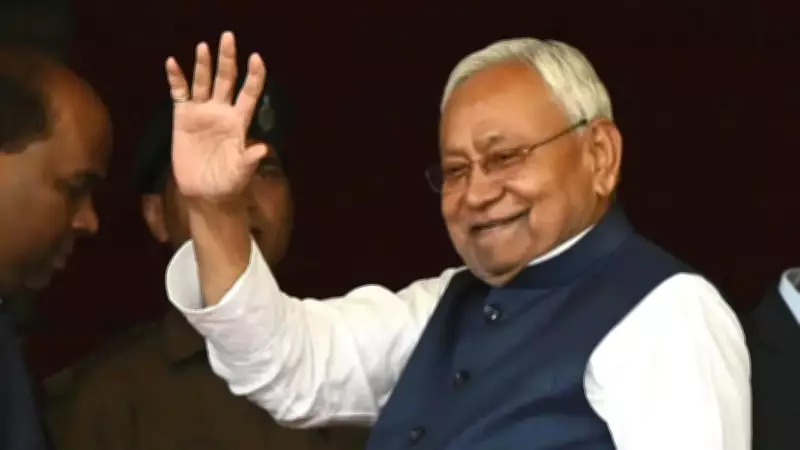
In a significant political development, Janata Dal (United) supremo Nitish Kumar tendered his resignation as the chief minister of Bihar on Tuesday. This move comes just days after he was elected to the Rajya Sabha, fulfilling a long-standing personal ambition to serve in all four legislative bodies of India.
Resignation and Transition Process
Nitish Kumar announced his resignation through a social media post on X, stating that the decision had been pre-planned. "We had decided that I would now leave the post of chief minister, and therefore, after today's cabinet meeting, I met the Governor and submitted my resignation to him," he said. The outgoing chief minister held his final cabinet meeting at the Bihar secretariat, where he recommended the dissolution of his cabinet before formally resigning to Governor Syed Ata Hasnain.
In his statement, Kumar emphasized his continued support for the state's administration. "The new government will have my full cooperation and guidance. Even ahead, a lot of very good work will be done, and Bihar will advance a great deal," he added, signaling a smooth transition of power.

Political Background and Succession Speculation
Nitish Kumar's political career in Bihar has been marked by longevity and strategic alliances. He first became chief minister in March 2000 for a brief eight-day term, then returned in November 2005 and has held the position almost continuously since—despite several shifts in political alignments. The only interruption was between May 2014 and February 2015, when Jitan Ram Manjhi briefly served as chief minister.
With Kumar's resignation, attention now turns to his successor. JD(U) leaders indicated that the identity of the next chief minister will be revealed soon, with Union minister Shivraj Singh Chouhan expected to oversee the transition in Patna. Deputy chief minister Samrat Choudhary, who holds the home portfolio and is a former state BJP president, is considered a front-runner. However, BJP insiders caution that a surprise candidate—similar to recent appointments in Rajasthan, Delhi, and Madhya Pradesh—remains a possibility at the discretion of the party's central leadership.
NDA's Strong Position and Government Formation
The National Democratic Alliance (NDA) commands a robust majority in the Bihar Legislative Assembly, which facilitates a stable government formation. In the 2025 assembly elections, the NDA secured a landslide victory, winning 202 seats in the 243-member house. The BJP holds 89 seats, followed by JD(U) with 85, while allies such as LJP(RV), HAM, and RLM contribute the remaining seats.
To formalize the new administration, all NDA legislators are scheduled to meet at the Central Hall of the state assembly. After a declaration of support from all coalition partners, the governor will be approached to initiate the formation of the new government. This process underscores the NDA's cohesive strategy in maintaining governance continuity in Bihar.
Implications for Bihar's Political Landscape
Nitish Kumar's resignation marks the end of an era in Bihar politics, characterized by his influential leadership and frequent realignments. His election to the Rajya Sabha represents a personal milestone, as he has now served in the Bihar Legislative Assembly, Bihar Legislative Council, Lok Sabha, and Rajya Sabha. As the state prepares for a new chief minister, Kumar's pledge of cooperation suggests a collaborative approach within the NDA, aimed at advancing Bihar's development agenda. The coming days will be crucial in determining the leadership and direction of the state's future governance.