The Surge of Micro Parties in Tamil Nadu's Electoral Landscape
As Tamil Nadu gears up for its state polls, the contest is often described as a three-cornered fight among major political players. However, a closer look at Chennai's constituencies reveals a different story: a crowded ballot with nearly 30 micro parties vying for attention. These small entities are not in the race with expectations of victory; instead, they are strategically pursuing visibility, bargaining power, and future relevance in the political arena.
A Catalogue of Candidates in Key Constituencies
From Perambur to Kolathur and Velachery, the election lists are packed with names that often exist more on affidavit papers than in the public consciousness. In Perambur, which has gained high-profile attention due to TVK's Vijay contesting, the ballot reads like an extensive catalogue. It includes parties such as Thakkam Katchi, Makkalatchi Katchi, Makkal Murasu Katchi, Makkal Nalvaazhvuk Katchi, Tamilnadu Mahatma Gandhi Makkal Katchi, All India Jananayaka Makkal Kazhagam, Republican Party of India (Athawale), and Tamil Telugu National Party.
Similarly, in Kolathur, where Chief Minister M K Stalin is a candidate, the ballot is equally congested. Despite the long lists, the actual contest for seats remains dominated by the major parties, leaving these micro players as mere fillers.

Historical Context and Unchanged Strategies
This phenomenon is not new. Most of these micro parties were also present in the 2024 Lok Sabha elections, where they made minimal impact. Yet, they have returned unchanged in structure but undeterred in their intent. For voters, these parties often represent filler names and symbols that are quickly scrolled past on Electronic Voting Machines (EVMs). For the candidates, however, this is a calculated strategy to accumulate just enough votes to negotiate with larger parties in the future.
Grassroots Campaigns and Single-Issue Agendas
In Perambur, M Geeta, a 40-year-old BCom graduate, is contesting on the ticket of Thakkam Katchi, an NGO-turned-political party. Her campaign is modest, relying primarily on pamphlets and door-to-door visits. "We do not accept donations above 5,000," she states, emphasizing a commitment to grassroots support. "People must start thinking that big parties are not solving their issues." Her approach reflects a broader desire among micro parties to position themselves as alternatives to established political forces.
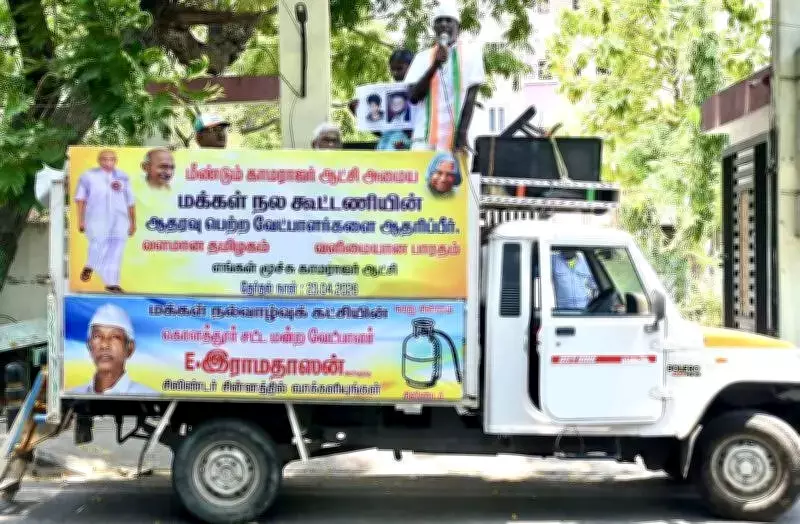
In Kolathur, E Raamadasan, 73, of Makkal Nalvaazhvuk Katchi, is driven by a single-point agenda: fighting for justice for the mothers of students Harisakthi and Harish, who were murdered in 2025 in Mayiladuthurai district after exposing illicit liquor activities. "The government promised the family support and then denied it. I want to expose DMK government's corruption and publicity-driven governance," he asserts, highlighting how micro parties often focus on specific, localized issues to garner support.
Another candidate in Kolathur, K Elumalai of Veerath Thiyagi Viswanathadoss Thozhilalarkal Katchi, registered in 2021, is more direct about his goals. "Our aim is to gain votes so we can ask for seats in big parties and represent our community," he explains, underscoring the bargaining power strategy that many of these parties employ.
Broader Ideological Pitches
From Velachery, Poyyamozhi M of Proutist Sarva Samaj advocates for an economic overhaul in the country. "We are an alternative to capitalism and communism," he pitches, showcasing how some micro parties aim to present broader ideological alternatives, even if their immediate impact is limited.
The Ultimate Question: Are People Noticing?
In the end, these micro parties are contesting to be noticed, but the critical question remains: are the people actually paying attention? With voters often focused on major contenders, the visibility these parties seek may be elusive. Yet, their persistence indicates a belief that even minimal recognition can translate into future relevance and influence in Tamil Nadu's dynamic political landscape.