Kerala Elections Sideline Middle East War Impact Unlike 1991 Gulf Conflict
As Kerala heads to the polling booths, the ongoing war in the Middle East involving the US, Israel, and Iran casts a significant shadow over the state. However, in a stark contrast to the 1991 Gulf War, mainstream political parties are showing a marked reluctance to make this conflict a central campaign issue. This hesitation persists despite the war's far-reaching consequences, which are being felt in much broader dimensions today.
Widespread Consequences for Kerala
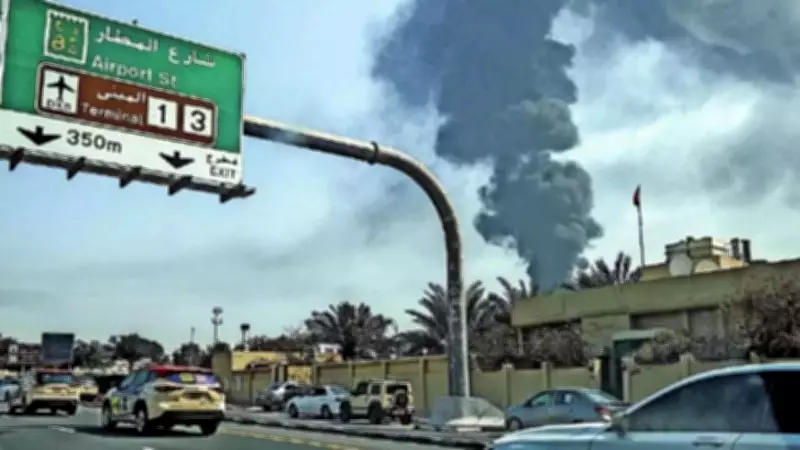
The current conflict has severely disrupted fuel supplies and raised critical questions about the safety and security of millions of Keralites working across several nations in the Gulf region. Unlike in 1991, when concerns were largely confined to Kuwait, the impact now extends to multiple countries where Malayali expatriates reside. This broader threat underscores the war's direct relevance to Kerala's remittance-dependent economy and social fabric.
The 1991 Gulf War as a Political Catalyst
In 1991, the Communist Party of India (Marxist) leader EMS Namboothiripad transformed the Gulf War into a major electoral focus during district council elections. His provocative slogan, "We are with Saddam (Hussein), are you?", captivated voters and made a war thousands of kilometers away a local election issue. Many in Kerala today might be surprised by how effectively this international conflict was leveraged politically.

Some CPM insiders at the time expressed doubts about the wisdom of adopting a pro-Saddam stance. They feared backlash from the thousands of Keralites in Kuwait and their families back home. However, EMS remained steadfast, arguing that Kerala's strong anti-imperialist, anti-US sentiment would translate into electoral gains. His strategy proved successful, with the Left Democratic Front (LDF) winning 13 out of 14 district councils, a victory partly attributed to this pro-Saddam posture, particularly in northern Kerala.
Expert Analysis of the 1991 Victory
Former Chief Secretary S M Vijayanand offers a nuanced perspective on the LDF's 1991 landslide. He suggests that the anti-US stance was not the sole factor. "The government in power then, led by E K Nayanar, had a clean image and was very popular. This contributed significantly to the LDF victory, at least in the southern districts," Vijayanand explained, highlighting the role of domestic governance alongside international posturing.
Current Political Caution and Changing Dynamics
Despite the Middle East situation's potential to influence Kerala's political climate, leaders of mainstream parties appear apprehensive about making the US-Israel attacks on Iran a campaign issue this election cycle. The war presents a complex scenario, with Iran targeting many Gulf Cooperation Council countries where Keralites work. A vehement pro-Iran stand could alienate some migrant workers and their families, posing electoral risks.
Experts point to internal shifts in Kerala that are restraining parties from taking aggressive positions. A Left thinker noted, "Like elsewhere, Kerala's rising middle class has no qualms about publicly supporting Israel or the US. The anti-imperialist trend has drastically waned since 1991. There is a significant political shift towards the Right, with the BJP garnering at least 15% of the vote. Parties are devising strategies to reconcile with these changes rather than confront them, choosing to sideline the war from poll debates."
Strategic Silence in a Transformed Landscape
The political calculus in Kerala has evolved dramatically over three decades. While the 1991 Gulf War was weaponized for electoral gain, the current conflict is met with strategic silence. This reflects not only the complexities of the war itself but also profound changes in Kerala's socio-political milieu, where global alignments and domestic priorities intersect in new ways.