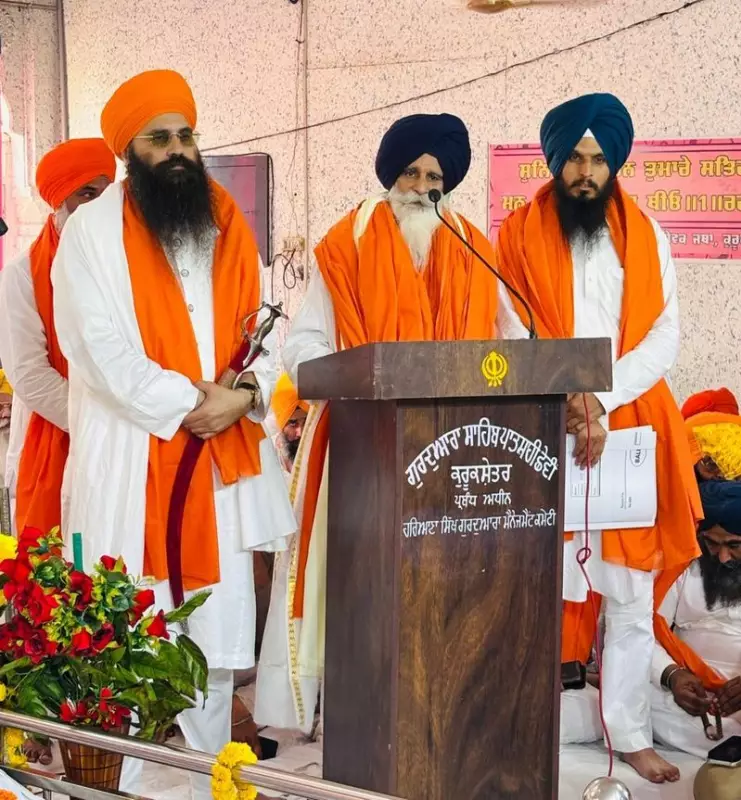
The Haryana Sikh Gurdwara Management Committee (HSGMC), a crucial body responsible for overseeing Sikh religious places in the state, has been rendered virtually dysfunctional due to intense internal feuds and a relentless struggle for control. This paralysis has stalled all development projects and public welfare initiatives under its purview, leaving the community in a lurch.
A Committee Divided: The Roots of the Stalemate
The core of the crisis lies in a deep-seated power struggle between two dominant factions within the committee. For an extended period, these groups have been locked in a conflict, primarily over control and influence, which has completely disrupted the panel's administrative machinery. The situation has deteriorated to such an extent that no meetings have been conducted for several months, and all developmental work has come to a grinding halt.
Sources within the committee reveal that the infighting is not new but has escalated recently, preventing any consensus on even routine operational matters. The absence of collaborative decision-making has effectively frozen the committee's bank accounts, as signatures from opposing factions are required and are not forthcoming. This financial deadlock directly impacts the maintenance of gurdwaras and the execution of community services.
Consequences of the Political Impasse
The operational paralysis has severe practical repercussions. Important construction and repair projects for gurdwara buildings across Haryana are suspended indefinitely. Schemes meant for public welfare and community support, a key part of the committee's mandate, cannot be implemented. The administrative logjam also raises concerns about the proper management of religious offerings and funds, potentially affecting the sanctity and financial health of these institutions.
This internal collapse occurs despite the HSGMC holding the legal and moral authority to manage Sikh shrines in the state. The committee's inability to function not only neglects its duties but also fosters disillusionment among the Sikh community in Haryana, which relies on this body for religious and charitable governance.
A Call for Resolution and Future Implications
The ongoing crisis highlights a significant failure in the governance of a major religious institution. Stakeholders and community elders are increasingly vocal about the need for a swift resolution. There is a growing demand for intervention, either through internal reconciliation mediated by respected figures or through external mechanisms that can break the deadlock.
The prolonged dysfunction of the HSGMC sets a worrying precedent. It underscores how internal politics and personal ambitions can undermine the core objectives of a religious administrative body. The stalemate serves as a critical case study on the necessity of robust governance frameworks and conflict-resolution protocols within such committees to prevent them from being hijacked by factional interests.
Until the warring factions find common ground or a higher authority steps in to enforce functionality, the Haryana Sikh Gurdwara Management Committee remains a panel in name only, its potential for service crippled by the very leaders elected to steer it.