Visakhapatnam's GVMC to Transition to Special Officer Rule as Council Term Ends
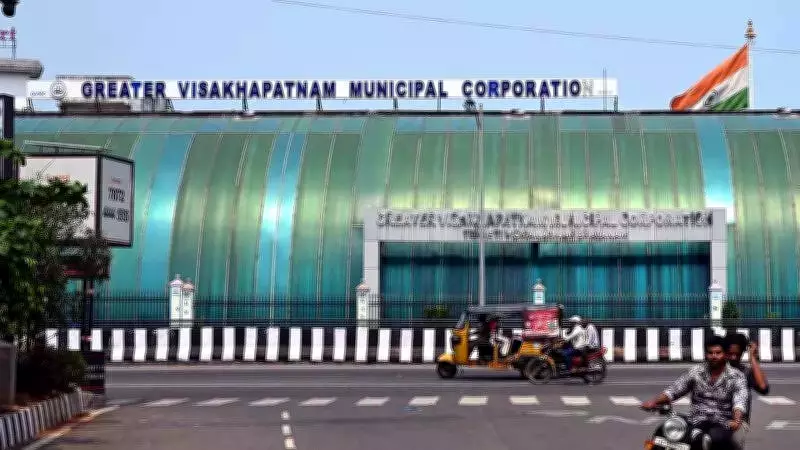
The Greater Visakhapatnam Municipal Corporation, the largest civic body in Andhra Pradesh, is set to come under special officer rule starting March 18, following the expiration of its current council's term on March 17. In an official order, the state government has appointed the district collector of Visakhapatnam as the special officer for GVMC, effective in the absence of an elected council.
Election Delays and Future Prospects
With little to no likelihood of elections being held in the immediate future, the special officer regime is anticipated to persist for several months, potentially extending to several years. During the council's final meeting on February 28, numerous corporators urged the civic body to pass a resolution requesting the state government to conduct elections at the earliest. However, the government has provided no clear indications regarding the immediate conduct of civic polls.
Local legislators from the ruling alliance have proposed incorporating villages from mandals such as Anandapuram, Pendurthi, Bheemunipatnam, and Padmanabham into the municipal corporation. These areas are experiencing rapid urbanization driven by upcoming IT projects, premium hotels, tourism infrastructure, and aviation-related developments. MLAs argue that these regions have transformed into densely populated suburban zones requiring urban-level civic services.

One proposal under discussion suggests that GVMC elections may only be held after the next census and delimitation exercise, expected around 2027, potentially pushing the elections to 2028. The last GVMC elections were conducted in 2021, after the corporation had been under special officer rule for nearly nine years.
Council Performance and Development Initiatives
GVMC deputy mayor Dalli Govinda Raju expressed satisfaction with the development initiatives undertaken during the council's tenure. He highlighted that in Gajuwaka alone, development works worth approximately Rs 250 crore have been initiated since the NDA government came to power in 2024. With support from local MLA Palla Srinivasa Rao, projects such as improved street lighting, new roads, and reconstruction of drainage systems have been implemented. Raju noted that several additional works are scheduled to launch in the coming week before the term ends.
Concerns Over Financial Autonomy and Governance
Opposition corporators have raised significant concerns regarding the corporation's financial autonomy. CPM corporator Dr. B. Ganga Rao alleged that successive administrations have functioned largely as extensions of their respective state governments. He claimed that nearly Rs 1,400 crore of GVMC funds have been diverted by the state government, with the corporation not reimbursed for expenses incurred during various government events in Visakhapatnam.
According to Dr. Rao, if GVMC maintains greater financial autonomy and fiscal discipline, the city could experience faster development and potential reductions in property and water taxes due to improved revenue inflows.
Jana Sena corporator P. Murthy Yadav criticized the present council for failing to undertake any major or landmark projects for the city during its five-year tenure. He emphasized that since most residents of Visakhapatnam belong to middle-income and economically weaker sections, there was greater scope to strengthen basic infrastructure in the wards. Yadav argued that more could have been done to improve civic amenities and local infrastructure.
Public Debate on Governance Models
The impending return to special officer rule has sparked public debate on the performance of the elected council over the past five years compared to the earlier nine-year administrative rule. Some residents contend that an elected council ensures grassroots issues are brought forward through local corporators, while others believe that governance under a special officer enables the municipal administration to pursue a more focused long-term vision.