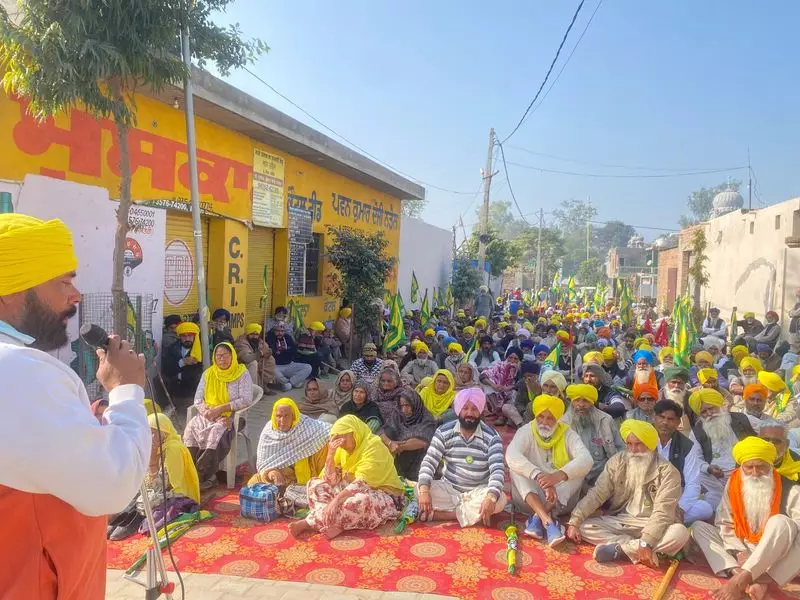
Tensions flared in Haryana's Fatehabad district as a group of local farmers staged a vehement protest against a court-mandated land auction. The demonstration escalated dramatically when the agitated protesters briefly held a government official, the Naib Tehsildar, captive. The incident, which unfolded on a tense Monday, underscores the deepening rift between the farming community and authorities over land ownership issues.
The Flashpoint: A Court-Ordered Land Auction
The core of the conflict lies in a land parcel scheduled for auction by court orders. Farmers, who claim ownership and have been cultivating the said land for an extended period, viewed the impending auction as a direct threat to their livelihood. They argued that the legal proceedings did not adequately consider their long-standing possession and rights over the agricultural plot.
On the day of the planned auction, a large contingent of farmers gathered at the site to block the process. Their primary demand was the immediate cancellation of the auction. The situation grew increasingly volatile as officials, including Naib Tehsildar Krishan Kumar, arrived to execute the court's directive. The farmers, firm in their resolve, surrounded the officials, leading to a standoff.

Escalation and Brief Captivity of Official
The protest took a serious turn when the farmers detained Naib Tehsildar Krishan Kumar. He was held against his will for a short period as the protesters voiced their grievances. This act of holding a government official captive brought the administration's attention squarely to the incident.
Upon receiving information, senior police and administrative officials rushed to the spot to negotiate and defuse the crisis. After talks, the farmers released the Naib Tehsildar. Following the release, a formal complaint was lodged by the authorities. Based on this complaint, the police have registered a case against the involved farmers.
The case has been filed under relevant sections of the Indian Penal Code (IPC), addressing unlawful assembly and wrongful restraint. This legal action marks a significant development, turning the protest into a matter of criminal investigation.
Aftermath and Lingering Agrarian Unrest
The Fatehabad incident is not an isolated event but a symptom of wider agrarian discontent in the region. Land disputes, often entangled in lengthy legal battles, frequently culminate in such direct confrontations. Farmers feel cornered by legal and administrative mechanisms they perceive as biased or unresponsive to their traditional claims.
The brief captivity of the Naib Tehsildar highlights the level of desperation and frustration among the cultivators. While the immediate crisis was resolved without physical harm, it has left the underlying issue of the land auction unresolved. The registered police case adds another layer of complexity, potentially prolonging the conflict between the farming community and the state machinery.
This protest serves as a stark reminder of the volatile nature of land-related issues in rural India. It calls for a nuanced approach from both the judiciary and the administration to address the root causes of such disputes, balancing legal decrees with socio-economic realities on the ground. The eyes of Fatehabad remain on the next steps, both in the legal case against the farmers and the fate of the contested land.