DK Shivakumar Addresses Davanagere Sabotage Controversy
Karnataka Deputy Chief Minister DK Shivakumar has publicly responded to the escalating Davanagere sabotage row, asserting that he is being unfairly blamed for recent disciplinary actions against Congress leaders. In a statement, Shivakumar clarified that he acted strictly on the party's directive, not on personal initiative.
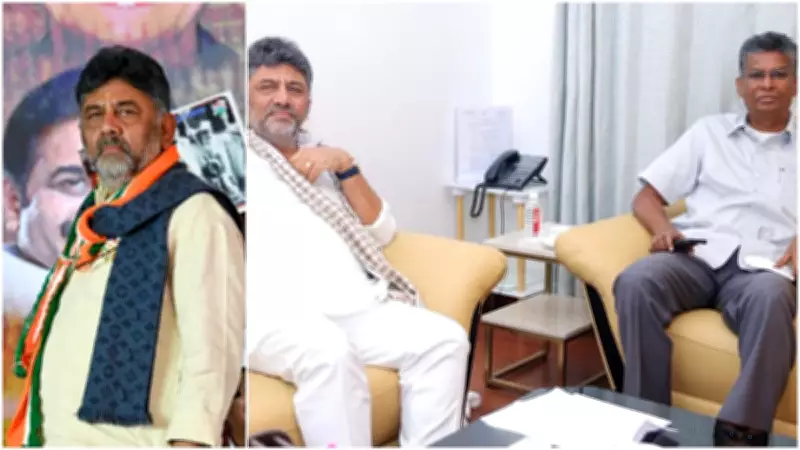
Meeting with Public Works Minister Satish Jarkiholi
Shivakumar met with Public Works Minister Satish Jarkiholi at the Kumarapark government residence in Bengaluru to discuss the Congress party's recent decisions. The meeting focused on the suspension of MLC Abdul Jabbar for alleged anti-party activities and the removal of another MLC, Naseer Ahmed, from his position as the chief minister's political secretary.
Shivakumar emphasized that these actions were part of the party's internal disciplinary measures, aimed at maintaining unity and discipline within the Congress ranks in Karnataka. He stated, "I am being blamed, but I acted on the party's directive. These steps were necessary to uphold party principles and ensure loyalty among members."

Background of the Davanagere Sabotage Row
The controversy stems from allegations of sabotage during recent political activities in the Davanagere region, which has led to internal strife within the Congress party. Key points include:
- The suspension of MLC Abdul Jabbar, accused of engaging in activities detrimental to the party's interests.
- The sacking of MLC Naseer Ahmed from his role as political secretary to the chief minister, following similar allegations.
- Ongoing discussions within the party leadership to address disciplinary issues and prevent future incidents.
Shivakumar's defense highlights the tension between individual accountability and party directives in political decision-making. He reiterated that the actions were taken after thorough deliberation by the party's high command, and he merely executed their orders.
Political Implications and Reactions
This development has sparked debates within Karnataka's political circles, with observers noting:
- The potential impact on Congress's internal cohesion ahead of upcoming elections.
- Questions about the transparency and fairness of disciplinary processes within political parties.
- The role of senior leaders like Shivakumar in enforcing party discipline while managing public perception.
Shivakumar's meeting with Satish Jarkiholi is seen as an effort to present a united front and address concerns within the party. Both leaders are expected to continue discussions to mitigate fallout from the Davanagere row and reinforce party solidarity.
As the situation evolves, stakeholders are closely monitoring how the Congress handles internal dissent and maintains its political strategy in Karnataka. Shivakumar's statements aim to deflect personal criticism and reaffirm his commitment to party directives, underscoring the complex dynamics of state politics.