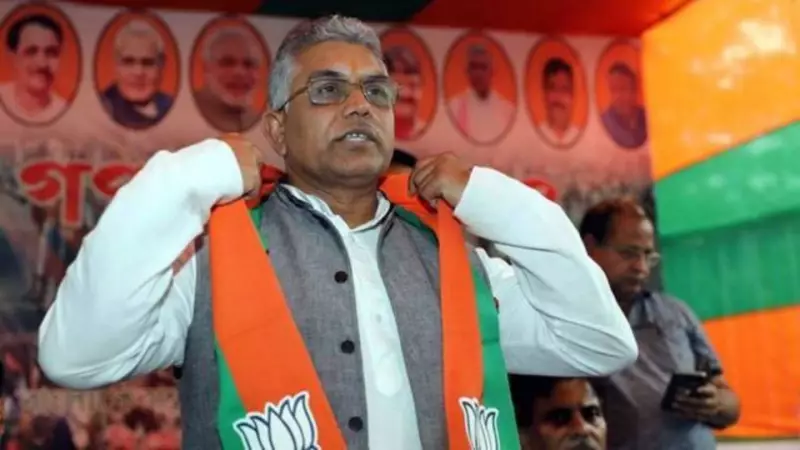
In a significant political move, the Bharatiya Janata Party (BJP) has reinstated its former West Bengal president, the firebrand leader Dilip Ghosh, into a central role for the upcoming state Assembly elections. This decision, coming more than eight months after he was sidelined for meeting Chief Minister Mamata Banerjee, marks a strategic shift as the party aims to present a united front.
The Comeback: A Directive from the Top
On December 31, 2025, Union Home Minister Amit Shah instructed a quartet of Bengal BJP leaders, including Ghosh, to set aside internal differences and lead the party's electioneering. This directive was a clear signal from the central leadership to end the factional feuds that have plagued the state unit. A day later, on January 1, 2026, Ghosh met with the current state BJP chief, Samik Bhattacharya, to chart out his campaign strategy.
Ghosh's reactivation is seen as one of the most crucial decisions by the BJP's high command recently. It is aimed at sending a strong message of unity to party workers and signals the intent to launch a "no-holds-barred" campaign, leveraging Ghosh's reputation as a combative and popular leader. He is scheduled to begin participating in rallies from January 6, 2026.
Why Ghosh? Grassroots Connect and Electoral Pedigree
According to senior BJP leaders, both from Delhi and West Bengal, several factors necessitated Ghosh's return. His deep grassroots-level connection, statewide popularity, and famously aggressive campaign style are considered vital assets. A senior Delhi-based leader emphasized that while national figures like PM Narendra Modi and Amit Shah campaign, it is local leaders like Ghosh who play the crucial on-ground role during polls.
Ghosh's electoral track record is notable. Under his presidency, the BJP's fortunes in Bengal saw a meteoric rise:
- The party won a record 18 Lok Sabha seats in 2019 (out of 42).
- It secured 77 Assembly seats in the 2021 state polls (out of 294).
- The vote share skyrocketed from 10.16% in 2016 to over 40% in 2019 and 2021.
Despite a dip to 12 Lok Sabha seats in 2024, the party maintained a vote share of nearly 40%. A state leader acknowledged, "The BJP grew when Ghosh was the state president."
The Road to Sidelines and the Path Back
Ghosh's downfall began after the BJP's 2021 Assembly performance, which fell short of ousting the TMC. Amid internal bickering, he was replaced as state president by Sukanta Majumdar. His isolation deepened after he visited the Jagannath Temple in Digha on April 30, 2025, and briefly met Mamata Banerjee. Subsequently, he was absent from major BJP events, including rallies addressed by the Prime Minister.
The current Bengal BJP leadership is seen as resting on three pillars: State President Samik Bhattacharya, Leader of Opposition Suvendu Adhikari, and former president Sukanta Majumdar. By bringing Ghosh into the fold, the central leadership has made it clear that all four must work in cohesion for any chance of victory. The big question remains: Can the party move past the factional feuds that have hampered its growth?
Opposition Dismissal and Internal Acceptance
The Trinamool Congress (TMC) and the Left have downplayed the significance of Ghosh's return. TMC state secretary Kunal Ghosh sarcastically remarked that Ghosh's comeback was a "blessing of Digha's Lord Jagannath" and suggested he should offer prayers there again. CPI(M) leader Shatarup Ghosh dismissed it as non-news, stating a BJP leader had simply re-joined his own party.
However, within the BJP, there is an acknowledgment of his utility. A Delhi leader stated, "He is a firebrand leader who sometimes created controversies... But yet we need such leaders when we are tackling the terror of the TMC at the grassroots level." The party hopes that Ghosh's reactivation will not just boost morale but also translate into a consolidated and aggressive campaign as it prepares for the high-stakes 2026 West Bengal Assembly elections.