Dalit Villagers Forced to Cremate Elderly Woman on Public Road in Bihar
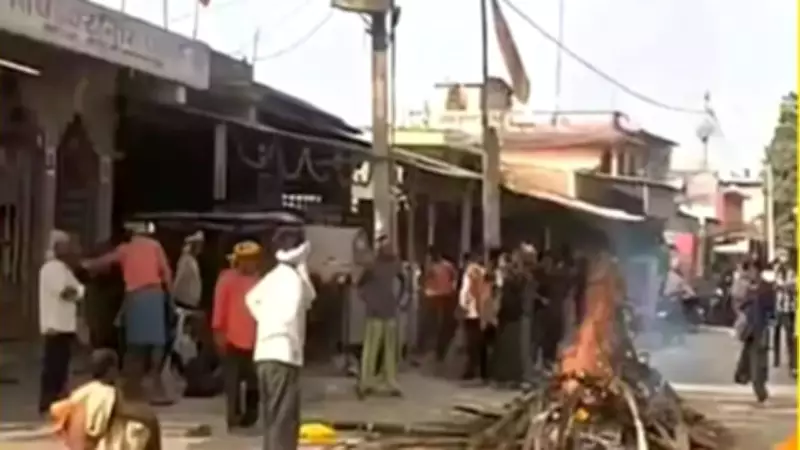
In a distressing incident that highlights persistent caste-based discrimination, Dalit villagers in Bihar's Vaishali district were compelled to cremate a 91-year-old woman on a public road after allegedly being barred from accessing the local cremation ground. The incident occurred in Sondho-Vashudeo village under the Goraul police station area, sparking significant community tensions and leading to an official inquiry being launched by authorities.
Funeral Procession Allegedly Blocked by Influential Villagers
According to detailed accounts from villagers and police officials, the funeral procession of Jhapsi Devi was proceeding toward the designated cremation ground on Thursday when they were reportedly stopped by some "influential" villagers from the area. Jhapsi Devi had passed away late Wednesday, and her family members were following traditional funeral customs when they encountered this unexpected obstruction.
Enraged by this denial of basic funeral rights, the grieving villagers made the difficult decision to carry the elderly woman's body to the middle of the public road and conduct the cremation ceremony there in full public view. Witnesses reported that Vedic rituals were chanted during the improvised roadside cremation, adding a layer of religious solemnity to the otherwise chaotic and distressing scene.

Family Members Express Helplessness and Despair
Sanjeet Manjhi, the son of the deceased woman, expressed the family's profound helplessness in the situation. "When we were not allowed to proceed to the cremation site, fellow villagers suggested we should conduct the cremation right here on the road itself," Sanjeet explained, highlighting the limited options available to the marginalized community.
Another villager, 67-year-old Mewalal Manjhi, who participated in the funeral procession, voiced even deeper despair about the systemic discrimination faced by Dalit communities. "We are poor people with no proper houses and no land of our own. Now, we are being denied even the basic right to cremate our deceased family members with dignity," Mewalal lamented, questioning the fundamental humanity of such exclusionary practices.
Broader Implications and Official Response
This incident has brought renewed attention to the ongoing challenges faced by Dalit communities in accessing public facilities and exercising their basic rights in various parts of India. The public road cremation has not only caused significant local tensions but has also raised serious questions about the implementation of anti-discrimination laws and social justice measures in rural Bihar.
Local authorities have confirmed that an inquiry has been initiated to investigate the circumstances that led to this extraordinary situation. Police officials are examining whether there was indeed deliberate obstruction of the funeral procession and what factors contributed to the villagers feeling they had no alternative but to conduct the cremation on a public thoroughfare.
The incident serves as a stark reminder of the social hierarchies that continue to affect daily life in some regions, even during moments of profound personal loss and grief. Community leaders and social activists have called for stronger enforcement of equality provisions and better sensitization programs to prevent such occurrences in the future.