

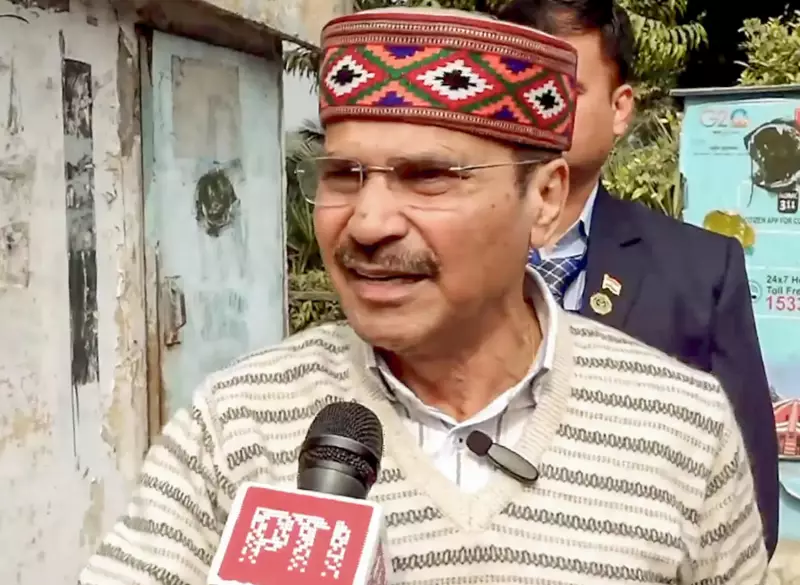
In a significant political development, senior West Bengal Congress leader Adhir Ranjan Chowdhury held a meeting with Prime Minister Narendra Modi in New Delhi on Tuesday. The primary agenda of the discussion was the alleged incidents of violence targeting Bengali-speaking migrant workers, particularly in states governed by the Bharatiya Janata Party (BJP).
A Meeting Focused on Migrant Welfare
Adhir Ranjan Chowdhury, who served as the Leader of the Congress party in the outgoing Lok Sabha, emphasized that his interaction with the Prime Minister was centered on the plight of migrant laborers from Bengal. He presented concerns about their safety and security in other states. Chowdhury explicitly alleged that these workers are facing attacks, especially in regions where the BJP is in power, and urged Prime Minister Modi to intervene and ensure their protection.
The veteran politician, known for his strong grassroots connect, represents the Murshidabad region, which has a significant Muslim population. His political stature is underscored by his electoral record; he won the Lok Sabha election from Berhampore for five consecutive terms, relying on his personal political strength even as the Congress party's influence waned in West Bengal. He lost the seat in the 2024 elections to Trinamool Congress's Yusuf Pathan.

Political Speculation Amidst Campaign Season
The timing of the meeting has ignited considerable political speculation, as it comes at a time when campaign activities are intensifying for the upcoming state assembly elections in West Bengal. Chowdhury is a prominent critic of Chief Minister Mamata Banerjee and her Trinamool Congress (TMC), a stance he shares with the BJP, which is the principal opposition party in the state.
This common ground has led to analysis about potential political realignments. A section within the BJP views Chowdhury as a formidable grassroots leader whose influence could be valuable in the Murshidabad region, where the BJP's organizational presence has historically been weak despite its emergence as the main challenger to the TMC across Bengal.
Chowdhury's Stance and the Road Ahead
Despite the swirling speculation, Adhir Ranjan Chowdhury has firmly insisted that his meeting was solely about the welfare of migrant workers and not indicative of any political shift. He positioned the discussion as a matter of representing his constituents' urgent concerns at the highest level of government.
The episode highlights the complex political dynamics of West Bengal, where issues of migration, identity, and security often intersect with electoral calculations. Whether this meeting remains a one-off discussion on a specific issue or leads to broader political consequences remains to be seen as the state moves closer to a crucial electoral battle.






