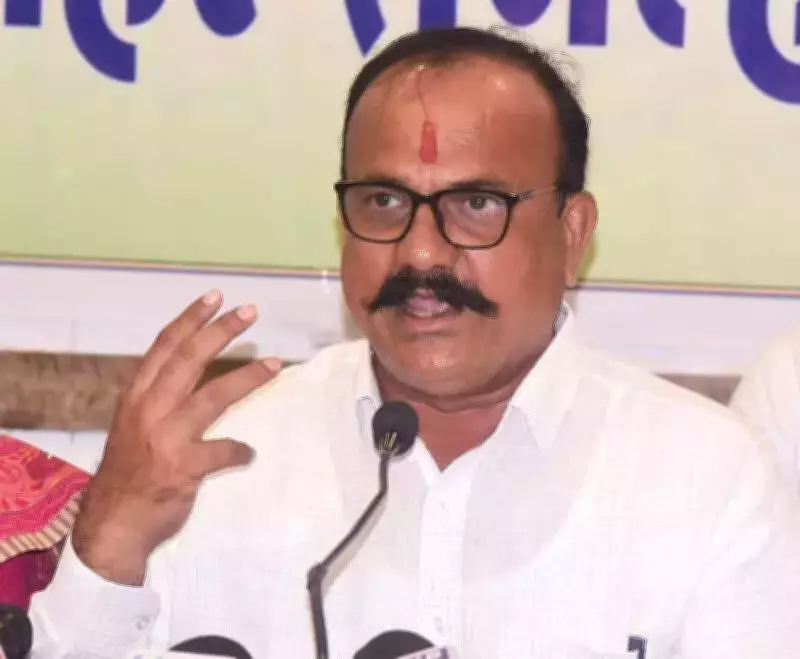
Congress Leader Alleges Widespread Political Links to Arrested Godman in Maharashtra
The controversy surrounding arrested self-styled godman Ashok Kharat has intensified dramatically after Maharashtra Pradesh Congress Committee (MPCC) president Harshwardhan Sapkal made explosive claims that an impartial investigation could potentially implicate numerous ministers and approximately two dozen government officials.
Explosive Allegations from Opposition Leader
In a public statement and through posts on social media platform X on Wednesday, Sapkal asserted that if the government conducts a genuinely honest investigation into the matter, "many ministers and officers will land in jail." The Congress leader pointed to what he described as deeply entrenched connections between influential political figures and the accused individual.
Ashok Kharat, who has been named in at least seven separate cases involving serious charges of rape, fraud, and exploitation, remains at the center of this growing political storm. The allegations have cast a shadow over Maharashtra's political establishment and raised questions about accountability within state institutions.

Historical Government Decisions Under Scrutiny
The remarks from the Congress leader emerge amid increasing scrutiny of past government decisions, including a substantial Rs 1.5 crore grant reportedly sanctioned in 2018 to a temple associated with Kharat. This financial allocation occurred during Devendra Fadnavis's initial tenure as chief minister of Maharashtra, adding another layer of complexity to the unfolding narrative.
Sapkal specifically referenced alleged connections between the controversial godman and individuals occupying key administrative positions within the state government. Notably, he mentioned an official currently serving in the housing authority as having ties to Kharat, though he did not provide specific names for all individuals referenced.
Photographic Evidence and Mystic Rituals
The MPCC chief revealed that images have surfaced showing a Union minister together with Kharat, though he did not identify the minister by name. Additionally, Sapkal claimed that senior state leaders maintained close associations with the controversial figure, suggesting relationships that extended beyond casual acquaintance.
Perhaps most startling were Sapkal's allegations that certain political figures had engaged Kharat to perform what he termed 'mystic rituals' aimed at securing positions of power. These claims, if substantiated, would represent a significant departure from conventional political conduct and raise serious ethical questions.
Questioning Government Response Timing
Sapkal raised pointed questions about the timing of the government's response to the allegations against Kharat. He asserted that Chief Minister Devendra Fadnavis had been aware of the serious allegations for several months but failed to take decisive action earlier. The Congress leader suggested that proximity between individuals linked to the case and those in power may have contributed to the delayed response.
According to Sapkal's account, action against Kharat was finally triggered only after alleged attempts by Bharatiya Janata Party allies to utilize the godman in occult rituals specifically aimed at destabilizing the current state leadership. "Action was taken only when such activities were used against the CM," Sapkal charged, introducing a layer of intra-political tension to the already complex case.
Political Leverage Allegations
The Congress leader further alleged that the entire controversy is now being strategically employed as leverage within political circles. "The case is being used to pressure allies and internal rivals," Sapkal stated, indicating what he characterized as a broader misuse of the situation for political advantage rather than genuine pursuit of justice.
Mounting Pressure for Transparency
These allegations surface at a critical juncture when the state government faces mounting pressure to ensure complete transparency and accountability in the ongoing investigation. The case has attracted attention extending far beyond Maharashtra's borders, given the involvement of prominent political figures and the broader implications for governance standards and institutional credibility.

The state government has not yet issued a detailed public response addressing the specific claims made by the Congress leader. However, officials have maintained that due legal process is being meticulously followed and that investigations into the matter continue to progress through appropriate channels.
The unfolding controversy represents more than just another political scandal—it raises fundamental questions about the intersection of power, influence, and accountability within Maharashtra's political landscape. As allegations continue to surface and investigations proceed, all eyes remain fixed on how state institutions will navigate this complex web of claims and counterclaims.