A significant crack has appeared within the Shiromani Akali Dal (Taksali), the breakaway faction of the traditional Akali Dal, as several of its prominent leaders have conspicuously abstained from campaigning for the party's candidates in two crucial assembly segments. This development points towards deepening internal discord at a critical juncture in Punjab's political landscape.
Leaders Absent from Crucial Campaign Trails
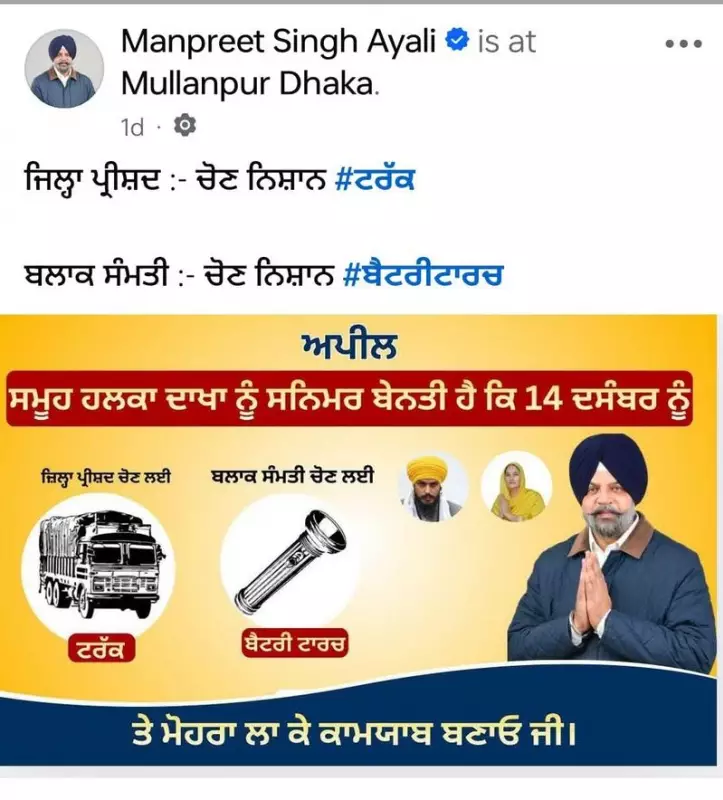
The faction, led by veteran politician Sukhdev Singh Dhindsa, is contesting the upcoming elections on its own symbol. However, its campaign efforts in the Ayali and Dakha assembly constituencies have been severely hampered. Key figures expected to rally support have been notably absent from the ground.
In the Ayali segment, where the party has fielded candidate Kulwant Singh Rohan, the campaign has lacked the presence of senior leaders. Similarly, in Dakha, the candidate Manjit Singh Manna has been left to campaign largely without the backing of the party's top brass. This absence is being viewed as a deliberate snub and a clear indication of dissatisfaction with the candidate selection process or the party's strategic direction.

Roots of the Discontent and Strategic Implications
The internal strife seems to stem from disagreements over the allocation of tickets. Many within the faction reportedly believed that the party should have entered into an alliance with a larger coalition to improve its chances. The decision to go solo and the subsequent choice of candidates have not sat well with a section of the leadership, leading to this passive resistance through non-participation in campaigning.
This rift poses a serious threat to the fledgling party's electoral prospects. The Ayali and Dakha seats are politically significant, and a lack of a united front from the party's own leaders can confuse supporters and weaken the campaign's momentum. It sends a signal of disunity to the electorate, potentially driving voters towards more cohesive rivals.
Broader Impact on Punjab's Political Equations
The Shiromani Akali Dal (Taksali) was formed as a splinter group aiming to present an alternative within the Akali polity. However, this internal fracture so close to the elections undermines that very objective. It highlights the challenges faced by breakaway factions in maintaining cohesion and presents an opportunity for the main Shiromani Akali Dal (Badal) and other competing parties like the Congress and the Aam Aadmi Party (AAP).
The situation remains fluid, and it is unclear if party president Sukhdev Singh Dhindsa will be able to bridge this gap and bring the dissenting leaders back into the active campaign fold. The outcome in Ayali and Dakha will be a crucial test of the party's resilience and its ability to manage internal democracy and dissent.
Ultimately, this episode serves as a reminder that in the high-stakes arena of Punjab politics, organizational unity is as critical as the political message. The chinks in the Akali Dal (Taksali)'s armor, exposed by the skipping of campaigning, could have a decisive impact on its electoral debut and its future as a viable political entity.