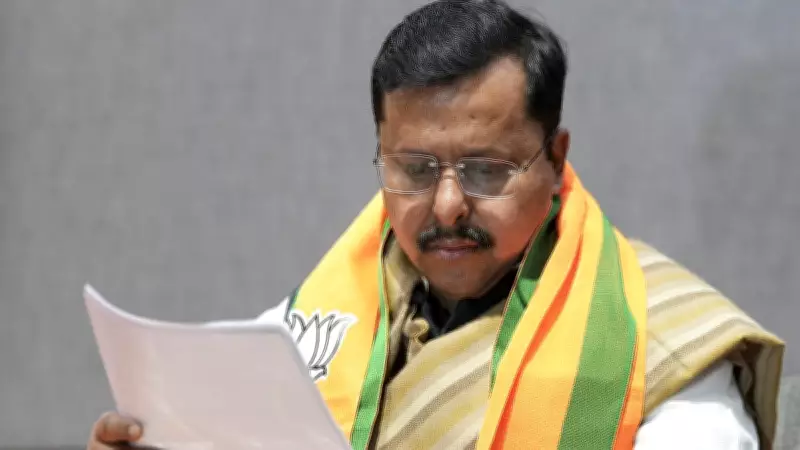
BJP State President Nitin Nabin Steps Down as Bihar MLA
In a significant political development, Nitin Nabin, the president of the Bharatiya Janata Party's Bihar unit, has officially resigned from his role as a Member of the Legislative Assembly. The resignation, submitted to the Bihar Legislative Assembly Speaker, has sent ripples through the state's political landscape, prompting widespread analysis and conjecture about the underlying motives and potential repercussions.
Official Reasons and Immediate Reactions
According to official statements, Nitin Nabin cited personal reasons for his decision to step down from the legislative position. However, political observers and analysts are scrutinizing this move closely, as it comes at a critical juncture with state elections on the horizon. The resignation has been formally accepted by the assembly authorities, marking the end of his tenure as an MLA representing his constituency.
Immediate reactions from within the BJP and opposition parties have been mixed. While some party members have expressed support for Nabin's decision, emphasizing respect for his personal choices, others hint at possible strategic realignments within the party's state leadership. Opposition figures have seized upon the resignation to question the stability and internal dynamics of the BJP in Bihar, suggesting it may reflect broader organizational challenges.

Political Implications and Future Speculation
The resignation of Nitin Nabin as an MLA is not merely a routine administrative change; it carries substantial political weight. As the state BJP chief, his dual roles provided significant influence, and stepping down from one could signal a shift in focus or preparation for new responsibilities. Analysts are exploring several potential scenarios:
- Electoral Strategy: Nabin might be positioning himself for a different role in upcoming elections, possibly aiming for a national-level position or focusing entirely on party organization.
- Internal Party Dynamics: This move could be part of a larger reshuffle within the BJP's Bihar leadership, aimed at revitalizing the party's approach and addressing local challenges.
- Opportunities for Rivals: Opposition parties, such as the Rashtriya Janata Dal and Janata Dal (United), may view this as an opening to gain political leverage, especially if it leads to uncertainties within the BJP ranks.
Furthermore, the timing of the resignation is particularly noteworthy. With Bihar's political climate heating up in anticipation of future electoral battles, every move by key figures is under intense scrutiny. Nabin's decision could influence voter perceptions and party strategies, making it a focal point for political discourse in the coming weeks.
Background and Broader Context
Nitin Nabin has been a prominent figure in Bihar politics, known for his organizational skills and grassroots connect. His resignation as MLA does not affect his position as the state BJP president, but it does alter his legislative responsibilities. This development is part of a broader trend of political realignments in Bihar, where parties are constantly adapting to shifting alliances and voter sentiments.
In the larger context of Indian politics, such resignations often precede significant changes, whether in party hierarchies or electoral tactics. As Bihar remains a crucial battleground state, the actions of its leaders are closely watched at the national level. The BJP's central leadership is likely monitoring the situation, balancing local autonomy with overarching party goals.
In conclusion, Nitin Nabin's resignation as Bihar MLA is a pivotal event that underscores the dynamic nature of state politics. While officially attributed to personal reasons, its political ramifications are far-reaching, affecting party strategies, opposition maneuvers, and public perception. As developments unfold, this move will undoubtedly shape the political narrative in Bihar, highlighting the intricate interplay between personal decisions and collective political fortunes.