KOLKATA: Bengal's voters will learn today which way their neighbours voted as the results of a highly contentious seven-week electoral battle begin to trickle in this morning. The 2026 election season has been remarkable for the unusual silence of a large section of the electorate, except for a vocal demand for change from many urban, white-collar voters, adding an element of intrigue and making the period from polling day to result day a battle of nerves for the Trinamool Congress and the BJP.
Unprecedented Aspects of the 2026 Poll Season
This election has been unprecedented for two distinct reasons: one exclusionary and the other more participatory and inclusive. The exercise excluded over 27 lakh voters due to the "logical discrepancy" clause introduced by the Election Commission in the SIR (Special Identity Roll) process, applicable only in Bengal. Children voted while their parents found themselves removed from the voters' roll. Residents of many high-rise complexes could not vote and instead watched their neighbours vote within the complex, as the EC ironically aimed to boost turnout. Overall, the voters' roll decreased from 7.66 crore to 6.82 crore due to the logical discrepancy factor and the removal of 58.2 lakh "non-existent" voters (deceased, absent, or relocated). A victory in this poll may be considered "tainted" as the process excluded many genuine voters.
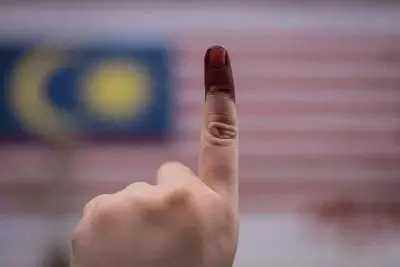
On a positive note, those who remained on the roll made a point to vote. Many were driven by a fear that their voting right might be revoked if they did not vote this time. Whatever the trigger, Bengal recorded a historic voter turnout of 92.94%, far exceeding the previous record of 81.5% set in 2011 when voters ousted the Left Front after 34 years.

Impact on Daily Life and Political Mood
Bike bans (later overturned by Calcutta HC), a nine-and-a-half-day liquor ban, and an unprecedented commute crisis in Kolkata due to the requisitioning of a large number of passenger vehicles for an unusually large security force reminded residents of Covid-era life. These factors contributed to the city's fractious political mood, keeping party leaderships guessing despite their confident campaign rhetoric. Prime Minister Narendra Modi, Union Home Minister Amit Shah, Bengal CM Mamata Banerjee, and her deputy Abhishek Banerjee have all repeatedly expressed confidence in winning "200-plus" seats.
However, the unprecedented voter turnout and cross-currents created by anti-incumbency sentiment among the more vocal section of the electorate (natural after three terms in office) and anti-SIR sentiment among another significant section have made this poll season and its endgame more unpredictable than ever.
Legal and Administrative Developments
State, Central Officials Move HC Over SIR Fears
SIR deletions have not only deprived 27 lakh people of their voting rights but also caused panic among government employees whose names were deleted. An assistant teacher, an AGM of a Maharatna unit, a medical professional, and an insurance agent have approached the Calcutta High Court, fearing termination of service due to SIR deletions. The AGM produced 11 documents at an SIR hearing but his name was still deleted. He later filed an appeal before a tribunal and has moved HC seeking an early hearing. However, the petition will be taken up after the polls.
Fifth Kalighat OC Transferred in 36 Days
The OC of Kalighat Police Station has been changed yet again, less than 24 hours after her appointment. This marks the fourth transfer (fifth officer to be shifted) in just 36 days. Chameli Mukherjee, who replaced Gautam Das, has now been asked to continue as OC of Ultadanga Women's Police Station, her previous posting.
What's at Stake for the Main Players
Mamata Banerjee
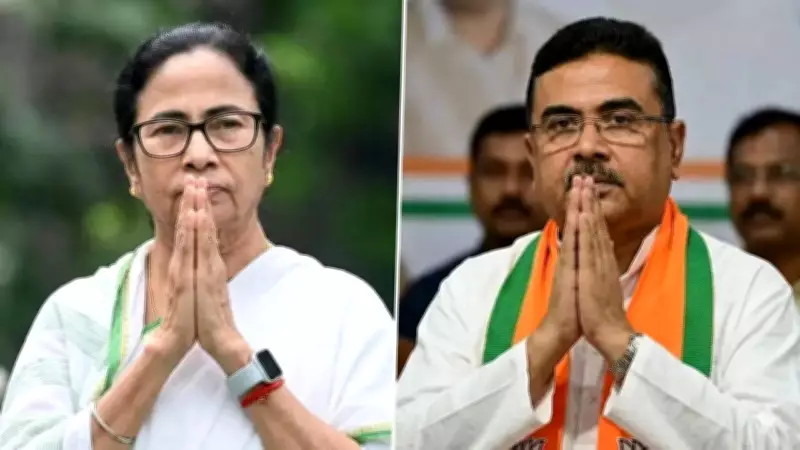
This may be the most consequential poll, besides the 2011 assembly election, in Mamata Banerjee's career. Then, she led an upbeat opposition whose ranks were swelling; people looked to her to deliver them from the 34-year Left Front regime. Now, she heads a party in power for three terms, and her supporters and opponents of BJP politics—both within and outside Bengal—look to her to stem the BJP's seemingly unstoppable march across the country. The voter's verdict will chart Bengal's future as much as Banerjee's.

Abhishek Banerjee
Abhishek Banerjee has proven a capable lieutenant, shouldering much of the campaign responsibility. He has deftly stayed in his mentor's shadow but emerged when needed, notably telling an enthusiastic Trinamool audience that he was "not Mamata Banerjee" and urging them to give back more than they got if threatened with violence by the BJP. Banerjee Jr will face greater responsibility regardless of the result, with a Trinamool victory serving as a launch pad for a bigger role.
Narendra Modi and Amit Shah
PM Modi and Union Home Minister Amit Shah have accorded this poll as much significance as any national election. Modi has visited Bengal frequently and promised to return for a BJP CM's swearing-in, while Shah has camped in the state for weeks, boosting party morale. A section of voters has been more receptive this time. A win would give the BJP its ultimate crown—a state called its final frontier—but a loss would expose them to ridicule for failing despite massive effort.
Suvendu Adhikari
Suvendu Adhikari has staked everything in this poll, giving back to CM Banerjee what she gave him in 2021. He has fought from his home turf Nandigram and also entered Banerjee's lair Bhowanipore for another battle royale. He has put all his cards on the table. A win would bring him closer to the CM's chair, but a setback may prove crippling.
Uncertain Verdict and Silent Voters
Above all, the studied silence of a larger section of the electorate has kept leaders guessing. Neighbours and commuters refuse to discuss politics, indicating deep divisions and a fractious electorate. Some issues aligned straightforwardly with parties: the BJP was the obvious choice for those seeking change, and Trinamool was the practical choice for those favouring a "Bangali" brand of Hinduism over the BJP's Hindutva.
However, other issues like SIR did not align neatly. Thousands returned from other states to vote, with many blue-collar workers identifying an unfair process with the EC and, by extension, the BJP. But many white-collar workers may not have done so; for them, each journey back to Bengal makes them yearn for high-paying jobs in their home state. Most of these votes would not favour the status quo.
These cross-currents have made even geography-wise predictions difficult. North Bengal would be the BJP's to lose, drawing strength from Alipurduar, Cooch Behar, Jalpaiguri, Darjeeling, Kalimpong, North and South Dinajpur, and pockets of East Midnapore, Nadia, and North 24 Parganas. Trinamool, besides winning seats from these districts, depends on the remaining 13 districts for its heft. But SIR complicated matters for the BJP in some strongholds, while anti-incumbency made things harder for Trinamool even in its bastions, underscoring the complexity of how Bengal voted on April 23 and 29.
Irrespective of these deep fissures, voters on both sides wish for a mandate that is easy to read—a mandate less fractious than the factors leading to it would suit Bengal well.