The Sudden Void: How Ajit Pawar's Death Reshapes Maharashtra's Political Chessboard
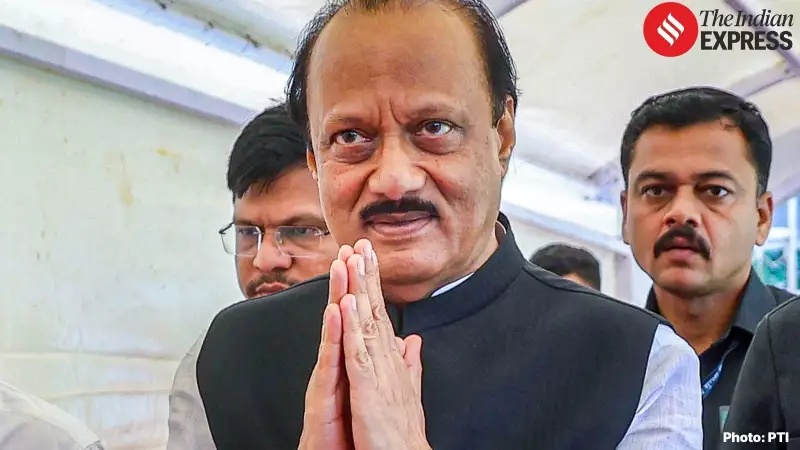
In a tragic turn of events that has sent shockwaves through Maharashtra's political corridors, the untimely death of Nationalist Congress Party (NCP) leader Ajit Pawar has created a significant power vacuum. For the past decade, Maharashtra's political landscape has been undergoing a fundamental transformation, with the Bharatiya Janata Party (BJP) emerging as the dominant force while systematically diminishing both national competitors like the Congress and regional political spaces.
A Critical Juncture in State Politics
The sudden demise of Ajit Pawar, affectionately known as "Ajit Dada" among his followers, comes at a particularly sensitive moment in Maharashtra's political evolution. His death in a road accident while traveling to Baramati for Zilla Parishad election campaigning underscores the intense demands of modern competitive politics, where leaders frequently risk their safety and well-being to meet electoral obligations.
This tragic incident highlights a broader concern about how political parties, not just in Maharashtra but across India, have become excessively dependent on top leadership figures, even for local-level elections. The loss of such a pivotal figure forces even grieving supporters to confront the inevitable question: What comes next for Maharashtra's political equilibrium?

Factional Turmoil and Shifting Equations
Ajit Pawar's unexpected departure has plunged both factions of the NCP into immediate turmoil while simultaneously altering numerous political equations across the state. Following last year's Assembly elections, the Ajit Pawar faction had emerged as the more popular wing of the party, creating an existential crisis for the faction led by party founder Sharad Pawar.
Recent municipal corporation elections had shown initial signs of rapprochement between the two NCP factions, a development that promised headaches for the ruling BJP and brought sleepless nights to opposition parties. With Ajit Pawar's absence, his own faction now faces significant disarray, complicating any potential reunification efforts.
The current political scenario presents three distinct options for Ajit Pawar's followers:
- Continue operating the party independently while attempting to carve out a distinct political space
- Return to Sharad Pawar's leadership fold
- Seek shelter under the BJP's expanding political umbrella
The Regional Space Conundrum
Typically, when a dominant party establishes ascendancy, the initial counter-response emerges through the formation of strong regional players. In Maharashtra, four distinct political entities that emerged from the fragmentation of the NCP and Shiv Sena have been struggling to occupy precisely this regional space.
Both Ajit Pawar and Maharashtra Chief Minister Eknath Shinde had been attempting to assert separate political identities while simultaneously subscribing to the development narrative championed by Prime Minister Narendra Modi. However, neither leader managed to adopt an overtly regionalist stance, constrained as they were by the BJP's dominant position in state politics.
Ajit Pawar had been particularly strategic in his approach, repeatedly signaling his disinterest in minority-bashing politics unlike some of his alliance partners. After joining the Mahayuti coalition, he had adopted what political observers describe as a "running with the hare and hunting with the hound" strategy – maintaining alliance commitments while preserving some degree of ideological autonomy.
Pressure from the Dominant Partner
Under consistent pressure from the BJP, Ajit Pawar had been struggling to develop his party machinery independently. His overtures toward the other NCP faction indicated that all was not well within the ruling coalition. Similar to the Shiv Sena led by Eknath Shinde, Ajit Pawar's NCP had been realizing that the BJP would neither easily cede regional political space nor allow consolidation of traditional social bases.

The potential reunification of the two NCP factions might have created a more formidable political entity, but with Ajit Pawar's demise, the situation now hangs in an uncertain balance between emotional considerations and harsh political calculations. Even veteran leader Sharad Pawar finds his party vacillating between power-sharing opportunities and the challenge of maintaining an independent political stance.
The Countervailing Power Within
When Ajit Pawar initially joined the Mahayuti coalition, the move was widely perceived as strengthening the BJP's position. Paradoxically, however, the separate existence of his party, its respectable performance in Assembly elections, and occasional spats with BJP allies during recent urban local elections ensured that Maharashtra retained some semblance of internal opposition within the ruling coalition.
With Ajit Pawar's departure, it remains uncertain whether this countervailing power – essentially an opposition within the government – will persist or gradually wither away. The veteran leader leaves behind several pockets of electoral strength, as evidenced by the last Assembly elections, along with numerous locally influential politicians who now enjoy greater freedom to make independent political choices.
Legacy and Political Inheritance
Ajit Pawar's political legacy extends beyond immediate electoral considerations. He cultivated close associations with various organizations, platforms, and particularly Maratha voters – a significant demographic in Maharashtra politics. This vast repository of political resources, including numerous non-ideological but ambitious young politicians eager to establish themselves in public life, now becomes the subject of intense competition among surviving political entities.
In all likelihood, these resources will gradually move closer to the BJP, further consolidating the party's dominant position in the state. The past decade has witnessed Maharashtra's politics standing at a critical cusp, with developments periodically punctuating this political transformation. Ajit Pawar's tragic death ensures that state politics will become more contingent and unpredictable, at least in the immediate future, as various political actors recalibrate their strategies in response to this unexpected development.
The void created by Ajit Pawar's absence represents not just the loss of a political figure but potentially a turning point in Maharashtra's political trajectory, with implications that extend well beyond party boundaries and into the fundamental structure of political competition in one of India's most significant states.