In an unprecedented development for Maharashtra's civic poll history, the ongoing Brihanmumbai Municipal Corporation (BMC) elections have sparked a major controversy. Shiv Sena (UBT) chief Uddhav Thackeray and Maharashtra Navnirman Sena (MNS) president Raj Thackeray have jointly condemned the election process after a staggering 67 candidates from the ruling alliance were elected unopposed.
A Historic First and a Democratic Outcry
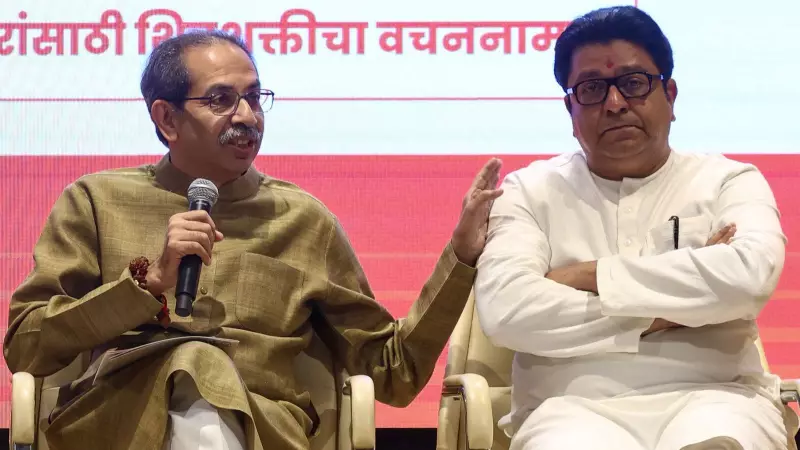
Addressing a joint press conference at Shiv Sena Bhavan on Sunday, the Thackeray cousins labeled the unopposed victories an "insult to democracy." Uddhav Thackeray argued that when candidates win without a contest, it directly deprives voters of their fundamental right to choose their representatives. He squarely blamed the Election Commission for this situation, accusing it of stripping citizens of their democratic rights.
Of the 67 unopposed winners, 45 belong to the Bharatiya Janata Party (BJP) and 22 are from the Shiv Sena, which includes one candidate backed by the BJP. This marks the first instance in recent years where such a large number of candidates have sailed through without a fight in the state's civic elections.
Demanding immediate corrective action, Uddhav Thackeray called for the cancellation of these uncontested elections. He insisted that a fresh electoral process must be initiated in all the affected wards to restore democratic choice for the people of Mumbai.
Political Allegations and a Demand for Suspension
The criticism extended beyond the election commission. Uddhav Thackeray trained his guns on Maharashtra Assembly Speaker Rahul Narwekar, seeking his suspension. He alleged that candidates from opposition parties faced undue pressure and intimidation during the critical nomination filing process itself.
Thackeray contended that the Speaker's conduct failed to meet the standards of neutrality and impartiality expected from someone holding such a high constitutional office. This allegation adds another layer of political friction to the already charged atmosphere surrounding the BMC polls.
Raj Thackeray, who returned to Sena Bhavan after nearly two decades—a move he humorously compared to "being released from jail"—also questioned the ruling BJP's consistency. He reminded everyone that the BJP had previously approached the Supreme Court when similar unopposed elections occurred in West Bengal.
"What is the BJP's position now?" he asked, warning that this trend sets a dangerous and wrong precedent that could severely undermine democratic institutions and processes in the long run.
A Common Vision for Mumbai's Future
Prior to their sharp critique of the election process, the two leaders presented a united front by releasing a common manifesto for the BMC. The document outlines a comprehensive plan focused on tackling Mumbai's perennial issues of housing and civic infrastructure.
The key promises in their joint manifesto include:
- Developing affordable housing projects on land owned by the BMC to address the city's massive housing shortage.
- Establishing a separate municipal housing authority to streamline and expedite housing-related projects and approvals.
- Substantially improving essential services across water supply, waste management, road maintenance, public transport, healthcare, and education.
Striking a note of regional pride, Raj Thackeray asserted that Mumbai would see a "Marathi mayor" after the conclusion of the elections, signaling a core agenda of their combined political effort.
The alliance between the Thackeray cousins and their sharp protests have thrown the spotlight firmly on the conduct of the BMC elections, raising significant questions about electoral fairness and the health of local democracy in India's financial capital.