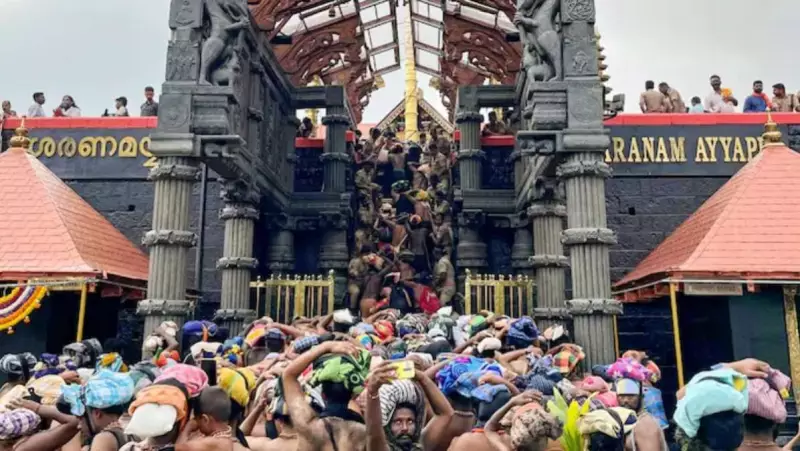
In a significant move to regulate pilgrim flow and ensure better crowd management, the Travancore Devaswom Board has implemented a daily cap of 5,000 spot bookings for Sabarimala temple darshan. This decision comes as a direct response to the Kerala High Court's recent intervention addressing concerns about overcrowding and safety at the famous hill shrine.
Kerala High Court Directs Pilgrim Management Overhaul
The Kerala High Court took suo motu cognizance of the chaotic situation at Sabarimala temple, where unprecedented crowds during the ongoing Mandala-Makaravilakku season raised serious safety concerns. The court expressed strong dissatisfaction with the existing crowd management systems and directed the Travancore Devaswom Board to implement immediate corrective measures.
Justice Devan Ramachandran, presiding over the case, emphasized the urgent need for systematic reforms to protect pilgrim safety. The court specifically questioned why modern crowd management technologies and practices weren't being utilized effectively at one of India's most visited pilgrimage sites.

New Booking System Implementation Details
The Travancore Devaswom Board has now established a structured approach to manage the daily influx of devotees. Under the new system, only 5,000 spot bookings will be permitted each day through the virtual queue system. This cap applies specifically to on-the-spot registrations made by pilgrims who arrive without prior online bookings.
Board officials clarified that this limitation is designed to work in conjunction with the existing advance booking system. Pilgrims who have secured their darshan slots through online reservations well before their visit will not be affected by this new restriction. The measure specifically targets the uncontrolled flow of walk-in devotees that has been causing congestion and safety hazards.
Enhanced Safety Measures and Infrastructure Improvements
Beyond the booking restrictions, the Devaswom Board has initiated several additional measures to improve the pilgrim experience. These include deploying additional security personnel, enhancing medical facilities along the pilgrimage path, and improving sanitation infrastructure throughout the Sabarimala complex.
The Board has also committed to implementing better queue management systems and increasing the frequency of cleaning operations in crowded areas. Special attention is being given to the pathways leading to the sanctum sanctorum, where bottleneck situations frequently occur during peak hours.
Police and disaster management teams have been placed on high alert to handle any emergency situations that might arise from the large gatherings. The authorities have established multiple help desks and information centers to assist pilgrims with queries and provide real-time updates about waiting times and crowd density.
Pilgrim Response and Future Planning
Initial reactions from pilgrims have been mixed, with some expressing understanding about the safety concerns while others worry about potential difficulties in securing darshan opportunities. Regular devotees have suggested that the Board should consider expanding the overall daily capacity while maintaining better crowd control mechanisms.
The Travancore Devaswom Board has assured that these measures are temporary and will be reviewed continuously based on ground realities and pilgrim feedback. Board president K. Ananthagopan stated that the primary objective is to balance religious sentiments with safety imperatives, ensuring that every devotee can have a meaningful and secure pilgrimage experience.
As the Sabarimala pilgrimage season continues, all stakeholders including temple authorities, police departments, and local administration are working in coordination to implement the High Court's directives effectively while maintaining the spiritual sanctity of this ancient tradition.