Mohali Municipal Corporation Intensifies Anti-Encroachment Drive in Phase 2
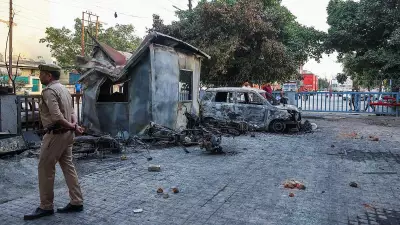
The Municipal Corporation of Mohali has significantly ramped up its efforts to reclaim public land, with a major anti-encroachment operation conducted in Phase 2 on Monday. According to MC Commissioner Parminder Pal Singh Sandhu, civic teams successfully removed at least 60 illegal structures that had been erected on public property across parks, residential neighborhoods, and commercial spaces.
Targeting Encroachments Without Bias
Commissioner Sandhu emphasized that the drive was carried out without any consideration for the status or influence of the individuals involved. "No private construction on public land will be tolerated, irrespective of status," he stated firmly. The operation specifically addressed encroachments linked to influential persons, sparking widespread discussions throughout the city regarding the administration's commitment to fairness.
Reclaiming Public Parks for Community Use
During the drive, significant portions of public parks were restored for community enjoyment. In Park No. 23, illegal fencing installed by owners of two-kanal houses was dismantled, reopening the space for public use, particularly for children. Similarly, in Park No. 8, unauthorized rooms constructed on parkland by a retired IAS officer were demolished by MC officials, ensuring the area is once again accessible to all residents.

Extension to Commercial and Residential Areas
The operation extended beyond parks to include the removal of temporary and illegal structures outside houses, shops, and showrooms in Phase 2. Administrative sources confirmed that bulldozers were deployed even outside properties associated with politically influential individuals and a government office, demonstrating the administration's resolve to enforce regulations uniformly.
Criticism and Allegations of Selective Action
However, the drive faced criticism from some traders who alleged that marble flooring outside certain showrooms was damaged where no permanent encroachment existed, leading to financial losses. Additionally, councillor Davinder Kaur Walia and Raja Mohali accused the administration of "selective action," claiming that while some areas faced strict enforcement, others with visible encroachments were overlooked.
In response, Commissioner Sandhu clarified that the drive is part of a routine and ongoing process. "This campaign will continue. People are advised to voluntarily remove unauthorized structures to avoid strict action," he added, urging cooperation from the public.
Parallel Drive in Sukhna Lake Catchment Area
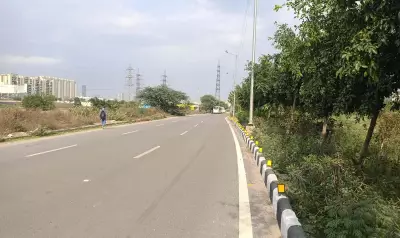
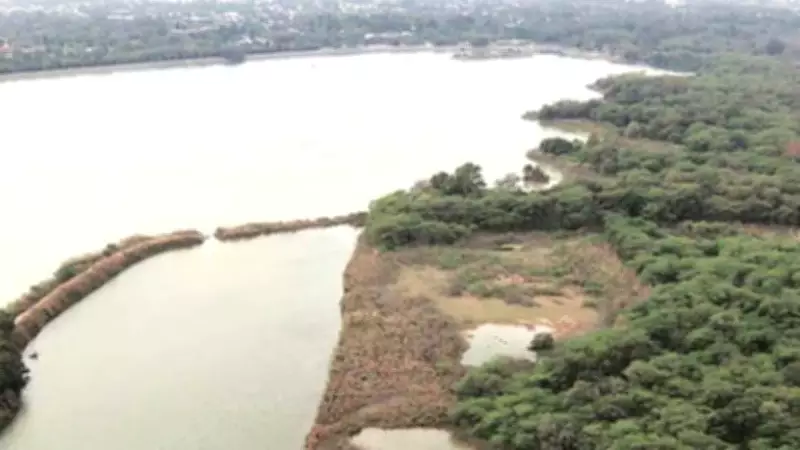
In a related development, the District Administration conducted a major anti-encroachment operation in the Naya Gaon area, with a special focus on the Kansal catchment area of Sukhna Lake. This action was taken in compliance with directives from the Punjab and Haryana High Court, targeting illegal constructions along Patiala Ki Rao and adjoining regions, including Shivalik Vihar, which fall within ecologically sensitive and floodplain zones.
Environmental and Legal Implications
Commissioner Sandhu highlighted the severe environmental risks posed by such encroachments, noting that they obstruct natural water flow, increase flood risks, and cause significant environmental damage. "No unauthorized construction will be allowed in the Kansal catchment, along Patiala Ki Rao or any protected zone. Any future violation will invite strict legal action," he warned.
The operation was supervised by the Nodal Officer, with teams from the municipal wing, including the Building Inspector, General Inspector, and Executive Officer, supported by an adequate police force to maintain law and order. Despite repeated notices and prior warnings, several structures were found to be in violation of court orders, environmental norms, and land-use regulations.

Commitment to Public Interest and Environmental Protection
The District Administration reiterated its unwavering commitment to protecting the Sukhna Lake catchment, preserving natural drainage channels, and enforcing environmental and municipal laws in the larger public interest. This dual focus on urban encroachment and ecological preservation underscores a comprehensive approach to safeguarding public assets and natural resources in the region.