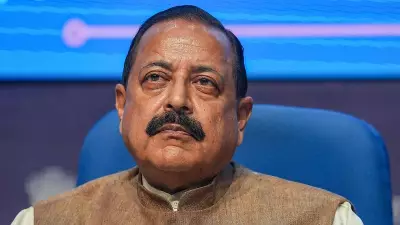
Padma Vibhushan Economist Issues Dire Warning on Punjab's Water Crisis
Renowned economist and Padma Vibhushan recipient Dr Sardara Singh Johl has delivered a scathing critique of successive governments, asserting that their persistent refusal to implement crucial agricultural reforms is pushing the Punjab region toward imminent environmental collapse. Speaking at the 61st Alumni Meet of the College of Agriculture at Punjab Agricultural University (PAU), where he previously served as Vice Chancellor, Dr Johl expressed profound frustration over the political inertia surrounding water conservation.
International Success Versus Local Neglect
Dr Johl revealed a painful paradox in his decades of policy advocacy. "I have given policy advice to at least two dozen international governments, and they have successfully implemented my recommendations through their parliamentary processes," he stated. "Yet here in my home state, nobody has paid heed. I have been crying out for action, but nobody has listened. This neglect creates a genuine ache in my heart." The economist emphasized that while global entities have adopted his sustainable agricultural frameworks, Punjab remains trapped in what he describes as a "disastrous cycle" of water resource depletion.
The Unsustainable Thirst of Paddy Cultivation
Dr Johl identified the region's current obsession with paddy cultivation as the primary driver of the water crisis. Originally introduced decades ago to address food security emergencies, this agricultural practice has become environmentally unsustainable. He presented alarming statistics showing that canal water supplies meet less than 30% of irrigation requirements, forcing farmers to extract the remaining 70% from rapidly diminishing underground aquifers.

The mathematics of water depletion are stark and straightforward. Producing just one kilogram of rice consumes approximately 5,000 gallons of water. Annually, Punjab extracts what Dr Johl described as a "one cubic kilometer block" of potable groundwater. "We are essentially using the drinkable water reserves meant for future generations to produce food grains for consumption elsewhere," he warned, highlighting the intergenerational equity concerns of current practices.
The Counterproductive Subsidy System
According to Dr Johl's analysis, a central pillar exacerbating the crisis is the provision of free electricity to farmers. While ostensibly designed to support agricultural communities, this policy actually suppresses the Minimum Support Price (MSP) because the true environmental costs of water extraction and power consumption are never properly calculated. "In the name of subsidizing farmers, we are actually subsidizing consumers of the 2.2 crore tonnes of food grains who live in other regions," he explained, pointing to the economic distortions created by current subsidy structures.
A Proposed Solution: The 'Green Box' Alternative
Instead of continuing with free power provisions, Dr Johl advocates for implementing a "green box subsidy" system. This approach would provide direct financial support to farmers, enabling them to pay their own electricity bills while creating economic incentives for water conservation. The economist revealed that even when he secured World Bank grants to facilitate this transition, political leaders refused to move away from what he characterized as "vote bank" tactics that prioritize short-term electoral gains over long-term sustainability.
Dr Johl recalled his early warnings, stating: "Back in 1986, I recommended that if we did not reduce the area under paddy cultivation by at least 20%, it would fundamentally disturb our water balance." He expressed disappointment that "politicians don't seem to care about the broader societal impact. They continue offering free benefits while people accept them like beggars."

Urgent Call for Crop Diversification
The economist urgently recommends shifting agricultural focus toward more water-efficient crops including oilseeds, pulses, cotton, maize, and various vegetables. When farmers inquire about alternatives to paddy cultivation, his response is characteristically direct: "Plant whatever crops you would consider planting when the water completely runs out. Why not make that transition now and preserve our precious water resources?" This blunt advice underscores the critical window for intervention before Punjab's groundwater reaches irreversible depletion levels.