In a move that produced the opposite of its intended effect, the temporary prohibition on e-rickshaws within Jaipur's historic Walled City has spectacularly failed to ease congestion. Instead of bringing order, the ban, active from December 20 to January 10, triggered a replacement of one set of vehicles with larger, more disruptive ones, plunging the heritage zone into deeper traffic chaos.
From Bad to Worse: Autos and Cars Fill the Void
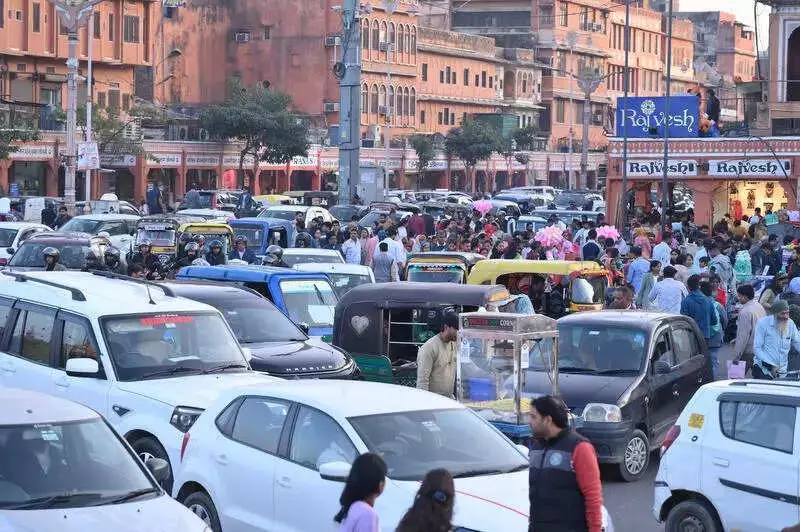
The administration's strategy to manage the seasonal surge in tourist footfall by banning e-rickshaws backfired on the ground. With these compact vehicles off the narrow lanes, auto-rickshaws and private four-wheelers swiftly took their place. This substitution exacerbated the gridlock, as these larger vehicles occupy more road space and move slower through the constricted pathways of the Pink City's core.
The situation is visibly dire from Hawa Mahal to Johari Bazaar, where vehicles crawl throughout the day. Long queues of cars and autos choke the arteries of the old city. However, the most severe impact has been borne by pedestrians, for whom navigating the area has become a hazardous ordeal.

Pedestrian Nightmare and Makeshift Parking Mayhem
The crisis extends beyond moving traffic to a complete collapse of pedestrian infrastructure and parking management. The iconic verandas inside the Walled City are packed with encroachments, while footpaths have been converted into informal parking spots. The parking shortage reached such a critical point that staff were compelled to take a drastic measure.
With authorized parking facilities overflowing, attendants began using an entire lane of the road as a makeshift parking area for four-wheelers. This effectively reduced the available road space by half in some sections, creating frequent bottlenecks and triggering long, stagnant jams. In the bustling Johari Bazaar, one full lane now functions primarily as a parking zone.
Arjun, a parking slip issuer in Johari Bazaar, highlighted the impossible dilemma. "We have no option but to allow parking on the road," he stated. "So many people are coming in cars that the parking lots are already full. If we don't park vehicles here, where will they go?"
Local Lives Disrupted: A Call for Stricter Controls
The traffic meltdown is severely disrupting daily life for residents and workers. Arjun shared his personal experience, noting that his commute from near Chandpole to Johari Bazaar has doubled or tripled. "Earlier it used to take me 10 minutes to reach Johari Bazaar, but now it takes 20 to 30 minutes. That's why I started walking to work," he explained.
This sentiment is echoed by local traders and pedestrians who are bearing the brunt of the failed policy. There is a growing consensus that without strict controls on the entry of autos and private four-wheelers, the traffic situation in the Walled City will continue its downward spiral. The unchecked congestion not only disrupts commerce and daily routines but also poses a significant threat to the very heritage and structural integrity of the fragile historic zone, with constant vibrations and pollution from idling vehicles.
The temporary ban has served as a stark lesson: removing one mode of transport without a comprehensive plan to manage its alternatives can lead to outcomes worse than the original problem.