

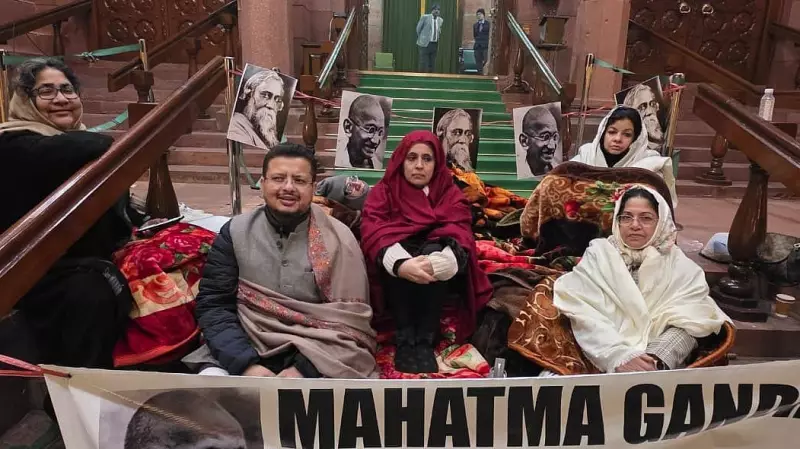
In a dramatic late-night session, the Indian Parliament approved the contentious VB-G RAM G Bill, a move that effectively replaces the two-decade-old Mahatma Gandhi National Rural Employment Guarantee Act (MGNREGA). The passage occurred amidst vehement protests from opposition leaders, who staged an overnight sit-in on the steps of Parliament.
Late-Night Parliamentary Approval
The Rajya Sabha gave its final nod to the legislation post midnight on Thursday, December 19, 2025. This followed the bill's passage in the Lok Sabha, completing its parliamentary journey. The session extended well beyond normal hours, highlighting the contentious nature of the proposed law that seeks to overhaul a cornerstone of India's rural social security framework.
Opposition's Overnight Dharna
As the debate raged inside, opposition members from parties like the AITC took their dissent outside. Leaders were seen participating in a dharna (sit-in protest) on the steps of Parliament overnight. Journalist Sagarika Ghose shared an image from the protest at 5 AM on December 19, with the caption "Good morning . ! Mahatma Gandhi Amar Rahe . #MNREGA protest," underscoring the emotional and political charge surrounding the issue.

The protest symbolized a last-ditch effort to voice dissent against what the opposition views as the dismantling of a critical rural employment guarantee. The visual of politicians sitting through the night became a powerful symbol of the resistance to the bill.
Replacing a Landmark Scheme
The core of the controversy lies in the bill's objective to supersede the 20-year-old MGNREGA programme. MGNREGA, launched in 2005, has been one of the world's largest work guarantee schemes, providing a safety net for millions of rural households by guaranteeing 100 days of wage employment per year.
The new VB-G RAM G Bill now sets the stage for a different architecture of rural employment and welfare. While the government has argued for the need for a more efficient and targeted system, critics fear the move will dilute the legal guarantee of work that was the bedrock of MGNREGA.
The passage of the bill marks a significant shift in India's policy landscape, closing a major chapter in social welfare. The political fallout and the implementation challenges of the new legislation are likely to dominate national discourse in the coming days and months.






