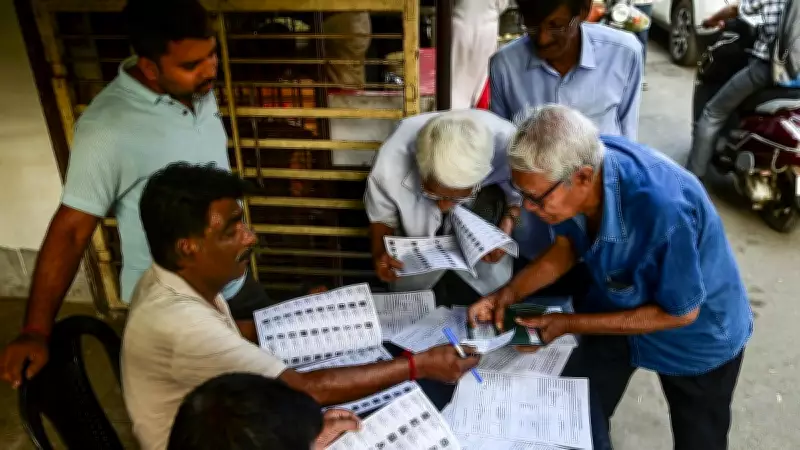
West Bengal Assembly Elections 2026 Likely to Be Held in Two Phases
An official from the Election Commission of India has revealed that the upcoming West Bengal Assembly elections, scheduled for 2026, are likely to be conducted in two distinct phases. This announcement comes as part of the preliminary planning stages for one of India's most politically significant state elections.
Official Statement and Decision-Making Process
The Election Commission official, who spoke on condition of anonymity, stated that while the two-phase plan is under serious consideration, the final decision has not yet been formalized. According to the official, another round of high-level meetings is scheduled to take place at the Election Commission's headquarters in New Delhi. These meetings will involve key stakeholders and election experts to review logistical arrangements, security concerns, and administrative requirements.
The final decision regarding the exact number of phases and the specific dates for the West Bengal Assembly elections will be made only after these crucial deliberations are completed, the official emphasized. This cautious approach reflects the Commission's commitment to ensuring a smooth, fair, and transparent electoral process in a state known for its vibrant and often contentious political landscape.

Context and Significance of the 2026 Elections
The West Bengal Assembly elections of 2026 are poised to be a critical political event, with implications for both state and national politics. West Bengal, with its 294 assembly seats, has historically been a battleground for major political parties, and the election is expected to draw intense national attention.
Key factors that the Election Commission is likely considering in its phase planning include:
- Security arrangements to prevent violence and ensure voter safety.
- Logistical challenges such as the deployment of polling personnel and electronic voting machines across the state's diverse terrain.
- Administrative efficiency to manage the large electorate and numerous constituencies.
- Historical precedents from previous elections in West Bengal and other states.
The mention of Gyanesh Kumar, a senior official associated with the Election Commission, underscores the involvement of experienced administrators in this decision-making process. His role, along with that of other officials, will be pivotal in finalizing the election schedule.
Next Steps and Timeline
As the Election Commission prepares for the upcoming meetings in New Delhi, political parties in West Bengal are expected to ramp up their campaign preparations. The two-phase model, if adopted, would likely involve splitting the constituencies into groups, with voting occurring on separate dates to facilitate better management and oversight.
This development follows the standard protocol of the Election Commission, which typically announces election dates and phases well in advance to allow for adequate preparation by all stakeholders. The official's statement serves as an early indicator of the Commission's strategic thinking, providing a glimpse into the planning that goes into organizing one of the world's largest democratic exercises.
In conclusion, while the West Bengal Assembly elections in 2026 are still in the planning stages, the likelihood of a two-phase election highlights the Election Commission's proactive approach to addressing the complexities of conducting polls in a major Indian state. All eyes will now be on the upcoming meetings in New Delhi, where the final blueprint for this significant electoral event will be crafted.