Trump's Super Bowl Choice Ignites Political and Cultural Battle
In a dramatic twist to Super Bowl entertainment, President Donald Trump's personal preferences have collided with mainstream programming, creating a stark political divide. The controversy centers on two competing halftime shows: one officially sanctioned by NBC featuring global superstar Bad Bunny, and an alternative stream organized by Turning Point USA headlined by Kid Rock.
White House Confirms Trump's Watch Party Plans
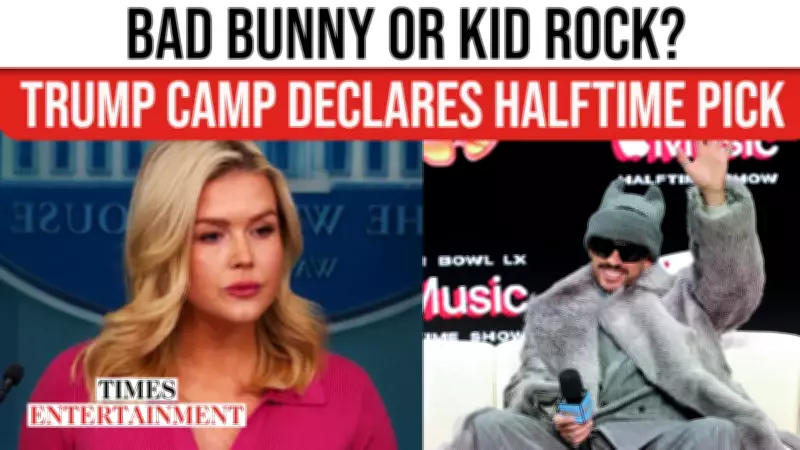
White House spokesperson Karoline Leavitt addressed President Trump's Super Bowl viewing arrangements during a recent press briefing, confirming his participation in a watch party that aligns with the alternative "All-American Halftime Show." This event, announced by conservative group Turning Point USA, directly challenges the official NBC broadcast that will showcase Puerto Rican artist Bad Bunny.
The political tension stems from Bad Bunny's previous criticisms of Trump's immigration policies, particularly those affecting Latin American communities. This history transforms what would typically be a musical performance into a symbolic battleground for cultural and political values.

Bad Bunny Addresses the Growing Controversy
Speaking at an Apple Music press event, Bad Bunny acknowledged the complex circumstances surrounding his upcoming Super Bowl performance. "There's a lot surrounding the moment," the artist admitted, hinting at the broader implications beyond mere entertainment.
This statement underscores how Super Bowl storylines have expanded far beyond sports and music into territory encompassing politics, cultural identity, and media debates. The annual championship game has become an arena where America's deepest divisions play out in real time.
The Cultural Significance of Competing Halftime Shows
The dueling halftime presentations represent more than just musical preferences. Kid Rock, known for his patriotic themes and conservative leanings, symbolizes one vision of American culture, while Bad Bunny represents the global, multicultural perspective that has increasingly defined mainstream entertainment.
This Super Bowl conflict reflects broader tensions in American society regarding immigration, national identity, and the role of politics in entertainment. What traditionally served as a unifying national event now highlights the country's polarized landscape.
The involvement of Turning Point USA, a prominent conservative organization, further politicizes the entertainment aspect of the Super Bowl, transforming musical performances into statements of political allegiance.
Media Landscape and Public Reaction
As news of the competing halftime shows spreads, media outlets and social platforms have become battlegrounds for discussing the implications. The situation demonstrates how entertainment programming can no longer be separated from political discourse in today's climate.
The Super Bowl, typically celebrated for bringing Americans together around sports, now finds itself at the center of cultural warfare. This development marks a significant shift in how major entertainment events intersect with political messaging and public debate.
With both sides preparing their presentations, the stage is set for a Super Bowl that will be remembered not just for athletic achievement, but for its reflection of America's ongoing cultural and political divisions.