Unfulfilled Promises Drive Tribal Farmers' March to Mumbai
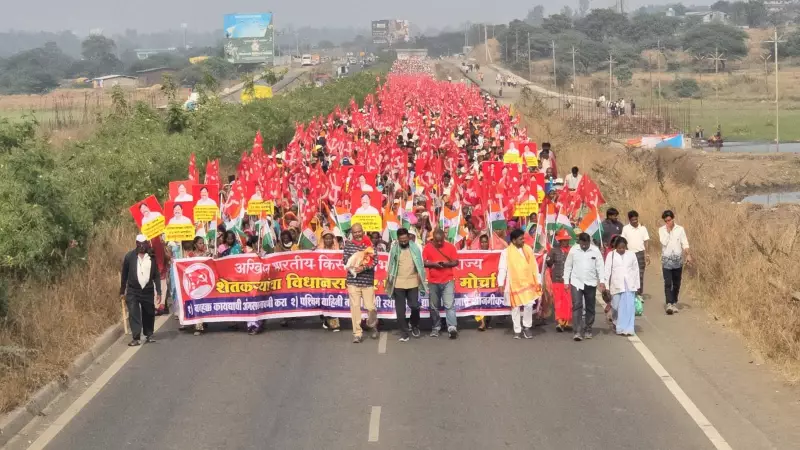
A significant joint march organized by the Communist Party of India (Marxist) and the All India Kisan Sabha, comprising tens of thousands of tribal farmers, is currently making its way towards Mumbai. This mobilization aims to highlight long-standing grievances and unaddressed commitments made to the agricultural and tribal communities over the past eight years.
March Details and Key Demands
The procession commenced from Nashik on Sunday, with participants covering nearly 60 kilometers over two days. The core demands of the marchers include the urgent redressal of pending claims under the Forest Rights Act and the issuance of land titles to those who actively cultivate forest lands. These issues have remained unresolved despite repeated assurances from the government.
Historical Context and Leadership Statements
Dr. Ashok Dhawale, a CPI(M) Politburo member and AIKS national president, emphasized the historical significance of this movement. He recalled the iconic Kisan Long March eight years ago, when thousands of farmers marched to Mumbai and secured several promises from the authorities. "A large portion of those assurances remains unfulfilled," Dhawale stated. "For the last eight years, there has been no real execution on the ground. The same chief minister has been in power, yet basic commitments given to farmers and tribal communities have not been honoured."

Dhawale further highlighted another critical issue: the diversion of water from west-flowing rivers to drought-prone regions like Nashik. "A promise to this effect was made in 2018 when we were asked to withdraw the march, but that too has not been implemented," he added, underscoring the pattern of broken commitments.
Broader Concerns and Corporate Influence
Ajit Nawale, another AIKS leader, voiced concerns over recent policy shifts that he believes adversely affect ordinary citizens. He pointed to the privatization of electricity, the introduction of smart meters, and aggressive land acquisition measures as examples. "These measures are aimed at serving the corporate lobby," Nawale asserted. "Corporate interests are expanding at the cost of ordinary people and their land and livelihoods." This critique reflects broader anxieties about development policies that prioritize corporate gains over community welfare.
Coalition and Upcoming Engagement
The march has garnered support from various organizations, including:
- The All India Democratic Women’s Association
- Democratic Youth Federation of India
- Students’ Federation of India
- The Adivasi Adhikar Rashtriya Manch
A delegation from the march is scheduled to meet with Maharashtra Chief Minister Devendra Fadnavis and other ministers on Tuesday afternoon. This meeting represents a crucial opportunity for dialogue, where leaders hope to secure concrete actions to address the longstanding issues faced by tribal farmers.
The march underscores a persistent struggle for rights and recognition, with participants calling for accountability and the fulfillment of promises that have been delayed for nearly a decade. As the procession approaches Mumbai, it brings renewed attention to the challenges confronting India's agricultural and tribal sectors.