TMC Leader Abhishek Banerjee Launches Scathing Attack on BJP Over Electoral Tactics
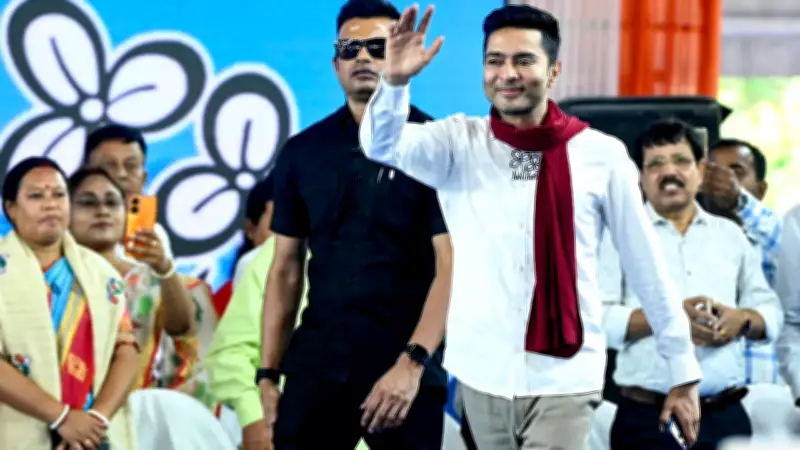
Trinamool Congress leader Abhishek Banerjee on Tuesday delivered a sharp critique of the Bharatiya Janata Party, accusing it of attempting to manipulate West Bengal's electoral landscape in the run-up to the 2026 Assembly elections. Speaking at a rally in Balurghat to support TMC candidate Arpita Ghosh, Banerjee questioned the performance of the Centre's much-promoted "double-engine government" while alleging a broader conspiracy against the state.
Allegations of Demographic Manipulation and Voter Importation
Banerjee claimed there is a "conspiracy to change Bengal's demography" through systematic efforts to bring voters from BJP-ruled states into West Bengal. "Efforts are being made to ensure that the people of Bengal cannot exercise their democratic rights. Voters are being brought into different parts of Bengal from Bihar and Uttar Pradesh," he stated emphatically. The TMC national general secretary revealed he has already lodged a formal complaint with the Election Commission regarding these alleged activities.
Challenging the Double-Engine Government's Performance
Turning his attention to governance issues, Banerjee specifically targeted Balurghat constituency, which has been represented by BJP parliamentarians and legislators for over five years. Without directly naming Union minister Sukanta Majumdar, he challenged the BJP to present a comprehensive "report card" of their achievements. "No one has experienced the so-called double-engine government more than the people of Balurghat... yet they have not been able to bring even 10 paise of additional funds or development," he asserted.

Banerjee contrasted this with what he described as the tangible benefits delivered by the state government's welfare initiatives:
- Lakshmir Bhandar: Financial assistance scheme for women
- Pathashree: Educational support program
- Yuva Sathi: Youth employment initiative with funds transferred within 15 days of announcement
He claimed these schemes have reached beneficiaries directly without bureaucratic delays.
Direct Challenge to BJP's Promises
Addressing BJP promises to expand financial assistance programs, Banerjee issued a bold challenge: "I challenge them to first implement such a scheme in any BJP-ruled state... if they can do that, I will stop campaigning for the TMC." This statement underscored his confidence in the TMC's governance model while questioning the BJP's ability to deliver similar benefits in states under their control.
Mamata Banerjee Echoes Concerns Over Electoral Integrity
The attack was reinforced by West Bengal Chief Minister Mamata Banerjee, who separately alleged that the BJP is attempting to include "illegal voters" from multiple states in Bengal's electoral rolls. She specifically mentioned Bihar, Uttar Pradesh, Rajasthan, and Haryana as sources of these alleged imported voters.
Mamata Banerjee made several serious accusations:
- Thousands of applications submitted in a single day through coordinated efforts
- Similar tactics being employed in other regions
- Collusion with the Election Commission during voter list revisions
- Targeted deletion of genuine voters, particularly women and minority community members
She characterized these activities as "illegal, unconstitutional and fundamentally undemocratic" and warned that people would resist any attempts to "squeeze in illegal voters."
Broader Political Context and Implications
These allegations come at a crucial political juncture as West Bengal prepares for the 2026 Assembly elections. The TMC's coordinated attacks suggest a strategic focus on:

- Questioning the BJP's governance credentials in constituencies they currently represent
- Highlighting perceived threats to electoral integrity and demographic stability
- Contrasting state-level welfare delivery with central government promises
- Building public narrative around alleged manipulation of democratic processes
The exchange represents escalating political tensions in a state that has witnessed intense electoral competition in recent years, with both parties positioning themselves for the upcoming electoral battle.