Congress Laid Red Carpet For Red Corridor: Anurag Thakur's Fiery Attack in Parliament
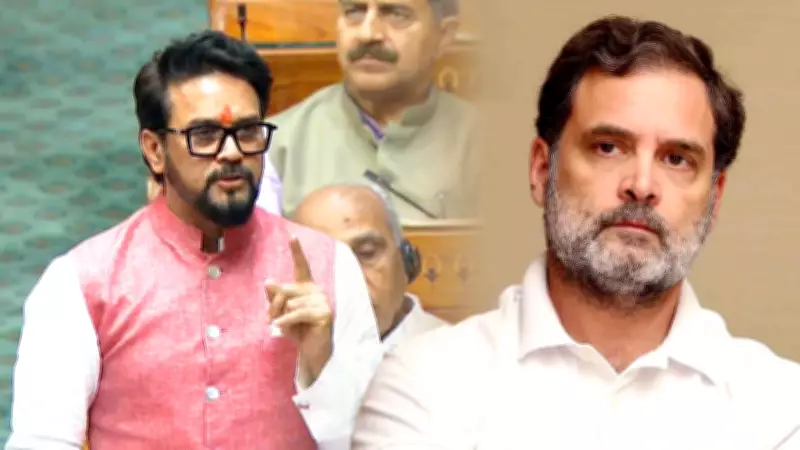
In a heated Lok Sabha debate on the government's efforts against Naxalism, BJP MP Anurag Thakur launched a blistering assault on the Congress party and its leader Rahul Gandhi. Thakur accused the Congress of historically surrendering to left-wing extremism and actively creating what he termed the "red corridor," a zone of Naxal influence across parts of India.
Accusations of Neglect and Surrender
Thakur asserted that the Congress party inflicted one of the most painful wounds on the nation by its approach to Naxalism. He claimed that Congress leaders repeatedly shirked responsibility, treating the issue merely as a local, developmental, or police matter, rather than addressing it seriously at its ideological and operational roots. This neglect, according to Thakur, allowed the problem to fester for decades.
The BJP MP emphasized that the Congress never showed the political will to confront Naxalism head-on, instead opting for a piecemeal strategy that failed to curb its spread. He argued that this lack of resolve contributed significantly to the expansion of Naxal activities in various regions.

Praise for Modi Government's Resolve
In contrast, Thakur heaped praise on Union Home Minister Amit Shah and the Modi government for demonstrating unwavering resolve to end the Naxal menace. He highlighted their comprehensive strategy, which combines security operations with developmental initiatives in affected areas.
Thakur stated that, thanks to the concerted efforts of the Modi administration, India is now on the verge of being free from the decades-old Naxal problem. He made a bold claim that eradication is expected within the next two days, signaling a significant milestone in the government's counter-insurgency campaign.
Political Implications and Future Outlook
The debate underscores the ongoing political rivalry between the BJP and Congress, with national security and governance being key battlegrounds. Thakur's comments are likely to fuel further discussions on historical accountability and current policy effectiveness in tackling internal security challenges.
As the government claims imminent success against Naxalism, the focus now shifts to sustaining peace and development in formerly affected regions to prevent any resurgence of extremism.