Congress Leader Jairam Ramesh Draws Historical Parallels Between Strait of Hormuz and Suez Canal Crises
As global tensions escalate over the Strait of Hormuz, Congress leader Jairam Ramesh has invoked a historical analogy, comparing the current situation to the 1956 Suez Canal crisis. In a detailed post on social media platform X, Ramesh highlighted the pivotal diplomatic role played by India's then-United Nations envoy, VK Krishna Menon, during that earlier international standoff.
Recalling the 1956 Suez Crisis and Menon's Diplomatic Efforts
Jairam Ramesh emphasized that seventy years ago, the world faced a similar geopolitical challenge with the Suez crisis. On July 26, 1956, Egyptian President Gamal Abdel Nasser nationalized the Suez Canal, sparking outrage in Western nations and raising fears of imminent conflict. "The man at the centre of the diplomatic effort to resolve the crisis was none other than VK Krishna Menon. He succeeded admirably, but only for a while," Ramesh stated, underscoring Menon's temporary success in de-escalating tensions.
However, the diplomatic progress was short-lived. On October 29, 1956, the United Kingdom, France, and Israel launched an invasion of Egypt. This military action was abruptly halted within days following intervention by US President Dwight Eisenhower, who Ramesh described as "furious" over the escalation.

Ironies and Historical Context in Middle East Conflicts
Ramesh pointed out a striking irony in Eisenhower's actions. "Ironically, this was the same man who three years earlier had approved the joint US-UK operation to overthrow the democratically elected PM of Iran, Mohammed Mosaddegh, who had nationalised the oil industry there," the Rajya Sabha MP observed. This reference connects past Western interventions in Iran to current tensions, adding depth to the historical comparison.
Following the cessation of the Egyptian invasion, the United Nations Emergency Force (UNEF) was deployed and remained stationed along the Sinai and Gaza borders until early June 1967. Ramesh noted that this peacekeeping force included troops from ten countries, with India contributing significantly. Indian military leadership played key roles: Lieutenant General PS Gyani served as commander from December 1959 to January 1964, and Major General Inder Jit Rikye led from January 1966 to June 1967.
Further highlighting India's involvement, Ramesh mentioned that Prime Minister Jawaharlal Nehru personally addressed the Indian contingent at the Gaza Strip on May 20, 1960. The UNEF's presence ended just before the outbreak of the Six-Day War in 1967, marking a critical juncture in Middle East history.
Current Strait of Hormuz Crisis and Global Implications
Ramesh's historical reflections come amid escalating concerns over the Strait of Hormuz, a vital maritime chokepoint through which approximately 20% of the world's oil normally transits. Iranian strikes on commercial vessels have severely disrupted shipping, reducing traffic to a trickle and causing a sharp increase in global oil prices. This has placed pressure on Washington to address the economic strain on consumers and the international economy.
Iran has effectively blocked the waterway in retaliation for US-Israeli strikes, which triggered the current Middle East crisis. The situation has raised fears of a global energy crunch, with only a few ships managing to pass through the strait recently.
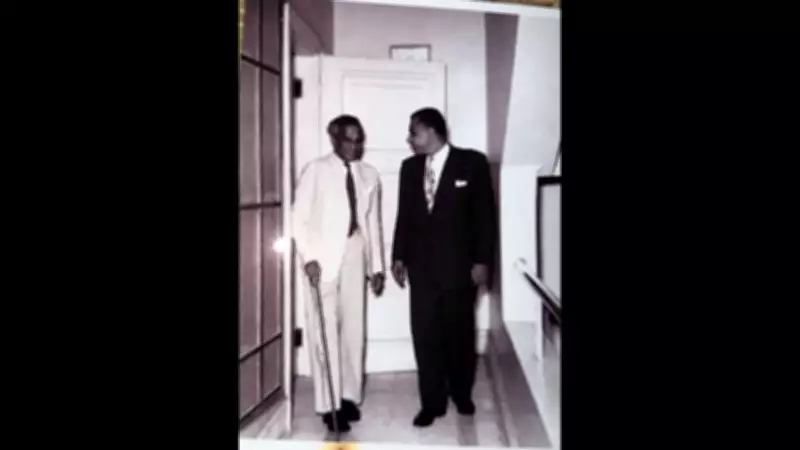
In his post, Ramesh also shared archival photographs depicting VK Krishna Menon engaging in diplomatic discussions with key figures such as President Nasser, British Prime Minister Antony Eden, and Foreign Secretary Selwyn Lloyd, illustrating the intense diplomatic efforts of the era.
This comparison by Jairam Ramesh not only sheds light on historical precedents but also underscores the ongoing complexities of international diplomacy and conflict resolution in volatile regions like the Middle East.