

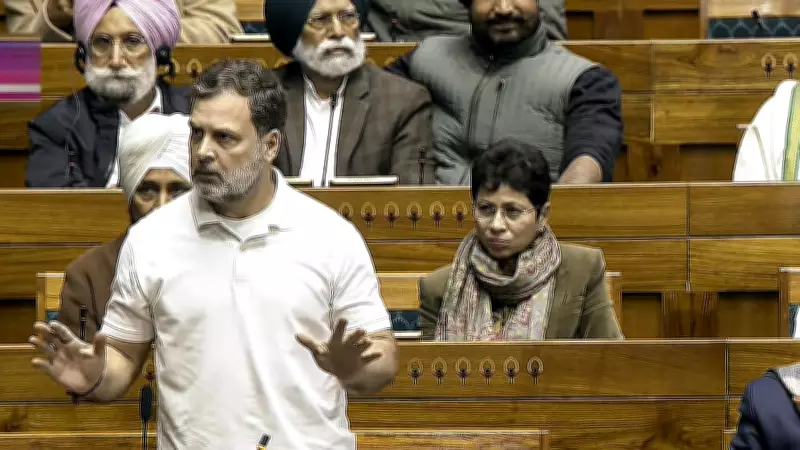
In a sharp political confrontation, Congress leader Rahul Gandhi has launched a scathing attack on Prime Minister Narendra Modi's government over the recently announced India-US trade agreement. Gandhi accused the Prime Minister of effectively 'selling out' the hard work and livelihoods of Indian farmers through the terms of the deal, framing it as a betrayal of agricultural interests.
Parliament Erupts in Protest Over Trade Pact
The political storm over the trade deal spilled onto the floor of Parliament, causing significant disruption to legislative proceedings. In the Lok Sabha, Members of Parliament from opposition parties vociferously raised the issue, leading to heated exchanges and forcing an adjournment of the house for nearly an hour as order could not be restored.
Rajya Sabha Witnesses Opposition Walkout
The protest escalated in the Upper House, where opposition lawmakers staged a coordinated walkout in a dramatic display of dissent against the government's handling of the trade negotiations. The walkout underscored the deepening political rift over economic policies perceived to impact the agricultural sector.

Rahul Gandhi's criticism centers on allegations that the trade deal favors foreign commercial interests at the expense of India's farming community. He argued that the agreement could undermine domestic agricultural markets and expose farmers to unfair competition, thereby threatening their economic security.
The government has yet to issue a detailed rebuttal to these specific allegations, but the trade deal has been positioned by administration officials as a strategic move to enhance bilateral economic ties and open new export opportunities for various Indian sectors.
This incident highlights the ongoing and contentious debate in Indian politics regarding globalization, trade liberalization, and the protection of vulnerable economic groups. The parliamentary disruptions reflect the high-stakes nature of international trade agreements and their domestic political repercussions.






