Rahul Gandhi Accuses PM Modi of Evading Decisions During Galwan Clash
Leader of Opposition in Lok Sabha, Rahul Gandhi, has made a serious allegation against Prime Minister Narendra Modi, claiming that the PM "ran away" from making crucial decisions during the 2020 India-China clash at Galwan Valley. This statement came amidst a heated parliamentary session where Gandhi was repeatedly denied permission to speak about an unpublished memoir by former Army chief General MM Naravane.
Parliamentary Chaos Over Unpublished Memoir
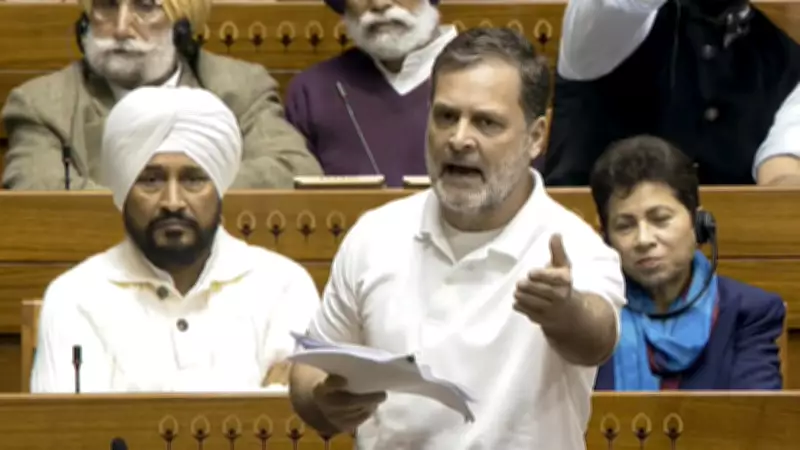
The political storm erupted when Rahul Gandhi attempted to quote from General Naravane's unpublished memoir during the Motion of Thanks debate. Union Home Minister Amit Shah and Defence Minister Rajnath Singh strongly objected to Gandhi's speech, leading to multiple adjournments of the lower house.
"I am not being allowed to speak. I just have to speak 2-3 lines. It is a matter of national security," Gandhi told reporters after the adjournment. "These are the words of the Army Chief (former), and it is a conversation that he has had with Rajnath Singh ji and PM Modi."

Gandhi's Allegations Against Political Leadership
Rahul Gandhi asserted that the Indian Army was "let down" by the political leadership during the Galwan confrontation. He claimed that both the Prime Minister and the Defence Minister were fearful of a particular line in Naravane's memoir that he wanted to reveal in Parliament.
"They are scared of a line. There is one line in it that PM Modi and defence minister Rajnath Singh are scared of. I will say that line inside Parliament, and no one will stop me," Gandhi declared defiantly.
The Core Controversy: Leadership During Crisis
Gandhi emphasized that his criticism wasn't about territorial gains or losses, but about leadership during a national security crisis. "The point here is exactly what the Prime Minister said and what Rajnath Singh Ji said. Whether the land was taken or not, that's a different question," he explained.
"But before we come to that, the leader of the country is supposed to give direction. The leader of the country is not supposed to run away from decisions and leave decisions to other people's shoulders. That is what the Prime Minister has done," Gandhi added, questioning "what happened to the 56-inch chest when China was standing against us."
BJP's Strong Rebuttal
The Bharatiya Janata Party dismissed Gandhi's claims as "misleading" and accused him of violating parliamentary rules. BJP IT cell head Amit Malviya shared several videos of General Naravane speaking positively about India's response to the Galwan clash.
In one interview, Naravane stated: "After this clash occurred and we showed that it is possible to stand up to China... from Canada to Lithuanian to Europe to Philippines everyone got that feeling that if you are fighting for what is correct, if you have a principled stand, it is possible to take a stand even against China."
In another video, the former Army chief confirmed that India had not lost any territory: "Firstly, we haven't lost out on any territory. We are where we were before this whole thing started."
Parliamentary Rules Violation Allegations
The uproar intensified when Speaker Om Birla repeatedly warned Gandhi that unpublished material could not be quoted in Parliament. Despite these warnings, Gandhi insisted the document was authenticated, triggering sustained protests from treasury benches.
Parliamentary Affairs Minister Kiren Rijiju accused Gandhi of violating House rules, leading to multiple adjournments as the deadlock continued. The BJP MPs accused Gandhi of "misleading the House" with unverified claims.
Unresolved Questions and Political Implications
While the BJP shared videos showing General Naravane's positive assessment of India's response, these did not specifically address Gandhi's claim about decision-making during the crisis. The controversy raises several important questions:

- What specific information does Naravane's unpublished memoir contain about political leadership during the Galwan clash?
- Why is the government preventing discussion of these matters in Parliament?
- How will this affect the ongoing political discourse about national security and border management?
The incident highlights the deepening political divide over national security issues and sets the stage for further confrontation between the ruling party and opposition in Parliament.