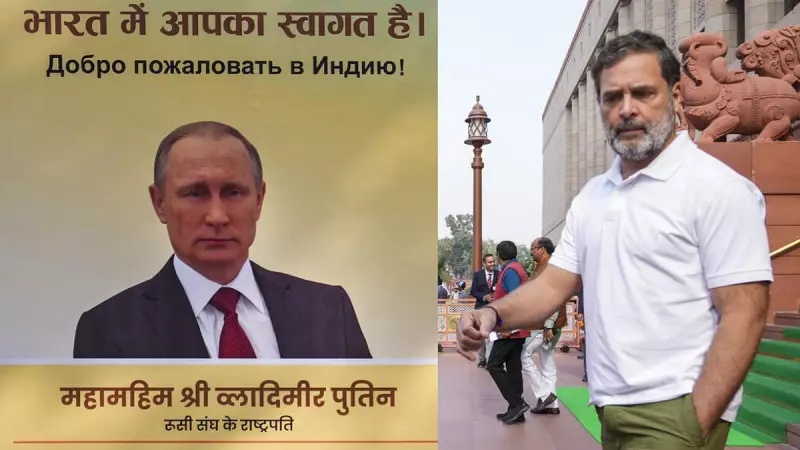
Congress leader Rahul Gandhi has launched a sharp critique against the central government, alleging that it actively prevents leaders of the opposition from engaging with visiting foreign dignitaries. He attributed this move to the ruling establishment's "insecurity."
The Core Allegation: A Monopoly on Diplomacy?
The remarks from the Leader of the Opposition in the Lok Sabha came amidst the high-profile visit of a global leader, understood to be in reference to Russian President Vladimir Putin's trip to India. Gandhi asserted that the government instructs foreign visitors not to hold meetings with the opposition, a practice he strongly condemned. "We too represent India. It is not just the government which does it," Gandhi stated, emphasizing the opposition's legitimate role in the nation's democratic framework.
He directly pointed fingers at Prime Minister Narendra Modi and the Ministry of External Affairs for not adhering to inclusive diplomatic norms. "The government doesn't want the Opposition to meet people coming from outside. Modi-ji and the Foreign Ministry don't follow this," he said during his interaction with the press on Wednesday, December 4, 2025.

"It Is Their Insecurity," Says Gandhi
When questioned about the potential rationale behind the government's alleged stance, the Congress MP offered a blunt assessment. He framed the issue as one stemming from a fragile political ego rather than strategic protocol. "It is their insecurity," he declared, suggesting that the ruling party views such independent engagements as a threat to its authority and narrative.
This accusation brings into focus the ongoing tussle between the government and the opposition over the latter's space and voice in matters of national and international importance. Gandhi's comments underscore a perception that the government seeks to monopolize India's official interactions on the global stage.
Implications for Democratic Protocol
The allegation, if true, marks a significant departure from conventional diplomatic practice in mature democracies, where opposition leaders often meet visiting heads of state or government. Such meetings are generally seen as a reflection of a country's cohesive political structure and a sign of respect for its democratic institutions.
By publicly voicing this concern, Rahul Gandhi has ignited a debate on the boundaries of executive control in foreign engagements and the rights of the elected opposition. The statement, reported by PTI, adds another layer of political friction, highlighting the deepening rift between the ruling BJP and the Congress-led opposition on the fundamental principles of parliamentary democracy and institutional inclusivity.