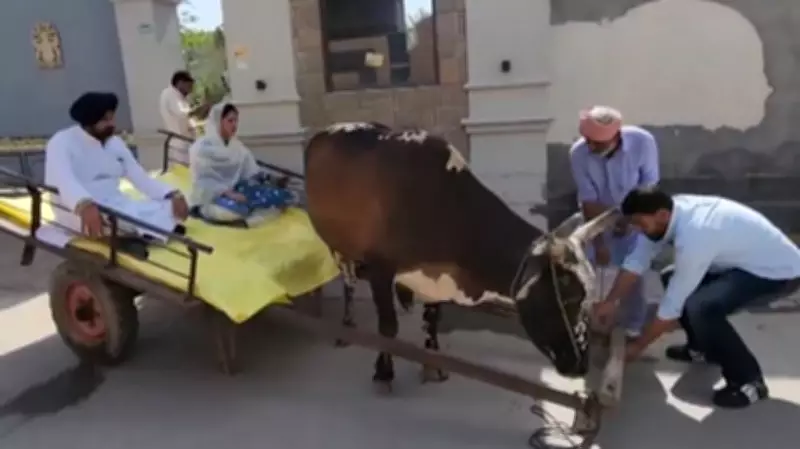
Punjab Congress chief Amarinder Singh Warring and his wife made a unique statement on Tuesday by arriving at a polling booth on a bullock cart in the state's Gurdaspur district. The couple, accompanied by party workers, cast their votes in the ongoing Punjab municipal corporation elections.
Symbolic Protest Against Rising Fuel Prices
Warring, who is also a former state minister, used the bullock cart as a symbolic protest against the steep rise in fuel prices under the central government. He said that the common man is struggling to make ends meet due to the skyrocketing prices of petrol and diesel, which have crossed the Rs 100 per litre mark in many parts of the country.
"The Centre has no sympathy for the poor. While the rich can afford luxury cars, the common man is forced to use bullock carts," Warring told reporters after casting his vote. He added that the Congress party would continue to raise the issue of inflation and unemployment in the state.

Congress Targets BJP Over Inflation
The Punjab Congress chief further accused the Bharatiya Janata Party (BJP)-led central government of failing to control prices of essential commodities. He said that the fuel price hike has directly impacted the cost of transportation, leading to a rise in food and other daily necessities.
"The BJP promised to bring down inflation but has done the opposite. Farmers, laborers, and small traders are the worst hit," Warring said. He urged the Election Commission to ensure free and fair polls in the state.
Warring's bullock cart arrival drew attention from locals and party supporters, who cheered him as he made his way to the polling station. The municipal elections in Punjab are being seen as a test of popularity for the ruling Aam Aadmi Party (AAP) government, which came to power in March 2022.
The Congress party, which was in power in Punjab before AAP, is hoping to regain lost ground through these local body elections. Warring's gesture is part of the party's campaign to highlight the economic hardships faced by the common people under the central government.